


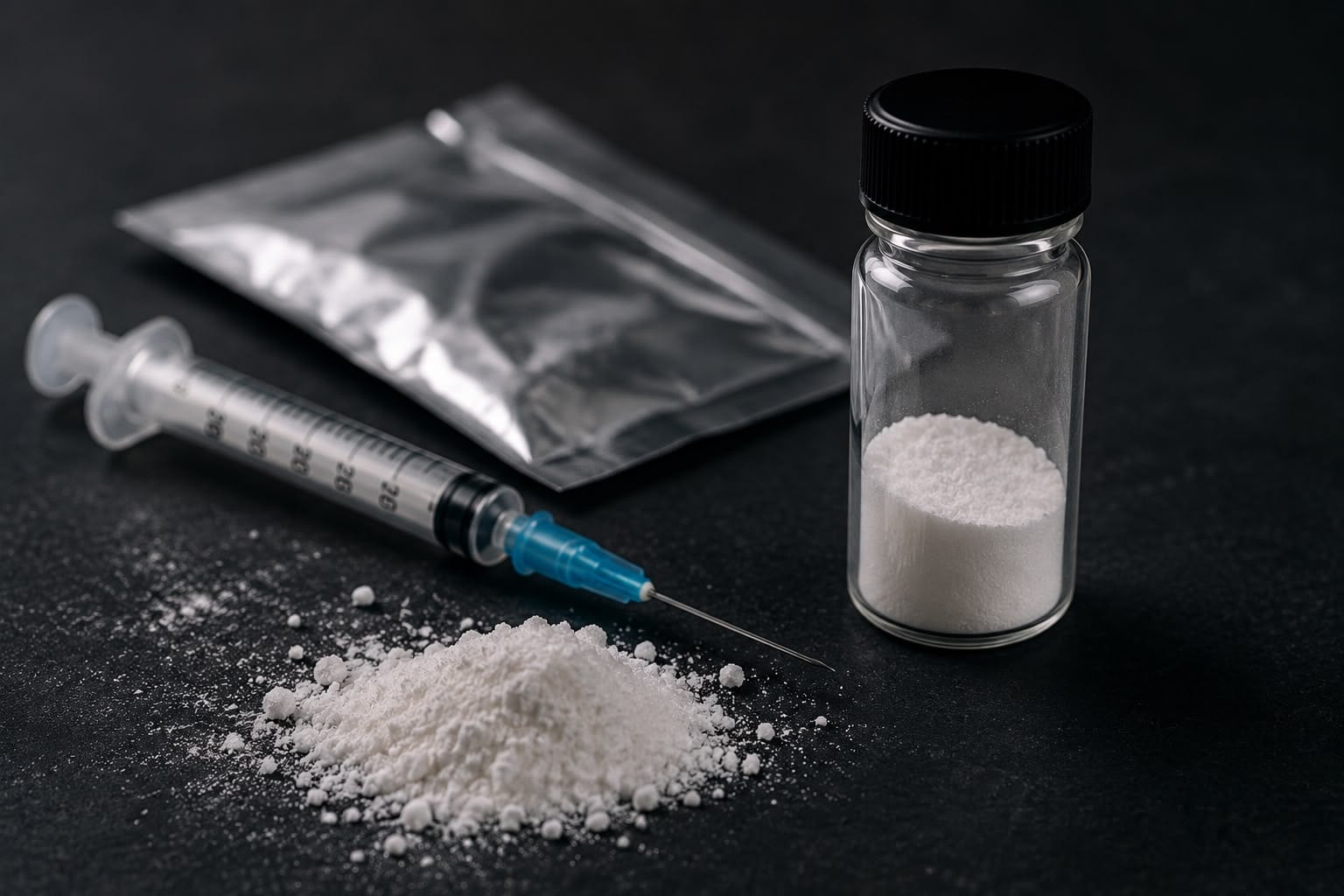
New York health officials have confirmed the state’s first detection of the emerging synthetic opioid, which forensic researchers say has been linked to a rising number of fatal overdoses across North America.
A synthetic opioid believed to be roughly ten times more potent than fentanyl has been detected in New York’s illicit drug supply for the first time, prompting a public health alert from the New York State Department of Health.
Laboratory testing confirmed the presence of N-Propionitrile Chlorphine — commonly known as cychlorphine — in the state in late June, according to the department. The substance has never been approved for human use.
Cychlorphine belongs to an emerging class of highly potent synthetic opioids that researchers refer to as “orphines.” According to the Center for Forensic Science Research and Education (CFSRE), which first flagged the drug in a public alert earlier this year, laboratory pharmacology data indicate it may be around ten times stronger than fentanyl, sharply raising the risk of fatal overdose even at very small doses.
Adding to the danger, authorities warn that the drug is frequently mixed into other illicit substances, meaning people may consume it without ever knowing they have been exposed. Reported effects include severe respiratory depression, extreme sedation, loss of consciousness and a high risk of fatal overdose. Unlike fentanyl, cychlorphine cannot be picked up by fentanyl test strips, according to reporting by The Hill, though naloxone — sold as Narcan — is still thought to be effective against overdoses it causes.
The New York detection forms part of a wider pattern. Researchers say cychlorphine has appeared in overdose investigations across multiple US states and parts of Canada, with fatal cases climbing since mid-2025. The CFSRE, which first identified the substance in mid-2024, said in its alert that the drug had been found in 25 blood specimens from fatal overdoses, with more than 100 further tentative identifications at NMS Labs, drawn from eight US states and three Canadian provinces.
Health officials are urging emergency responders, healthcare providers and the public to stay alert as laboratories continue tracking the drug’s spread.
