


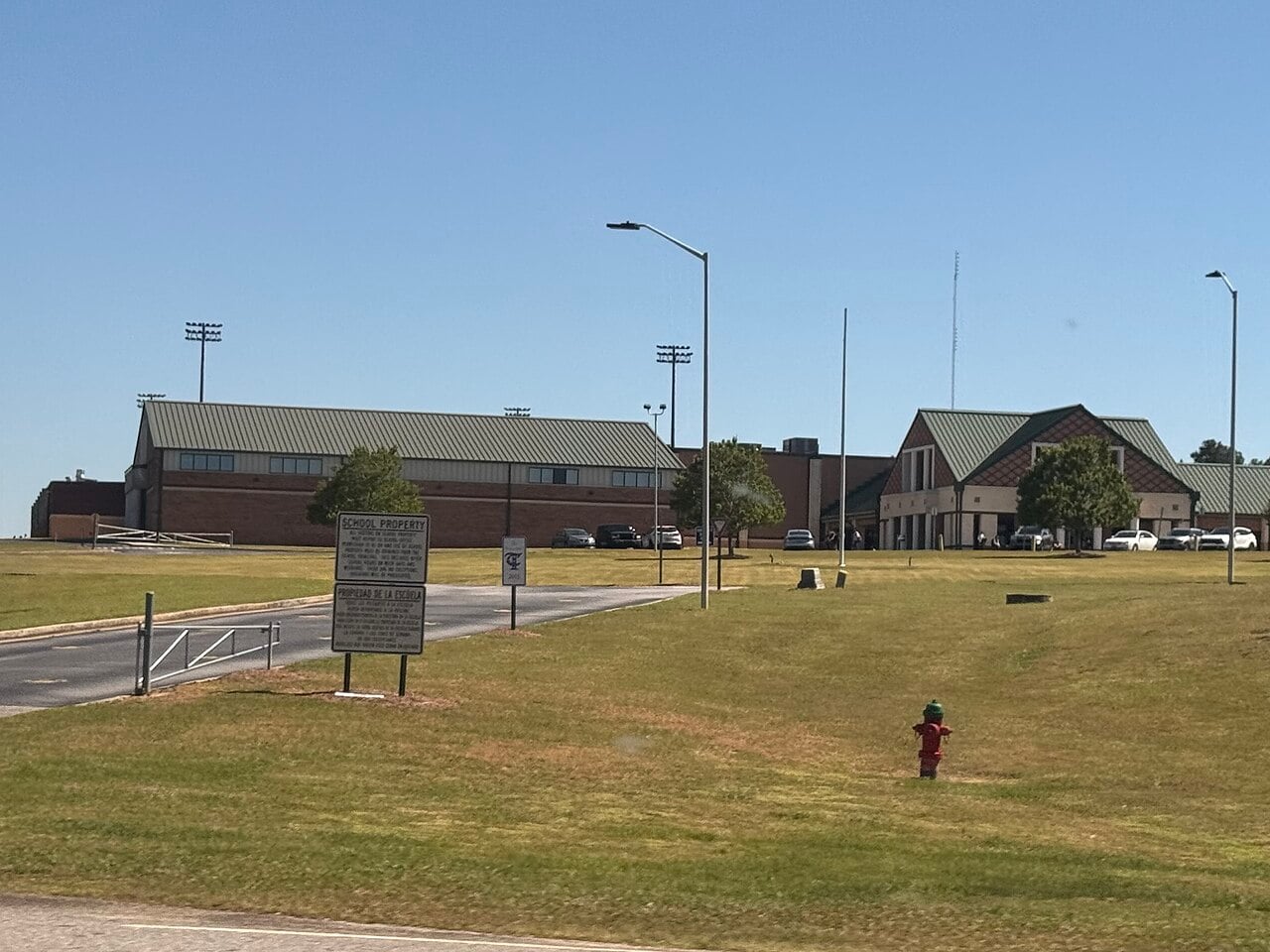
Court documents show the 16-year-old, accused of killing two students and two teachers at the Georgia school in 2024, will appear for a “non-negotiated” plea and sentencing hearing on 24 July — months before his trial was due to begin.
The teenager accused of carrying out the 2024 shooting at Apalachee High School in Georgia is set to change his plea, according to court documents, in a development that could bring the case to a close before it reaches trial.
Colt Gray, now 16, is due before Barrow County Superior Court in Winder on 24 July for a plea and sentencing hearing, documents filed on Friday show. The filing describes it as a “non-negotiated” plea hearing. Gray, who was 14 when he allegedly shot dead two students and two teachers at the school, had previously pleaded not guilty; his lawyers indicated in late 2025 that a plea deal was being negotiated, after which the judge set a deadline.
Charged as an adult, Gray faces 55 counts in total: four counts of malice murder, four of felony murder, four of aggravated battery, 25 of aggravated assault and 18 of first-degree cruelty to children. He faces up to 30 years in prison on the second-degree murder charges and a maximum of 180 years overall. Because he was a minor at the time of the shooting, he cannot face the death penalty, and Georgia Public Broadcasting has reported that the terms of any plea could determine whether he would be eligible for parole on a life sentence. He has been held at a juvenile detention centre since his arrest.
The change-of-plea filing comes after Judge Nicholas Primm had pencilled in a trial for 13 October. The court had already granted a change of venue, with proceedings expected to move to Columbia County — outside the Atlanta media market — after Gray’s defence argued that extensive pre-trial coverage and local feeling in Barrow County made a fair trial there impossible. The trial had been expected to run roughly until the first week of November.
Prosecutors say that in September 2024, Gray brought a semiautomatic assault-style rifle onto his school bus with the barrel protruding from his book bag, concealed in poster board. He is accused of leaving his second-period class, emerging from a bathroom with the weapon and opening fire on people in a classroom and hallways. Investigators say he left behind a notebook containing handwritten preparations for the attack and a diagram of his classroom.
His father, Colin Gray, was convicted in March of second-degree murder and all other charges he faced — the first adult to be charged in connection with a school shooting in Georgia, and only the third time in the US a parent had been charged over a mass shooting allegedly carried out by their child. Prosecutors said he had ignored repeated episodes of violence by his son over the years. He admitted giving his son the rifle used in the shooting, telling the court he had hoped it would help them bond through hunting and trips to the shooting range. His sentencing is scheduled separately for 28 and 29 July at the Barrow County Courthouse, where he faces a maximum combined sentence of 180 years.
The shooting also reshaped school-safety law in Georgia. Governor Brian Kemp signed House Bill 268 in April 2025, legislation developed directly in response to the Apalachee attack. It requires updated school mapping and mobile panic-alert systems, faster transfers of student records and anonymous reporting programmes, and creates new offences of making a “terroristic threat of a school” and committing a “terroristic act upon a school.” Schools faced a 1 July 2026 deadline to obtain standardised mapping data, and the law also mandates annual evidence-based suicide-awareness and prevention training for pupils in grades six to twelve.
