


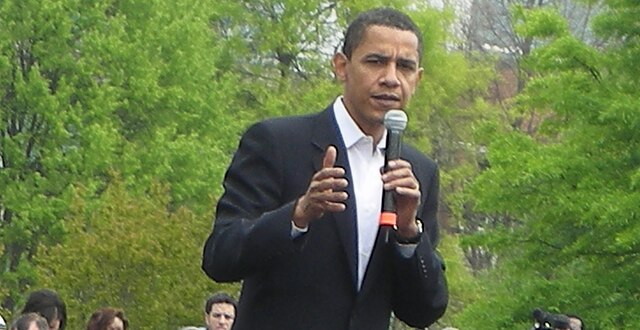
With four days to go before Virginians vote on one of the most consequential state-level ballot measures of the cycle, the campaign has taken on an unusual character: a tug-of-war over the legacy and words of a single man. Barack Obama’s face, voice and record are being deployed by both the supporters and opponents of a proposal that could tilt the balance of the next US House of Representatives.
The referendum on Tuesday will ask voters whether Virginia’s Democratic-led legislature should be permitted to draw a new congressional map — one that, according to Reuters, could yield four additional seats for the party. It is an attempt to neutralise a series of Republican-led redistricting drives in Texas and other states, carried out at the urging of President Donald Trump.
What is actually on the ballot
If approved, the new map would remain in force until the next census cycle concludes after 2030. Turnout already looks substantial for a special election: the Virginia Department of Elections reports that more than one million people have cast ballots early, and recent polling of likely voters gives the “yes” side a narrow lead.
The stakes explain the scale of the spending. Virginians for Fair Maps, a Republican-led committee opposing the measure, has raised close to $20 million. Justice for Democracy PAC, which is also campaigning against the amendment, has drawn nearly $9 million from Per Aspera Policy Incorporated, a conservative nonprofit. Both have chosen to build their message around the former president.
Why Obama’s words cut both ways
Obama himself has formally backed the “yes” campaign. In a television advertisement released by supporters, he tells Virginians: “Republicans want to steal enough seats in Congress to rig the next election and wield unchecked power for two more years, but you can stop them by voting yes by April 21.” His appearance in mailers, radio spots and TV ads has made him, in effect, the unofficial voice of the pro-amendment push.
Opponents have chosen to answer with Obama’s own back catalogue. The Republican-backed ads lean on footage from a 2017 appearance at the University of Chicago, in which Obama argued that gerrymandering had driven the parties further apart and made it “harder and harder to find common ground.” One radio spot from Justice for Democracy frames the argument directly: “Our president, Barack Obama, knows that partisan gerrymandering is wrong for our democracy. Listen to his words.”
The tension is real. The former president was once among the most prominent Democratic critics of partisan map-drawing, a position that sits uneasily with his current endorsement of a measure designed to do precisely that in Virginia. Reuters noted that Obama’s position reflects how far Democrats have travelled since Republicans began their unprecedented mid-decade redistricting push.
A proxy war over the House majority
For Democratic officials, the Republican strategy of deploying archival footage is read as a sign of weakness rather than strength. “They wouldn’t be lying about Obama’s position if they weren’t desperate and worried,” Senator Tim Kaine of Virginia told Reuters.
Republicans see the manoeuvre differently. Representative Jen Kiggans, a Virginia Republican, argued that leveraging a Democrat’s past remarks is precisely the kind of tactic her opponents would reach for if their positions were reversed.
Behind the duelling advertisements lies a blunt calculation. Virginia has become a counterweight in a national contest over how congressional districts are drawn, and the party that prevails on Tuesday will gain an advantage that could help decide control of the House in November. With mixed messaging pouring in from groups with deliberately bland names, voters are being asked to cut through the noise — and, in many cases, to decide which version of Barack Obama they find more persuasive.
