


What is on the table in Pakistan
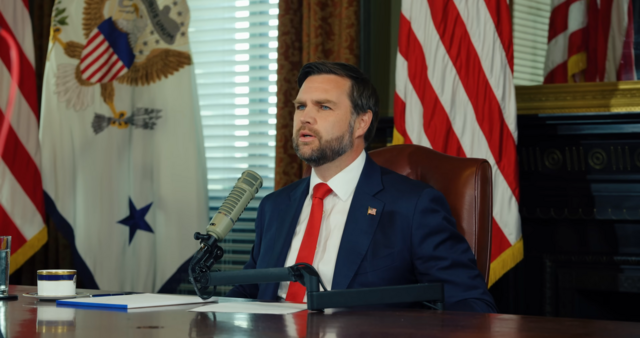
Vice-President JD Vance has set off for Islamabad at the head of an American delegation tasked with exploring a possible end to the war between the United States, Israel and Iran, arriving with a pointed message for his Iranian counterparts: do not attempt to game the process.
Speaking at Joint Base Andrews in Maryland shortly before departure, Vance said: “If they’re gonna try to play us they’re gonna find the negotiating team is not going to be that receptive.” He added that Donald Trump had given the team “some pretty clear guidelines” for the encounter.
The vice-president will be accompanied by special envoy Steve Witkoff and Jared Kushner. Iran’s delegation, already in place, is being led by foreign minister Abbas Araghchi alongside the country’s parliament speaker, Mohammad Bagher Ghalibaf. The White House has so far offered little clarity on the shape of the talks, including whether the two sides will meet directly or through intermediaries, nor has it outlined firm expectations for what might emerge.
Vance’s involvement is itself notable. Within Trump’s inner circle he has been among the more hesitant backers of the campaign against Iran, having long voiced scepticism about foreign military adventures and the risks of being drawn into open-ended conflict.
Why Tehran is hardening its language
Even before the delegations sit down, the atmosphere around the talks has darkened. Trump used his Truth Social account on Thursday to accuse Iran of walking back its undertaking to reopen the Strait of Hormuz, writing bluntly: “That is not the agreement we have!”
Iran, for its part, has sharpened its own rhetoric. Supreme Leader Mojtaba Khamenei issued a written statement demanding “blood money” from Washington and Israel, branding both “criminal aggressors”. Deputy foreign minister Majid Takht Ravanchi told ambassadors gathered in Tehran that his government was not prepared to sign up to any pause that could simply serve as a breathing space for its opponents. “We do not want a ceasefire that allows the aggressor enemy to re-arm and launch another aggression,” he said, according to the semi-official Tasnim news agency. He also maintained that it had been “agreed that Iran’s 10-point plan will be the basis for negotiations”.
A widening set of flashpoints
The Islamabad meeting is taking place against a backdrop of fresh escalation elsewhere. Israel’s military chief, Lieutenant General Eyal Zamir, said earlier in the day that the Israel Defence Forces remained “a state of war” and insisted there was no ceasefire in place with Hezbollah.
Hezbollah itself struck a defiant note. The group’s leader, Naim Qassem, vowed that resistance would continue “as long as there is breath”, arguing that Israel had failed to mount a successful ground invasion or to stop missile fire. Qassem also warned the Lebanese government against offering “free concessions” to Israel ahead of separate talks planned in the United States, saying: “We will not accept a return to the previous situation, and we call on officials to stop offering free concessions.” The group later claimed to have targeted an Israeli naval base at the port of Ashdod with missiles, framing the strike as a response to what it described as violations of the ceasefire and attacks on Beirut.
Pope Leo weighed in from Rome, lamenting what he called the “ferocious” spread of “absurd and inhuman violence” across the Christian East. The region, the American pontiff said, had been “profaned by the blasphemy of war and the brutality of business, with no regard for people’s lives, which are considered at most collateral damage of self-interest”. He added: “No gain can be worth the life of the weakest, children, or families. No cause can justify the shedding of innocent blood.”
Diplomatic ripples beyond the region
The widening crisis is beginning to reshape relationships well beyond the immediate theatre. Israel has expelled Spain from the US-led Civil-Military Coordination Centre (CMCC), the hub established in October 2025 under President Trump’s Gaza peace plan to oversee humanitarian, logistical and security support for the territory. Staffed by personnel from militaries including those of the United Kingdom, Italy and Australia, the centre falls under US Central Command.
Israeli foreign minister Gideon Sa’ar said the decision had been taken in coordination with Washington, citing what he described as the Spanish government’s “blatant anti-Israel bias”. He added: “The Sanchez government has such a blatant anti-Israel bias that it has lost all ability to serve as a useful factor in the implementation of [US President Donald] Trump’s peace plan and in the CMCC that operates within the plan.”
China’s potential role is also drawing attention in Washington. US Trade Representative Jamieson Greer told CNBC that while the administration was working to preserve a degree of stability with Beijing, any Chinese involvement with Iran that ran counter to American interests would inevitably complicate relations. “The underlying goals of our economies are so different. But there’s a way where we can have some economic stability,” he said. “If China is going to be involved in Iran in a way that’s harmful to US interests, then that obviously complicates it, and that’s China’s responsibility to eliminate that.” Greer said he still expected Trump to hold a productive meeting with President Xi Jinping next month.
Why the Ceasefire Has Not Yet Reopened the Strait of Hormuz
The war’s reach into American wallets
The economic fallout is already showing up in US price data. Consumer inflation jumped to 3.3 per cent in March, according to figures from the Bureau of Labor Statistics, up sharply from 2.4 per cent the previous month. The surge was driven largely by energy costs: petrol prices climbed 21.2 per cent between February and March, squeezing household budgets at a moment when Washington is trying to project confidence heading into the Islamabad talks.
For all the hard words being exchanged in public, both sides are now sending senior figures to the same city. Whether that is enough to arrest the drift towards wider conflict will become clearer in the hours ahead.
