


.
Iran’s parliament speaker has warned that the Strait of Hormuz “will not remain open” unless the United States lifts its naval blockade of Iranian ports, undermining efforts by both Washington and Tehran to present progress towards ending the conflict.
The warning from Mohammad Bagher Ghalibaf came hours after Iran’s foreign minister, Abbas Araghchi, declared the strait “completely open” to commercial shipping for the remainder of the ceasefire. The contradictory signals from Tehran, combined with President Donald Trump’s insistence that the blockade would stay in place until a comprehensive deal was struck, left the status of the world’s most critical oil chokepoint in doubt on Friday evening.
What each side is claiming
Trump hailed what he called “a great and brilliant day for the world” after Araghchi’s announcement, but made clear the US naval blockade — which has forced 21 ships to turn back since it began on 13 April, according to US Central Command — would remain “in full force” until the “transaction” to end the war was “100% complete”. He also suggested the ceasefire could be terminated unless a long-term agreement was reached by Wednesday.
The President went further, telling CBS that Iran had “agreed to everything”, including surrendering its stockpile of enriched uranium to the United States. Tehran flatly denied this. Iran’s foreign ministry said the matter “had never been raised in negotiations”, while Ghalibaf — who led Iran’s delegation at recent face-to-face talks in Islamabad — accused Trump of making “seven claims in one hour, all seven of which were false”.
Araghchi’s own statement drew criticism from Iranian hardliners and some domestic media outlets, who called on him to clarify his remarks. Ghalibaf appeared to distance himself from the foreign minister’s position, writing on X that whether the strait was open or closed “will be determined on the ground, not on social media”.
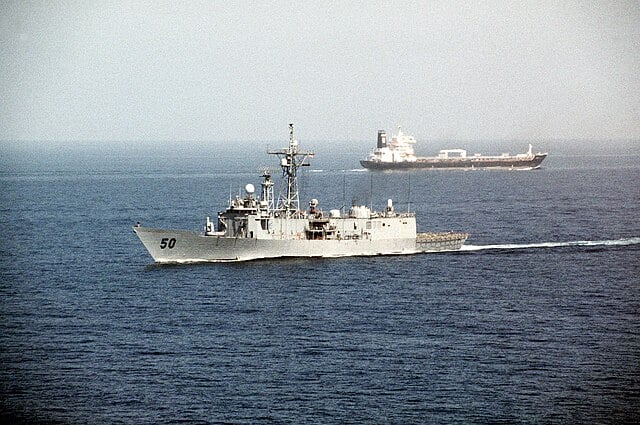
Maritime tracking data suggested the rhetoric on both sides was running well ahead of reality. Very few vessels were recorded transiting the strait on Friday, and a significant backlog of shipping remained trapped inside the Persian Gulf.
The civilian and military toll so far
The Israel Defense Forces disclosed new figures on the scale of the military campaign, reporting approximately 10,800 strikes on Iran since operations began. The US-based Human Rights Activists News Agency has documented 1,701 Iranian civilian deaths as of 7 April, the day Trump announced the conditional two-week ceasefire.
In Lebanon, where six weeks of parallel conflict have unfolded, the IDF said it had carried out more than 14,900 artillery strikes and 2,500 air strikes, hitting roughly 165 multi-storey buildings. Lebanese health authorities put the death toll at 2,100, with more than a million people — approximately one in five of the population — displaced.
Why oil markets remain on edge
Oil prices fell by nearly 10 per cent following Iran’s announcement that the strait was open, but analysts cautioned that the drop could prove premature. The head of the International Maritime Organisation told the BBC the shipping industry should remain “cautious”, and Iran’s insistence that all vessels follow a “designated route” added a further layer of uncertainty.
China, the largest buyer of Iranian oil and a country that receives roughly 38 per cent of its crude via the Strait of Hormuz, has been pressing Tehran to negotiate. Trump said President Xi Jinping was “very happy” about the reopening and pointed to a planned bilateral meeting on 14–15 May as potentially “historic”.
Separately, the US Treasury announced late on Friday that it would extend a waiver allowing purchases of sanctioned Russian oil, with the reprieve running until 16 May. The move came days after Treasury Secretary Scott Bessent had said such waivers would not be renewed. Trump had lifted restrictions on Russian oil exports in March as global prices surged amid the Iran conflict and instability around the strait.
Despite the diplomatic signals from multiple capitals, the gap between what is being claimed and what is happening on the water remains wide — and the ceasefire’s expiry date is approaching fast.
