


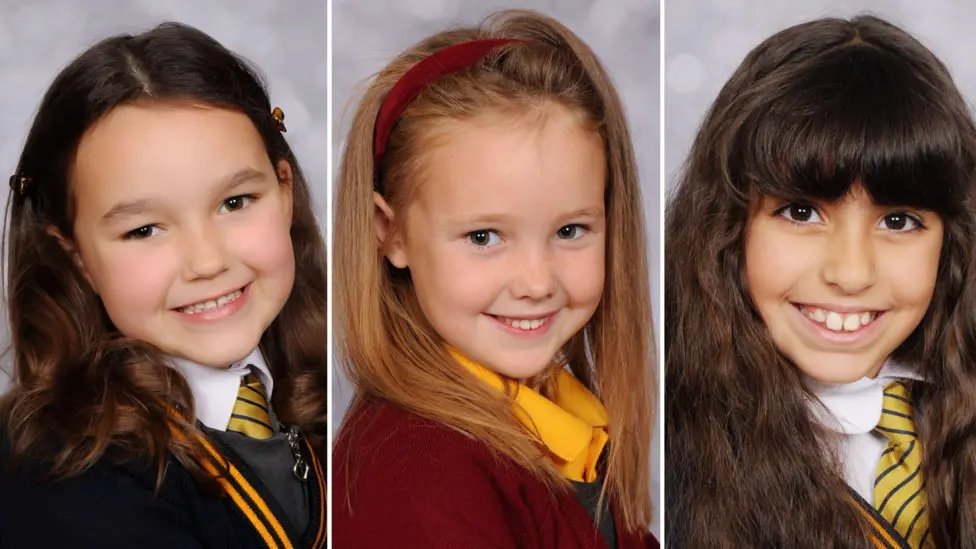
The parents of Axel Rudakubana withheld information about their son that would almost certainly have led to his detention before he launched the attack on a children’s dance class in Southport last summer, the public inquiry into the murders has concluded.
In a 760-page report published on Monday, Sir Adrian Fulford, chair of the Phase One inquiry, said Rudakubana’s mother and father had failed in what he described as a clear moral duty to alert the authorities to their son’s escalating behaviour. Had they done so, he wrote, the teenager “undoubtedly” would have been taken into care or held in custody before 29 July 2024, the day he walked into a Taylor Swift-themed class and killed three young girls.
Bebe King, six, Elsie Dot Stancombe, seven, and Alice da Silva Aguiar, nine, died in the attack. Eight other children and two adults suffered serious injuries.
What the Inquiry Found
Sir Adrian, a retired High Court judge, concluded that Rudakubana — 17 at the time of the killings — should have been in custody long before he reached Hart Space in Southport. He described a succession of missed chances stretching back years and condemned a “culture” in which agencies passed cases between one another rather than taking ownership of them.
That tendency, he said, was the “single most important conclusion” of the report. “This failure lies at the heart of why [Rudakubana] was able to mount the attack, despite so many warning signs of his capacity for fatal violence.”
Among those criticised were Lancashire Police, the Prevent counter-extremism programme, NHS mental health services, Lancashire County Council, children’s social care, youth offending services and the wider multi-agency framework meant to coordinate their work. Sir Adrian said the young man’s autism had repeatedly been used as an “excuse” for alarming conduct, when in his particular case the diagnosis ought to have been recognised as heightening the risk he posed to others.
He was equally scathing about the failure of professionals to scrutinise Rudakubana’s online activity. “I have no hesitation in concluding that the degrading, violent and misogynistic material that [Rudakubana] was viewing online contributed to and ‘fed’ his already unhealthy fascination with violence,” he wrote.
Why the Warning Signs Were Not Acted Upon
The report identifies a 2019 assault at Range High School in Formby, in which Rudakubana struck another pupil with a hockey stick shortly after being expelled for carrying a knife, as a “watershed moment”. Sir Adrian said the incident established “beyond doubt” that the boy was driven by a desire to seriously injure or kill a fellow pupil, and that nothing in the following five years suggested that danger had receded.
A second episode in March 2022 drew particularly sharp criticism. Rudakubana was reported missing and later found by Lancashire officers on a bus carrying a knife, but was returned home without arrest. Sir Adrian called it “the most marked example of the consequences of poor information sharing”, noting that a search of the family home at that point would probably have uncovered the ricin seeds Rudakubana had purchased and the terrorist manuals he had downloaded.
Lancashire Constabulary’s Chief Constable, Sacha Hatchett, accepted the finding. “I am extremely sorry for this,” she said, acknowledging that officers had missed an opportunity to detain him.
Convicted Rapist on Day Release Attacks Student While Unsupervised
The sharpest personal rebuke was reserved for the killer’s father, Alphonse Rudakubana, whom the inquiry found had deliberately concealed knowledge of his son’s stockpile of weapons, including ricin. Giving evidence last year, the father wept as he apologised and said he had not contacted police in the run-up to the attack because “the love I had for him overrode [my] good judgement”. Sir Adrian acknowledged that life with the teenager had been “a nightmare” for his parents, but said their reluctance to act had been rooted in a “misguided and irresponsible” wish to keep him out of care.
A System That Failed at Every Turn
Describing Rudakubana as an “aggressive, near-total recluse” who bullied his family and lied routinely to officials, Sir Adrian said the inquiry had exposed systems of oversight and protection that were either poorly used or entirely ineffective. “The consequences were catastrophic,” he said.
The report makes 67 recommendations, centred on better information sharing and closer coordination between the bodies responsible for identifying dangerous individuals.
Home Secretary Shabana Mahmood said the government was determined to “take the necessary action to reduce the risk of such an attack happening again”, while Prime Minister Sir Keir Starmer pledged “the fundamental changes needed to keep the public safe”.
Mahmood also set out the terms of reference for the second phase of the inquiry, which begins immediately and is due to report in spring 2027. It will examine how agencies manage individuals fixated on extreme violence, laws governing knives and weapons, and the role of the internet and social media.
Nicola Ryan-Donnelly of Fletcher’s solicitors, representing 22 of the injured and traumatised children, called the findings “disturbing and frankly depressing” and urged that the demands for accountability “must be acted upon”. Mark Wynn, chief executive of Lancashire County Council, said the authority was “deeply sorry” and had committed to implementing every recommendation in full.
