


Home Office data showing that several thousand non-Ukrainians have entered the UK through the emergency visa schemes created after Russia’s 2022 invasion has reignited a political row over the integrity of Britain’s humanitarian immigration routes.
Figures obtained and analysed by The Telegraph indicate that 3,464 visas were issued to nationals of 112 other countries under the two programmes — Homes for Ukraine and the family visa route — out of a total of 279,223 granted since the schemes began. That works out at roughly one in every 80 visas going to someone who is not a Ukrainian citizen.
What the Home Office data reveals
The schemes were designed to offer sanctuary to those fleeing Vladimir Putin’s war, either by joining relatives already settled in Britain or by being hosted by UK residents through the sponsorship programme. Non-Ukrainians became eligible where they applied alongside an immediate family member holding Ukrainian citizenship.
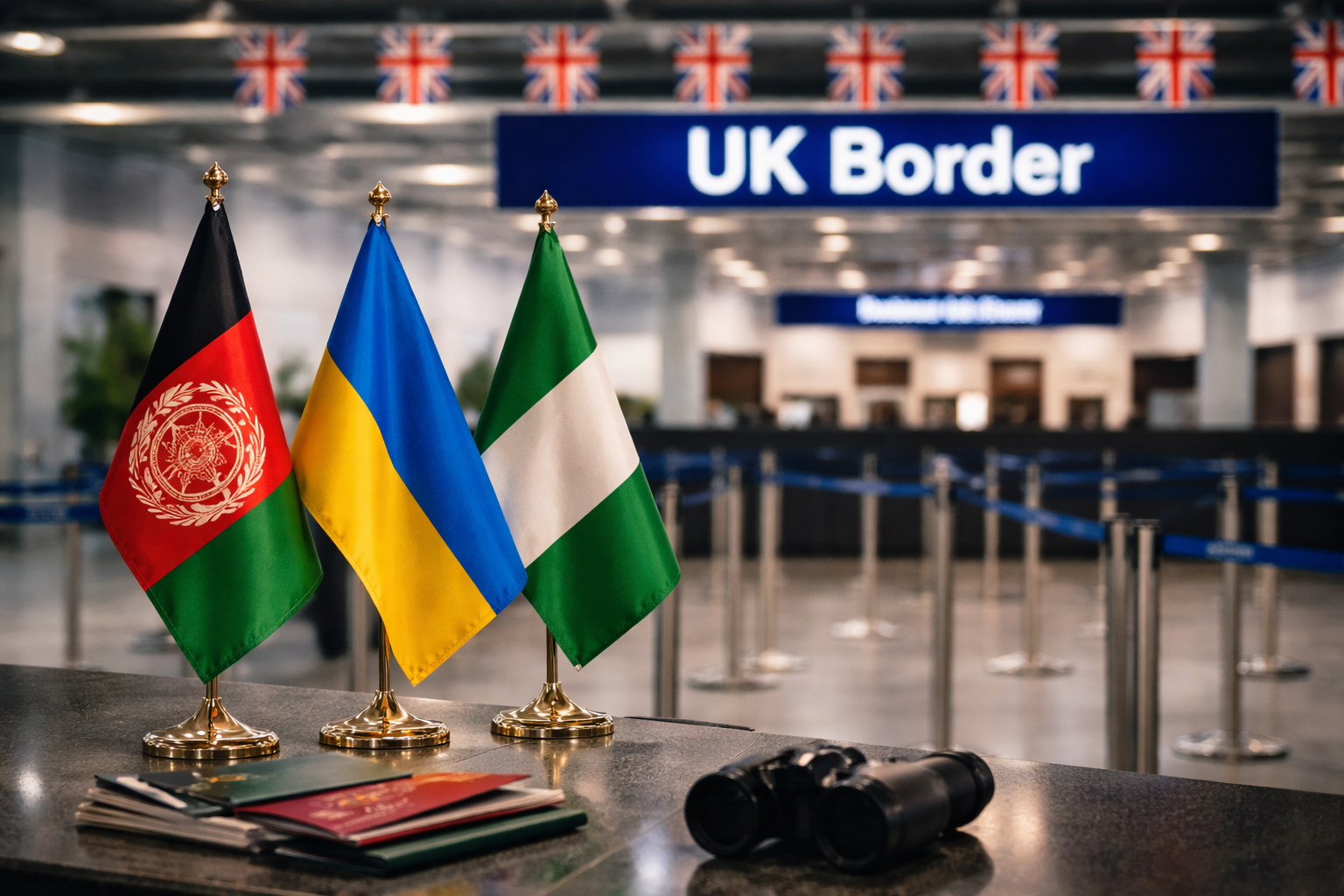
Russians make up the single largest group of non-Ukrainian arrivals, at 588. They are followed by 408 Nigerians, 294 Afghans, 161 Iraqis, 152 Moldovans and 149 Turks. Smaller numbers came from India, Belarus, Iran and Egypt, each contributing roughly 100 visas. The long tail of countries represented stretches from Ghana, Syria and Libya to Vietnam, Yemen and, at the lower end, a handful of Chileans and Argentines.
Launched under the Conservatives, both routes have continued under the Labour government as the conflict enters its fifth year.
Why the figures have reopened an old argument
The disclosures have landed in the middle of a long-running dispute over whether Britain’s post-invasion visa architecture has drifted beyond its original purpose. That argument intensified last year after a Palestinian family displaced by the war in Gaza successfully argued before an immigration tribunal that they should be admitted through the Ukrainian route in order to join a relative in the UK, on the grounds that no alternative pathway was available to them. The ruling was later overturned on appeal by the Home Secretary, Shabana Mahmood.
Chris Philp, the shadow home secretary, said the scheme was never intended to accommodate applicants from outside Ukraine. “The Government should not be allowing non-Ukrainians into the UK under the Ukrainian visa scheme. It is supposed to be for Ukrainians, not Afghans and Iraqis,” he said. Mr Philp argued that the Palestinian case illustrated how the European Convention on Human Rights was being used to stretch the boundaries of the programme, noting that the family concerned had been in Egypt at the time, and repeated his party’s position that Britain should withdraw from the convention.
Reform UK’s Home Office spokesman, Zia Yusuf, was similarly critical, accusing successive governments of losing control of the border and pledging that his party would end what he described as the misuse of the refugee route.
A system critics say is too easily stretched
Alp Mehmet, chairman of Migration Watch UK, acknowledged that the non-Ukrainian figures were modest in proportional terms but argued that the principle mattered more than the numbers. He suggested that generous judicial readings of the ECHR had left the wider asylum framework exposed, warning that people from conflict zones worldwide could now pursue human rights claims in the UK.
The Home Office defended the design of the programme. A spokesman said the Homes for Ukraine route remained “primarily for Ukrainian nationals”, and that third-country nationals qualified only when applying at the same time as an immediate Ukrainian family member. The department added that the schemes were explicitly temporary, did not offer a path to permanent settlement, and reflected Kyiv’s wish that its citizens eventually return home.
