


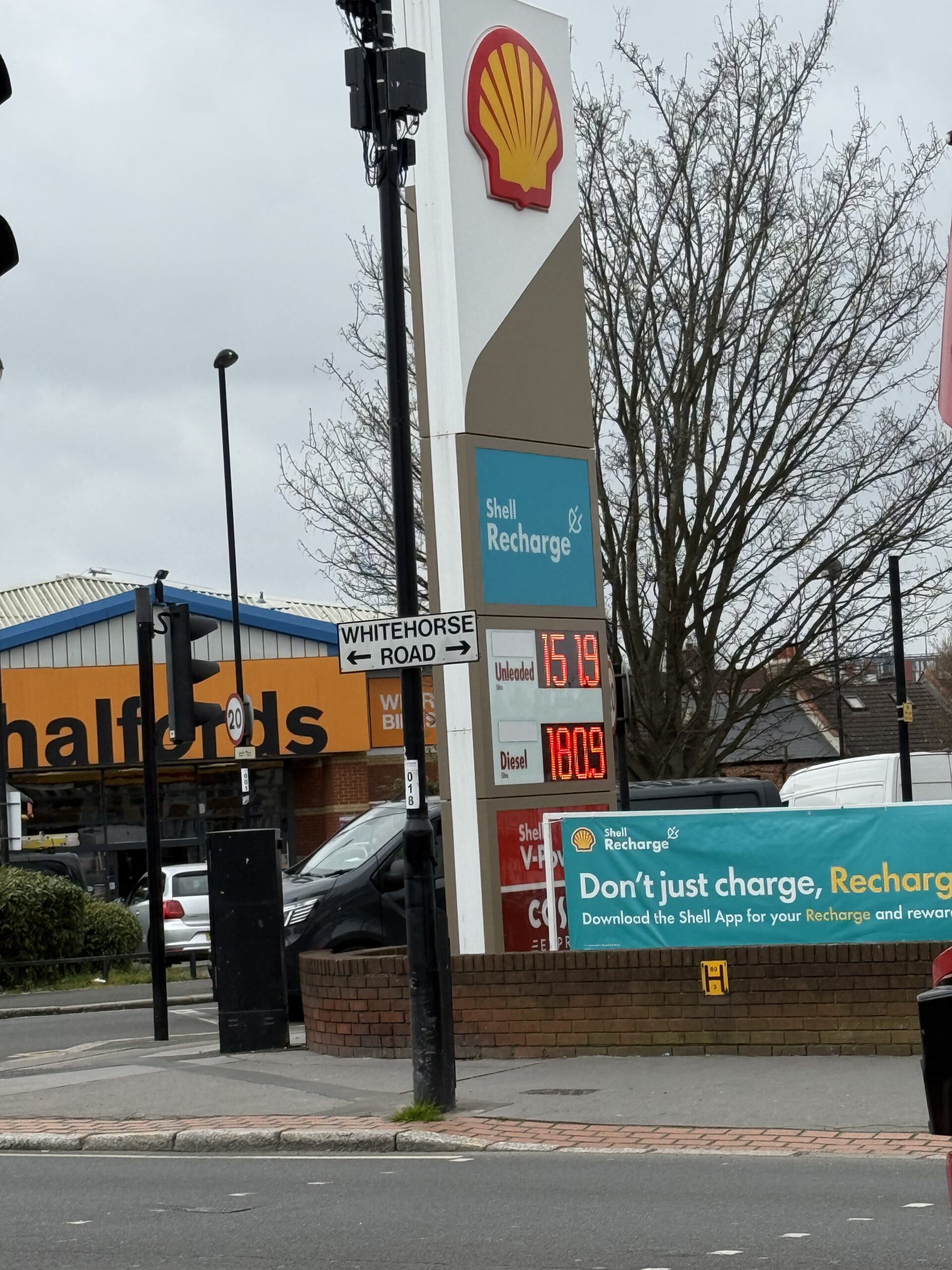
While Westminster debates warships and waterways, a quieter crisis is unfolding in kitchens and mortgage meetings across the country. A Dispatch Times analysis finds the Iran war has already added more than £1,400 to the average British household’s annual costs — and the hardest hit is still to come.
A war fought 3,000 miles away, paid for in Preston and Peckham
When the first American bombers took off for Iranian airspace on 28 February 2026, the Downing Street line was reassuring: Britain was not directly involved, and the economic fallout would be “contained.” Seven weeks later, that fiction has collapsed. The Iran war has become the most expensive foreign conflict for British household budgets since the 1973 oil shock — and unlike Ukraine, which triggered a visible energy crisis, this one is arriving in disguise, hidden inside mortgage renewal letters, fertiliser invoices and the quiet reshuffling of supermarket shelves.
Pulling together figures from the Commons Library, the Resolution Foundation, the Food and Drink Federation and the Bank of England, a single and uncomfortable picture emerges: the typical British household is now on track to be between £1,400 and £2,100 worse off over the coming year than it would have been had the conflict never begun. For millions of families refinancing a mortgage this spring, the number is significantly higher.
This is the bill nobody voted for.
The Resolution Foundation’s £480 shock — and why it’s only the floor
The most widely cited number so far comes from the Resolution Foundation, which in early April warned that working-age British households would be an average of £480 worse off in 2026 compared to pre-war projections. Real income growth, previously forecast at 0.9 per cent, has flipped to a 0.6 per cent contraction — a £480 swing per household driven almost entirely by the surge in energy, fuel and food prices since the Strait of Hormuz was first closed.
But the £480 figure is deceptively narrow. It measures the shift in projected income growth. It does not capture what is happening to the cost side of the household ledger — and that is where the real damage is being done.
1. The forecourt: 14p on a litre of petrol, 29p on diesel
According to the Commons Library’s April economic update, petrol prices rose by roughly 14 pence a litre — about 10 per cent — between the outbreak of war on 28 February and 23 March. Diesel, which powers the HGVs that restock every UK supermarket, climbed by 29 pence a litre over the same window: a 20 per cent rise.
For a two-car family driving the UK average of 7,400 miles a year on petrol alone, that is an extra £440–£500 a year at the pump. For a diesel-driving tradesperson doing 15,000 miles? Closer to £1,200 a year in added fuel costs, before any onward inflation hits their tools, materials or insurance.
The political consensus since the March ceasefire has been that pump prices will “normalise” — but the Iran reclosure of the Strait of Hormuz on 18 April has already sent Brent crude back above $100, and wholesale petrol futures are pricing in another leg upward through May.
2. The energy bill: a 75% wholesale gas shock heading for your summer cap
The second front in this household war is the one most people have not yet noticed, because the reckoning arrives in July.
UK wholesale natural gas prices surged by approximately 75 per cent between late February and late March. Under Ofgem’s price-cap mechanism, that wholesale shock feeds through with a lag. The April 2026 cap was set before the war and actually delivered a modest £117 saving to the average household. That saving is about to be wiped out, and then some.
British Gas’s own forecast pencils in a 9 per cent rise in the July price cap, with further increases expected in the October and January 2027 caps. For a typical dual-fuel household on the cap, that translates into roughly £170–£200 of additional energy costs over the second half of 2026 — and a full-year cost increase of well over £300 if the autumn and winter caps rise as predicted.
Households on fixed-rate tariffs are faring worse. Lenders and energy suppliers alike have spent the past six weeks repricing for a longer war.
3. The mortgage trap: the £1,000-a-year shock hitting one million borrowers
If there is a single group for whom this war has rewritten their financial year, it is the roughly one million UK households coming off fixed-rate mortgage deals between April and September 2026. And the Financial Conduct Authority has flagged exactly that number as being in the refinancing window.
The maths, supplied by analysts at Morningstar and echoed by academic economists writing in The Conversation, is brutal: two-year fixed mortgage rates that were averaging around 4.8 per cent in early February are now closer to 5.5 per cent and, on Octane Capital’s “worst-case” scenario in which the Strait remains blockaded, could hit 6 per cent before the summer is out.
On a £200,000 mortgage over 25 years, a jump from 4.8 to 5.5 per cent adds roughly £90 a month — close to £1,100 a year — to the household’s outgoings. Over a typical two-year fix, that is £2,200 that simply did not exist as a cost pre-war. For London and South East borrowers, whose balances routinely exceed £350,000, the figure is closer to £1,900 a year.
More than 1,500 mortgage products were withdrawn from the UK market in the first three weeks of the conflict as lenders scrambled to reprice. The Bank of England, which had been expected to cut rates at its 19 March meeting and again on 30 April, held at 3.75 per cent and is now, according to futures markets, more likely to raise rates than cut them before the year is out.
This is the single largest and least-discussed household cost of the war.
4. The weekly shop: the 9% food inflation warning
In mid-March, the Food and Drink Federation — the industry’s main UK body — nearly tripled its 2026 food inflation forecast, from 3.2 per cent to as much as 9 per cent by year-end. The trigger is not just fuel; it is the Persian Gulf’s role as a major hub for fertiliser and ammonia production. Fertiliser prices have spiked by as much as 60 per cent in some wholesale markets, and the UK government has privately modelled a scenario in which CO₂ inventories — essential for fresh-food packaging, from bagged salads to packaged meats to fizzy drinks — could fall to as little as 18 per cent of current levels.
For context: a 9 per cent food-price rise translates to roughly £600–£720 a year on the grocery bill of the average UK family of four, which the ONS puts at around £7,800 annually. That is on top of the cumulative food inflation already absorbed since 2022.
The National Farmers’ Union has warned that the impact on British-grown produce is itself being driven by the conflict, because UK farmers are paying more for fertiliser and diesel to run their combines. This is not imported inflation. It is homegrown, grown in fields in Lincolnshire and Suffolk, priced by a war in the Gulf.
5. The invisible costs: helium, jet fuel and the things you haven’t thought about
Some of the Iran war’s bills will arrive months from now, in places nobody is watching yet.
- Jet fuel. The International Energy Agency has warned that Britain is one of the most exposed European economies for jet-fuel supply; flight cancellations across UK airports have been floated as a plausible scenario from May onwards if Qatar’s LNG and refining capacity does not recover. A summer of cancelled holidays and compensation claims would ripple through household budgets in ways that do not show up in the ONS inflation basket.
- Helium. Qatar produces around 30 per cent of the world’s supply. Helium is essential to semiconductor manufacturing, MRI scanners and a long list of industrial processes. Expect supply-chain disruption in consumer electronics and medical diagnostics to filter through by autumn.
- Insurance. Shipping insurance premiums through the Gulf have multiplied several times over since February. Those costs are being passed on in the price of anything that crosses an ocean — from the trainers on a teenager’s feet to the components of a new boiler.
Why Britain is taking this harder than most
Much of Europe is absorbing the same shock. But Britain is taking it worse, for three specific reasons.
First, the UK imports around 44 per cent of its energy, an unusually high share for a G7 economy. That exposure means global price spikes travel faster and further through the British economy than through, say, France’s nuclear-powered grid or Norway’s hydropower base.
Second, the UK entered this war with inflation already elevated and growth already weak. The Bank of England’s pre-war plan was a gentle glide path of rate cuts through 2026. That plan is in ashes. The result is that mortgage pain and cost-of-living pain are arriving on the same doorstep at the same moment — a combination most continental economies are not facing.
Third, the UK’s food supply chain has been repeatedly flagged as fragile by its own industry. The twin dependencies on imported fertiliser and on gas-intensive domestic production make British shelves unusually sensitive to Gulf disruption.
The uneven bill: who pays the most
The most politically explosive finding buried in the Resolution Foundation’s work is the distribution. The poorest fifth of UK households are now expected to see income growth of just 1.2 per cent this year, barely half the 2.8 per cent projected before the strikes. There is one significant offset: larger low-income families benefit from the abolition of the two-child benefit cap, projected to deliver income growth of 7.7 per cent for that specific group. For low-income households with one or two children, however, growth is effectively zero.
In short: the Iran war is being paid for disproportionately by working-age, low-and-middle-income households with small families and by middle-income mortgage holders in the commuter belt. Pensioners on the triple lock and the wealthy, whose energy and food costs represent a smaller share of their income, are largely insulated.
This is not a war tax that has been debated in Parliament. It is one that has arrived, unannounced, on council estates and in the Home Counties alike.
What happens next
Three scenarios dominate the forecasting conversation inside the City.
The optimistic path — oil retreating to $70–75 by May, a functioning ceasefire, and the Bank of England delivering a rate cut by Q3 — would see the household damage broadly contained within the £1,400 range. Even then, the food inflation and energy-cap pipeline means British families will feel this conflict well into 2027.
The base case, which most analysts now quietly favour, has Brent stuck in the $85–100 range through the summer, the Bank holding rates all year, mortgage pricing stabilising around 5 to 5.5 per cent, and the total household bill landing closer to £1,800–£2,100.
The worst case — with Hormuz repeatedly closed, structural damage to Qatari LNG production, mortgage rates touching 6 per cent and food inflation overshooting 9 per cent — would push the total household cost to north of £3,000 for a typical mortgaged family. At that point, the political arithmetic of the Starmer government, already under strain, becomes genuinely difficult.
As of this weekend, with Iran again warning shipping away from the Strait and ceasefire talks visibly fraying, the worst case is no longer a tail risk. It is the one the Treasury is quietly modelling.
The bill nobody budgeted for
There is a tendency in wartime coverage to focus on the geopolitics: the warships, the tonnage, the threats traded across podiums. It is the more cinematic story. But for the vast majority of British households, the Iran war is not being experienced in the Persian Gulf. It is being experienced at the petrol pump, at the checkout, in the letter from the mortgage broker and in the Ofgem update that lands in the inbox in June.
No chancellor has stood up to say so. No minister has quantified the hit. The Office for Budget Responsibility’s formal reassessment is not due until the autumn. Yet the data is already in, and it is unambiguous: this is the most expensive foreign policy episode for British household finances in a generation.
Britain may not have fired a shot in this war. It is paying for it anyway.
Dispatch Times analysis draws on data and forecasts published by the House of Commons Library, the Resolution Foundation, the Food and Drink Federation, the Bank of England, the International Energy Agency, British Gas, Moneyfacts, Octane Capital, the National Farmers’ Union, Morningstar, and the Financial Conduct Authority. All figures reflect the most recent publicly available projections as of 18 April 2026.
