


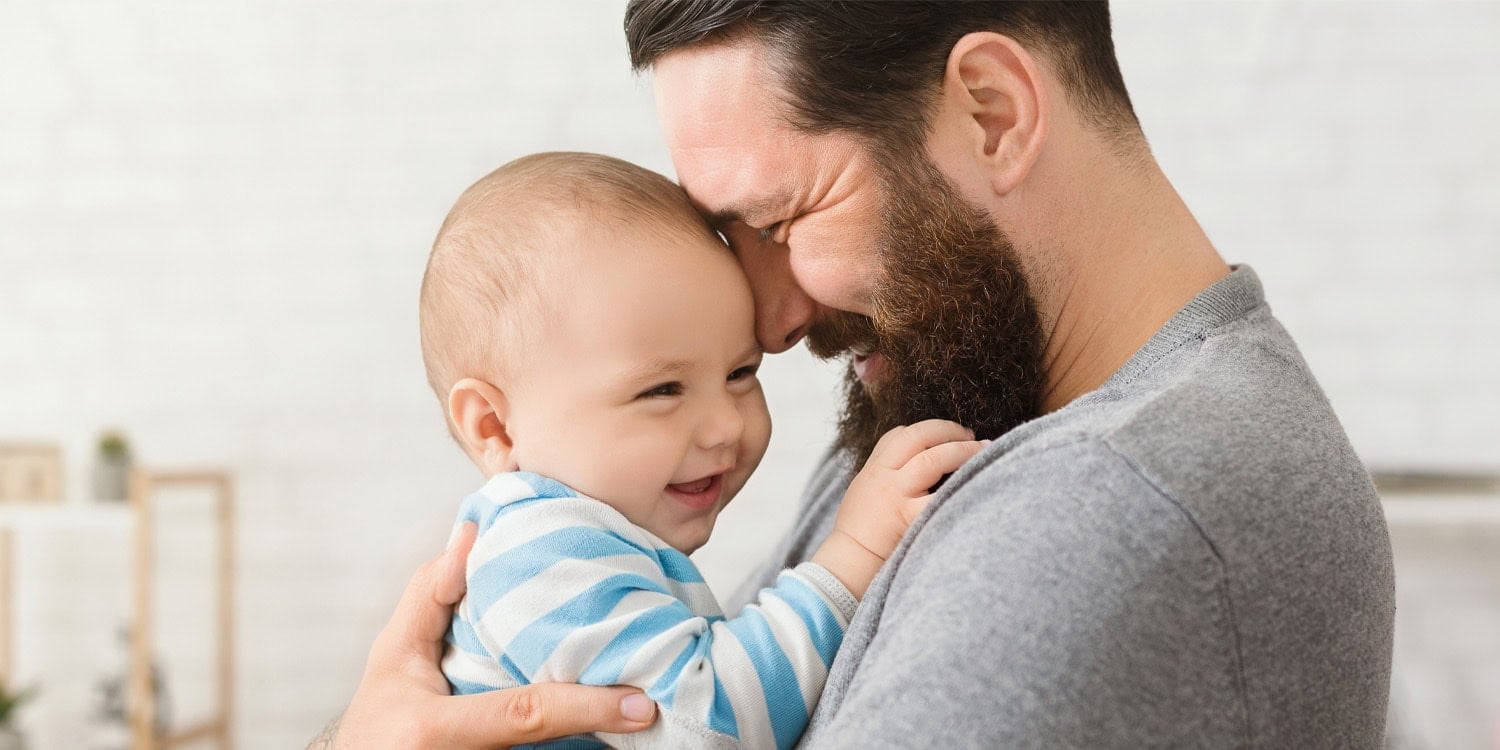
Scientists have found that the scent of a father can help babies align their brain activity with unfamiliar adults, potentially boosting the pace at which they socialise. In a small study, infants exposed to their father’s natural body odour demonstrated greater neural synchrony with strangers during brief interactions, a finding published in Science Advances.
Interbrain synchrony occurs when the brain waves of two people pulse in harmony during social interaction, helping infants tune their developing social brain to the surrounding environment and guiding caregivers in providing sensory input.
Previous research has shown that maternal body odours can calm infants and increase neural synchrony with unfamiliar adults, acting as an evolutionary signal of safety and aiding infants in orienting to faces while reducing neural responses to fearful faces.
The new study asked whether paternal odour might play a similar role, recognising that fathers often engage in higher-energy play that fosters positive arousal and exploration, thereby supporting the development of attention and cognitive skills.
Yaara Endevelt-Shapira, a researcher affiliated with Reichman University in Israel and the University of Washington, together with Linoy Schwartz and Ruth Feldman, led the investigation. The team sought to determine whether infants respond to their father’s scent as a sensory cue that helps them form neural connections with people beyond the family.
The study recruited 40 infants aged five to twelve months and their biological fathers. To capture scent, fathers wore a 100 percent cotton T-shirt for two consecutive nights, avoiding scented products and foods that could markedly alter body odour.
In the laboratory, researchers employed dual-electroencephalography (EEG) to record brain activity from both infants and adults simultaneously, ensuring the recordings were synchronised down to the millisecond.
In the first phase, infants interacted with their own fathers and with an unfamiliar male experimenter in three-minute sessions that were toy-free and devoid of physical contact.
The infants exhibited higher interbrain synchrony with their own fathers than with the stranger, and this synchrony was observed specifically in the alpha frequency band—the brain rhythm that develops in the latter half of the first year of life and is linked to attention regulation, working memory and visual processing.
The neural connection linked the father’s left central brain region, responsible for sensorimotor processing and skill execution, with the infant’s right temporal region, a core area for processing social information including biological motion and attention.
In the second phase, researchers tested how the father’s scent influenced the infant’s interaction with the unfamiliar male. Each infant experienced two sequential sessions with the stranger: in one, the t-shirt bearing the father’s body odour was placed near the infant; in the other, a blank unworn shirt served as a control.
When the father’s scent was present, neural synchrony between the infant and the stranger increased, aligning with the pattern seen when the infant interacted with the actual father. The researchers found no statistically significant difference between the odor condition and the real-father condition in this regard.
Video analyses demonstrated that the father’s scent boosted the infant’s positive arousal during the stranger interactions, as evidenced by more frequent smiling, laughing, cooing and changes in posture such as leaning forward or backward.
There was a correlational trend: infants who spent more time looking at the stranger’s face and displayed greater engagement tended to show a larger rise in neural synchrony when the father’s odour was present.
The study also collected information from fathers about their usual level of involvement in childcare. Infants whose fathers reported higher daily involvement showed a more pronounced increase in neural synchrony in the presence of the paternal odour.
The researchers note that caregiving behaviours are highly variable and do not map neatly onto biological sex. Differences observed between this paternal scent study and previous maternal scent research may reflect variations in parenting styles, parental mental states, or levels of childcare involvement.
Given that the infants were in a developmental window when alpha brain rhythms are still maturing, the researchers caution that age-related changes could influence the observed patterns. Future studies with a narrower age range could clarify how this brain rhythm evolves over the first year of life.
Using a blank shirt as a control raises the possibility that infants were responding to a general human scent rather than their father’s odour specifically, though the stranger’s own scent accompanied both conditions. The continuous presence of a scent could also lead to olfactory habituation, with diminishing perception over time.
The researchers acknowledge that more precise odour delivery methods may be required to capture dynamic changes in brain activity. They also suggest future work could examine the emotional state of fathers during scent collection, and extend investigations to populations with developmental differences, such as infants at greater risk of autism.
The study, Scent of a father: Paternal body odors boost interbrain synchrony, is credited to Yaara Endevelt-Shapira, Linoy Schwartz and Ruth Feldman.
