


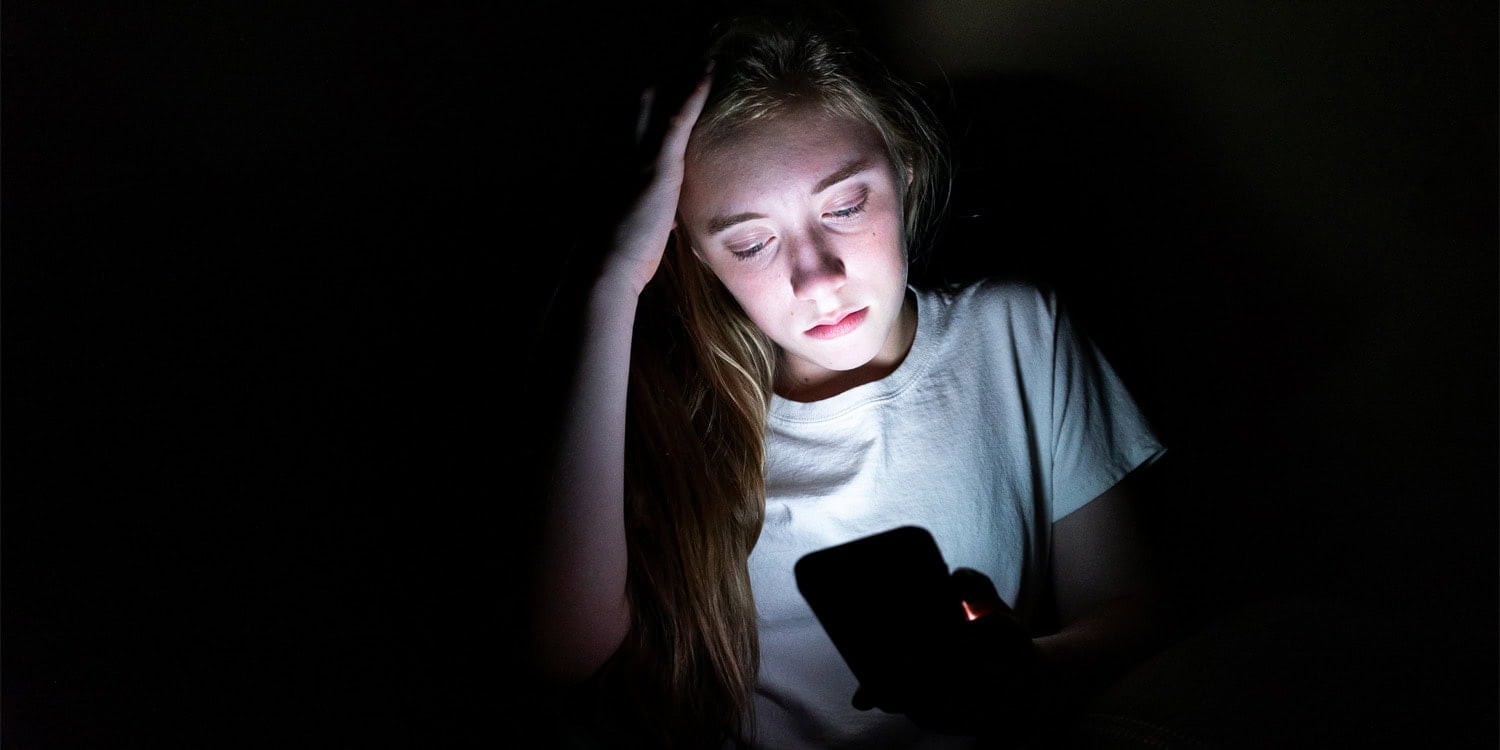
A new study published in npj Mental Health Research has found that adolescents’ sleep patterns, measured objectively with a wearable device, are linked to how they regulate their emotions. Analysing data from 1,371 teenagers in the Adolescent Brain Cognitive Development (ABCD) study, researchers report that highly variable sleep schedules are associated with greater inward‑directed distress such as anxiety and depression, and with a greater reliance on expressive suppression. The association appears strongest among teenage girls, suggesting that stable sleep routines may help safeguard emotional well‑being.
Adolescence is a sensitive developmental period marked by the emergence of new emotional challenges and the refinement of emotional coping skills. During this time, many young people begin to experience internalising symptoms, which are difficulties directed inward, such as feelings of anxiety, depression and social withdrawal. To navigate these feelings, adolescents rely on emotion regulation to manage their emotional responses.
Two common strategies for regulating emotion are cognitive reappraisal, which involves reframing a situation to change its emotional impact, and expressive suppression, which involves hiding or inhibiting the outward display of feelings. Physical health behaviours, particularly sleep, are believed to play a role in how adolescents manage these emotional processes.
A series of recent studies has linked sleep to self‑control and emotional coping, with newer work turning to objective sleep data rather than self‑reported sleep quality. The authors note that sleep problems and mental‑health difficulties are known to influence one another, but much of the existing research relies on parental report or adolescents’ own statements about how they sleep.
Led by Andrea N. Goldstein-Piekarski, an assistant professor of psychiatry and behavioural sciences at Stanford University’s School of Medicine and director of the CoPsyN Sleep Lab, and Sarah Izabel, a graduate student at Stanford, the team sought to examine whether sleep aspects measured by a Fitbit device relate to symptoms such as sadness, worry and anxiety and to the strategies adolescents use to regulate their emotions.
Data came from 1,371 teenagers with an average age of 14 who participated in the ABCD study. Sleep data were collected with Fitbit devices worn for up to three weeks. To ensure reliability, the researchers included only participants with at least three weekdays and one weekend day of usable sleep tracking per week.
The participants were categorised into two groups by average nightly sleep duration: a short sleep group sleeping just over seven hours or less, and a non-short sleep group sleeping more than seven hours.
The investigators calculated sleep duration variability, which measures how much a participant’s sleep length fluctuated night to night on weekdays, and sleep onset time, the average time a participant fell asleep. Mental health was assessed with the Brief Problem Monitor, which gauges internalising symptoms, and the Emotion Regulation Questionnaire for Children and Adolescents, which evaluates the use of cognitive reappraisal and expressive suppression.
The data revealed several links between sleep and emotional well‑being. Adolescents who slept around seven hours or less reported greater internalising symptoms than those who slept longer, and later sleep onset times were similarly associated with higher levels of internalising symptoms.
Inconsistent sleep schedules also played a role; higher variability in sleep duration was linked to more internalising symptoms, with the association stronger in teenage girls than in teenage boys.
Sleep irregularity was also linked to expressive suppression. Adolescents with highly variable sleep durations were more likely to report suppressing their emotions, whereas neither short sleep duration nor late sleep onset times were associated with expressive suppression.
“Taken together, these findings emphasise that sleep is important to mental health, but they also show that the relationship is nuanced,” the researchers noted. “It depends on which aspect of sleep and which mental health outcome you examine, as well as factors such as sex.”
When looking at cognitive reappraisal, however, the researchers did not find a relationship with any of the sleep measures. “From past literature, we anticipated that a greater tendency to use adaptive emotion regulation strategies, including cognitive reappraisal, would be associated with better sleep, but this was not borne out,” the researchers told PsyPost.
“Cognitive reappraisal is a more complex skill that continues to develop through adolescence, so our older teens may have had relatively stable reappraisal abilities that were less sensitive to short-term sleep patterns,” they explained. “It is also possible that links between sleep and reappraisal emerge over longer periods than the one‑week window we assessed.”
The findings align with earlier PsyPost coverage noting irregular sleep patterns are linked to internalising symptoms in 14‑year‑olds and that poor teen sleep is linked to anxiety and depression, though the new study advances this by using objective sleep tracking rather than self‑reported data.
The researchers caution that the study looked at sleep and mental health at a single point in time, so it cannot establish causality. It is possible that irregular sleep causes emotional distress, but it is equally possible that experiencing internalising symptoms leads to a disrupted sleep schedule.
Other caveats include the use of a consumer wearable to measure sleep, which estimates sleep based on movement rather than direct brain activity. The group studied was also more likely to be White and have parents with education beyond high school, so findings may not apply equally across all adolescent populations.
An important next step, the authors say, is longitudinal research following adolescents over time and across developmental periods to clarify the timing of sleep–mental health relationships. They suggest examining whether changes in sleep variability predict later changes in emotional well‑being for early to late adolescence and across different stages from around 10–13 years to 18–21 years.
They also emphasise the need to explore the direction of these associations, including whether emotional difficulties lead to sleep disruptions, and to test whether improving sleep—by ensuring adequate duration, more consistent schedules and earlier bedtimes—can bolster emotional health.
Ultimately, the authors conclude that different facets of sleep—duration, duration variability and timing—are each linked with adolescent mental health. They describe these as modifiable sleep behaviours that can be improved, and advocate supporting sustainable sleep routines as a practical approach to underpin teen well‑being. The study was authored by Sarah Sampaio Izabel, Orsolya Kiss, Adam J. Krause, Ethan T. Hunt, Sarahjane L. Dube, Nicholas Allgaier, Alexandra S. Potter, Micah E. Johnson, Hugh Garavan, Fiona C. Baker and Andrea N. Goldstein‑Piekarski.
