


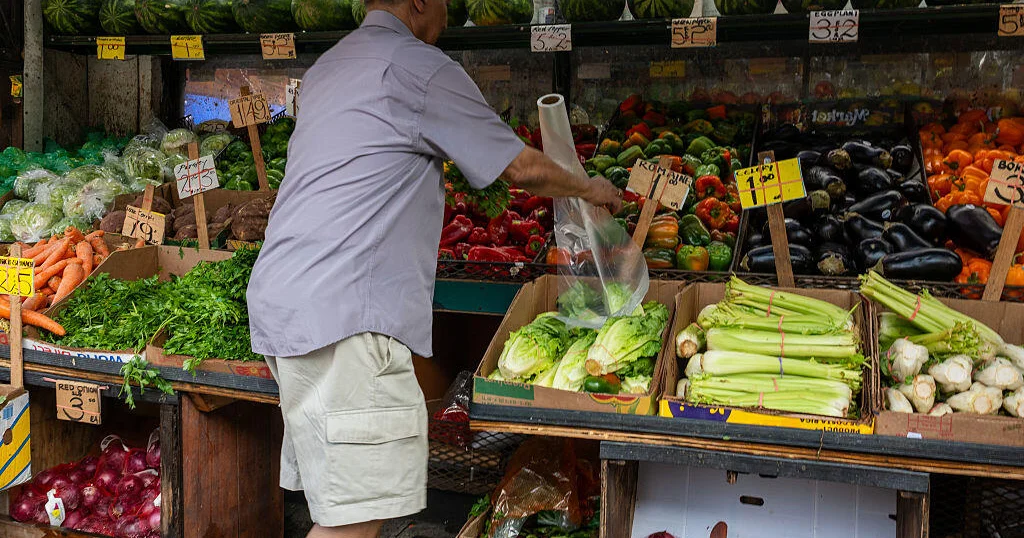
Food safety recalls and a major cyclospora outbreak have become an unexpected political battleground ahead of the US midterm elections, with Democrats blaming the Trump administration’s cuts to public health agencies and Republicans accusing them of scaremongering.
The outbreak, linked to lettuce, sickened almost 20,000 people between May and August across 21 states, making it the largest recorded outbreak of the parasite. The figure compares with 1,180 laboratory-confirmed cases during the same period in 2025.
Restaurants including Chipotle and Taco Bell removed lettuce, jalapeños and other suspected ingredients from their menus as a precaution. The episode, alongside the recall of tens of thousands of pounds of imported meat, fuelled public concern over whether food bought in shops and restaurants was safe to eat.
Teresa Murray, consumer watchdog director at the US Public Interest Research Group, said the combination of well-known restaurant chains and the scale of the outbreak had made food safety more immediate for consumers.
“One of the reasons food safety is in the news this year, and people have been rightfully concerned, is the combination of high-profile restaurant names and the absolute colossal number of illnesses,” she said. “It’s thousands of people. It makes it more real.”
Food safety becomes an election issue
Democrats have used the outbreak to attack President Donald Trump’s budget priorities and the role of Health and Human Services Secretary Robert F Kennedy Jr.
The Democratic National Committee published a list of recalled food products while calling Mr Kennedy a “complete disaster” who should resign. Senator Elizabeth Warren said: “Trump is dismantling our government — and it’s harming people,” linking cuts to food safety agencies with the cyclospora outbreak.
Representative Gabe Amo, a Democrat from Rhode Island, called on Mr Trump to “stop gutting the FDA & restore its inspectors”. The campaign for Representative Judy Chu, a California Democrat, said the country had seen “far too many food recalls this summer”.
The administration has rejected the criticism. HHS spokeswoman Grace Davis Jamison said FDA staff involved in outbreak investigations had not been affected by staffing changes or reductions in force, and that the CDC laboratory supporting investigations remained operational.
“The Trump Administration has mounted a robust response to each outbreak, working closely with health departments in all 50 states and leading the public health response by promptly identifying known sources and providing Americans with the information they need to protect themselves,” she said.
The FDA has also said recalls in the 2026 financial year are among the lowest recorded in more than a decade. HHS senior adviser Calley Means accused Democratic operatives of attacking the agency for carrying out its work.
However, food safety experts have questioned the figures used by the administration. The FDA total cited includes drugs and medical devices as well as food, making it misleading to use it as evidence that food recalls have fallen, said Susan Mayne, who led the agency’s food safety and applied nutrition centre from 2015 to 2023.
What the recall figures show
There have been about 200 food recalls so far in 2026, broadly in line with the number at the same point last year, according to data cited by the US Public Interest Research Group.
Across a longer period, recalls have increased. The FDA and the US Department of Agriculture recorded 320 food recalls in 2025, compared with 296 in 2024, while the total rose by 21% between 2021 and 2025. Much of that increase was driven by Class I recalls, the highest-priority category because products may cause serious illness or death.
But recall totals do not provide a complete picture. Agencies do not publicise every recall, particularly when products are no longer available, and one contaminated ingredient can generate several recalls when it is used in processed foods.
Epidemiologists say the number of people falling ill is a more useful measure. Craig Hedberg, a public health professor at the University of Minnesota, said the broader trend in bacterial contamination involving E. coli, listeria and salmonella suggested that fewer people were becoming ill in individual outbreaks.
“That’s an indication we’re finding more outbreaks and finding more when they are smaller and limiting the extent to which they can get bigger,” he said.
Despite that, an estimated 48 million people in the US experience foodborne illness each year. A July Quinnipiac University survey found that most registered voters had little or no confidence in government oversight of food safety, with Democrats more likely than Republicans to distrust the protections in place.
A separate survey found that 94% of US adults were concerned about the frequency of food recalls. The proportion of consumers who strongly agreed that the country’s food system produced safe food fell to about 30% in August, from 40% in November 2025.
Almost half of consumers said they had changed which groceries they bought in the previous month because of food safety concerns, while 40% had altered their restaurant purchases. Concern about exposure through fresh vegetables also increased.
Dispute over food safety policy
Public health groups say the administration’s stated ambition to make food safer is at odds with decisions affecting inspection, prevention and traceability.
Mr Trump said in August that he would make it easier for small livestock operations to slaughter and process their own meat, prompting concern that inadequately inspected beef could enter the food system. He also announced plans to import more beef from Argentina and Brazil, despite questions about inspections and safety.
The administration withdrew a proposed rule that would have prevented the sale of raw turkey and chicken containing high levels of salmonella. It also delayed a requirement for grocery shops and companies to keep additional records allowing contaminated food to be traced quickly through supply chains. The rule’s implementation was moved from January this year to July 2028 after stakeholders raised concerns about the time needed to comply.
Sarah Sorscher, regulatory affairs director at the Center for Science in the Public Interest, said: “There’s a level of hypocrisy from the administration when they promise to make our food safer and then eviscerate the agencies and programs that detect and prevent outbreaks.”
The debate has also affected consumer behaviour and the food industry. Sandra Eskin, chief executive of the non-profit organisation Stop Foodborne Illness, said people needed confidence in fresh produce if they were to eat more of it.
“If you want people to eat real food, fresh fruits and vegetables, they have to be safe,” she said. “Instead, we have had farmers plowing under fields because people aren’t buying lettuce.”
