


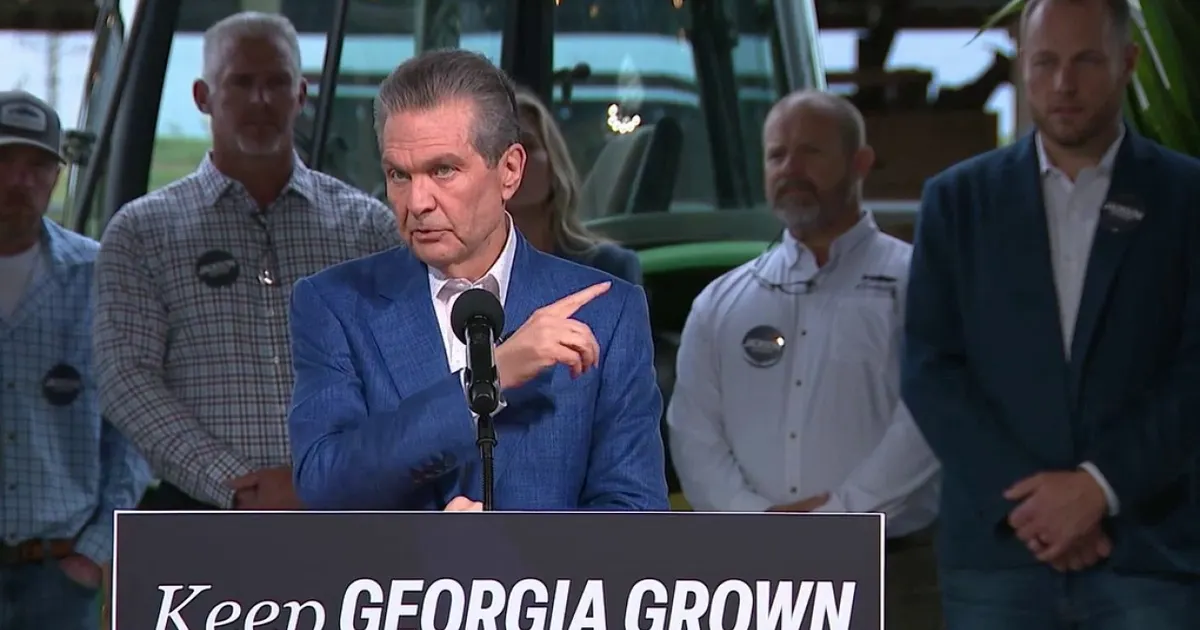
Republican candidate Rick Jackson has unveiled an agricultural platform in Canton, promising financial support for farmers and automatic gas tax relief during periods of soaring fuel prices.
Speaking at a farm in Cherokee County on Thursday, Jackson said his proposals were intended to shield Georgia’s producers from rising equipment, supply and diesel costs, as well as sudden disruption caused by events such as wars and hurricanes.
Rick Jackson’s Georgia agriculture plan
The plan includes what Jackson described as efficient, cost-effective capital solutions for farmers facing heavy financial pressures. He also pledged to protect key agricultural tax exemptions, including GATE, amid rising prices for machinery and supplies.
Jackson said an automatic mechanism would reduce gas taxes when market prices surged, lowering the cost of diesel used to harvest and transport crops. He did not set out the legislative process that would trigger the relief or explain how the state would replace any lost revenue.
“You are our number one industry,” Jackson said, arguing that Georgia’s economic growth depended on backing the agricultural sector.
He said the proposal would provide support when international or natural events squeezed farmers’ margins, adding that Georgia should not impose an additional tax burden on the people producing its food.
Jackson presented the policy as a longer-term commitment to rural communities and farming families, saying agriculture was central to the state’s future.
Keisha Lance Bottoms campaign responds
The announcement drew a response from the campaign of Democratic nominee Keisha Lance Bottoms, who said her own proposals would focus on agricultural education, protecting family farms and helping more farmers compete for federal programmes.
“Keisha is the only candidate who will stand up for Georgia’s number one industry,” a campaign spokesperson said.
The competing plans place farming alongside the cost of living at the centre of the contest between Jackson and Bottoms, with both campaigns seeking to appeal to voters affected by higher household and business costs.
Neither campaign has published detailed estimates of the financial impact of its agricultural proposals. Jackson has also yet to specify how his proposed gas tax relief would work in practice or how any reduction in state revenue would be funded.
