


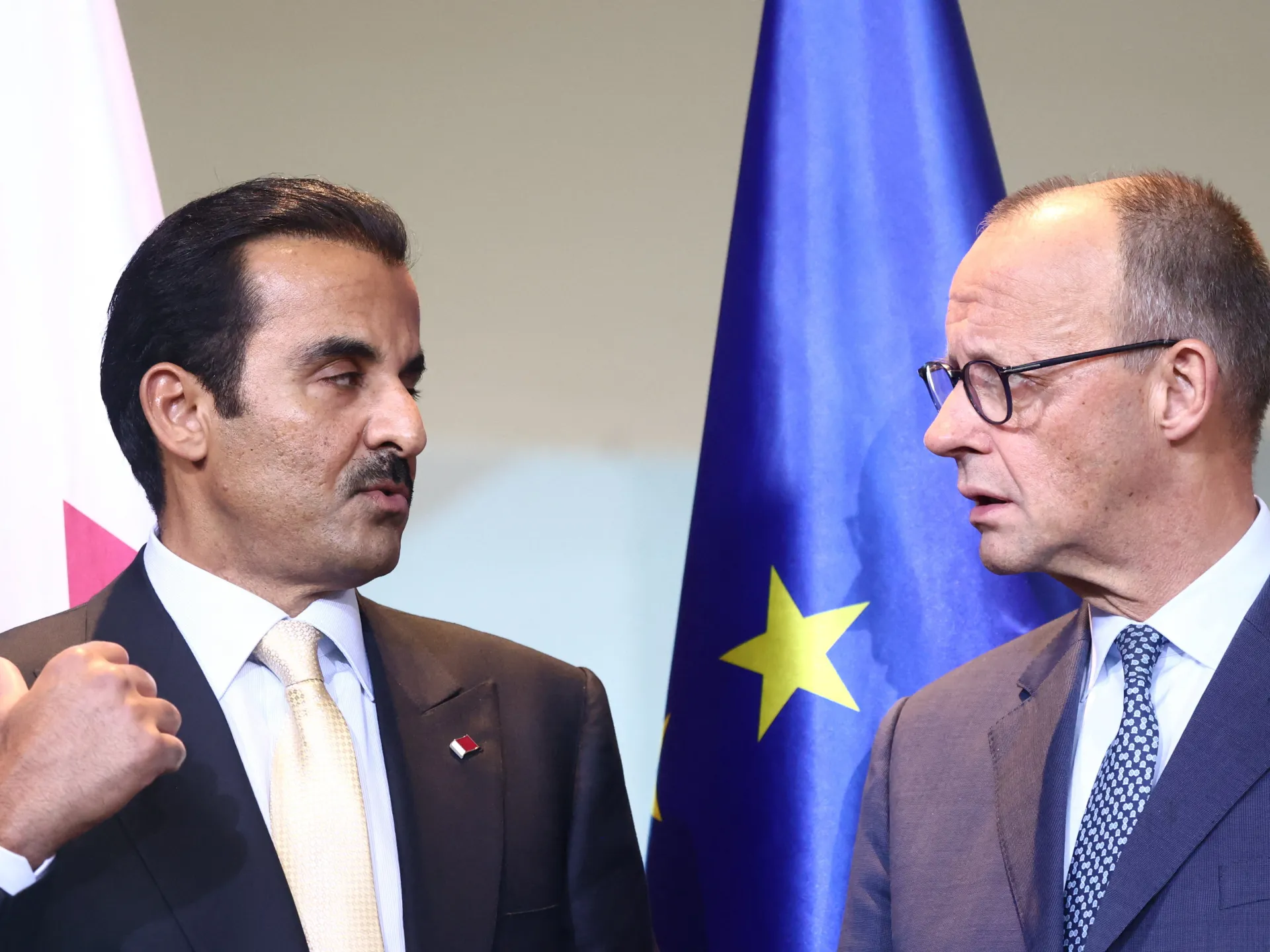
Qatar and Germany are to deepen their defence and technology ties after the Emir of Qatar held talks with German leaders in Berlin, with Chancellor Friedrich Merz saying Doha had pledged a further €15 billion (£? no, source gives $16.5bn; avoid conversion) in investment.
Mr Merz said the new investment would support co-operation in artificial intelligence, computer chips and aviation. The two countries also agreed to work more closely on security and protection against cyberattacks.
Germany is interested in developing partnerships between its defence industry and Qatar, the chancellor said at a joint news conference with Sheikh Tamim bin Hamad Al Thani.
Qatar and Germany expand strategic dialogue
The talks mark a broadening of a relationship that has traditionally been centred on trade and investment. The two countries agreed in 2023 to establish formal strategic discussions, and Sheikh Tamim told German President Frank-Walter Steinmeier that Qatar wanted the first round to take place.
Sheikh Tamim also met Mr Steinmeier to discuss efforts to end the US-Israel war on Iran and restore maritime traffic through the Strait of Hormuz, according to a joint statement.
Mr Steinmeier proposed a regional security conference to bring Middle Eastern governments together to build trust and address security disputes. The Qatari emir invited him to the Doha Forum on December 5 and 6 to discuss the proposal with other countries.
Qatar has been pressing for a diplomatic solution to the conflict, which has disrupted shipping through the Strait of Hormuz, a major route for global oil and gas supplies.
Mr Merz acknowledged Qatar’s role in mediating between the United States and Iran and called for the strait to be reopened permanently. He also urged Tehran to halt its military nuclear programme.
Sheikh Tamim said: “Peace and sustainable peace and security can only be reached through a political agreement,” adding that dialogue was the only way forward and describing Germany as an important partner.
Sheikha Alanoud bint Hamad Al Thani, a fellow at the Middle East Council for Global Affairs, said the relationship was now moving beyond commerce towards strategic dialogue. She pointed to shared security concerns, including drone attacks on Qatar and hybrid warfare threats facing European countries.
