


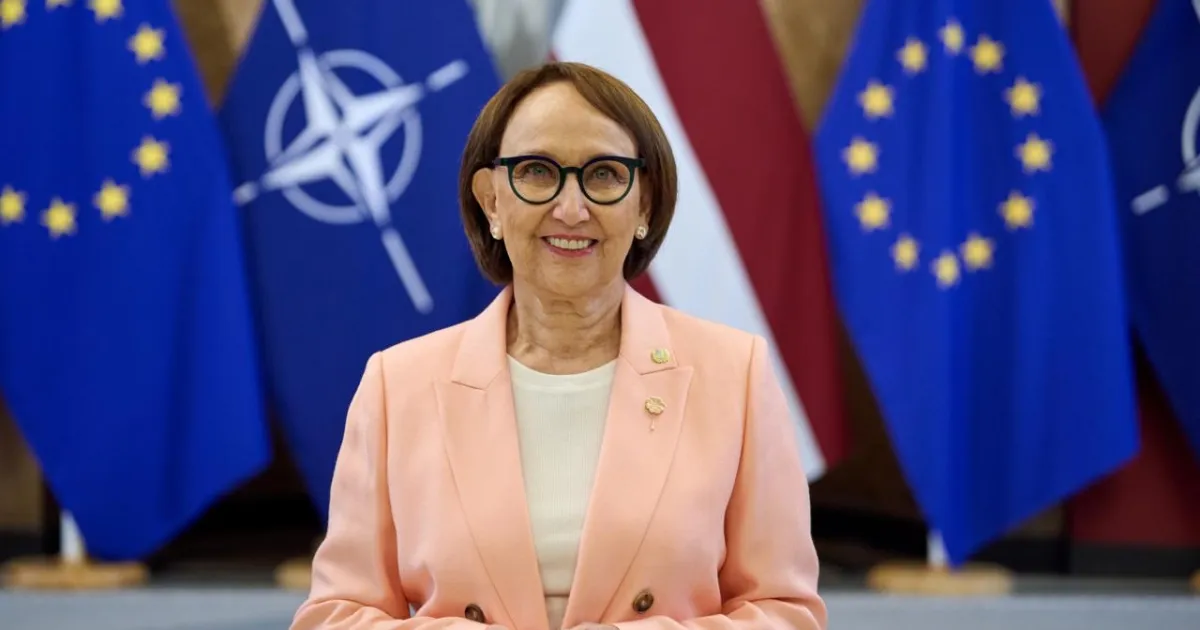
Rebeca Grynspan’s bid to become UN secretary-general is leading the field in repeated Security Council straw polls, but her prospects remain uncertain as at least one of the council’s permanent members is believed to oppose her.
The 70-year-old Costa Rican diplomat could become the first woman and the first Jewish person to hold the United Nations’ most senior post if she defeats seven other candidates.
Antonio Guterres’s successor must be selected by December 31. The eventual choice will require the backing of the 15-member UN Security Council, where the United States, Russia, China, France and the United Kingdom each have the power to veto a candidate.
Because the ballots are secret, it is not publicly known which permanent member or members may be blocking Ms Grynspan’s candidacy. Her record on Israel’s occupation of Palestinian territory and Russia’s war in Ukraine is expected to complicate efforts to secure support from the most powerful nations.
Her most difficult challenge may be winning over US President Donald Trump, whose administration has sought to weaken and reshape an organisation that Ms Grynspan hopes to lead.
Ms Grynspan, who heads the United Nations Conference on Trade and Development, has presented herself as a reformer and a determined mediator. “The UN must become less risk-averse. Its biggest risk today is the risk of not trying,” she said.
“I have listened to people who need the UN but increasingly doubt it can act. They want leadership willing to take risks for peace.”
Grynspan’s diplomatic record
An economist, Ms Grynspan served as Costa Rica’s second vice-president from 1994 to 1998 and held several government positions, including deputy finance minister during the country’s debt crisis in the 1980s.
She later became secretary-general of the Ibero-American Conference, representing 22 countries across Latin America, the Caribbean and Europe, and held senior roles with the UN Development Programme and the UN Commission for the Reconstruction of Haiti.
In 2021, she became the first woman to lead UNCTAD. Her work there has focused on global trade, debt and economic inequality, alongside efforts to support post-Covid economic recovery, digital transitions and climate objectives.
She was also closely involved in the Black Sea Grain Initiative, which enabled Ukrainian agricultural exports during the war with Russia. The UN and Turkey-brokered agreement exported 32 million tonnes of grain and reduced global food prices by 22 per cent before Russia withdrew in 2023, according to UNCTAD.
Ms Grynspan helped negotiate the arrangement while undergoing breast cancer treatment. She said the agreement succeeded because Russia and Ukraine were able to co-operate on grain exports without resolving their wider differences over the war.
“If wars do not wait for ideal conditions, neither should diplomacy,” she said.
However, Richard Gowan, programme director of global issues and institutions at the International Crisis Group, has said her criticism of Russia’s withdrawal from the initiative could prompt Moscow to veto her candidacy. Ms Grynspan met Russian Foreign Minister Sergey Lavrov in April as part of efforts to build support.
Israel, Gaza and the US hurdle
Ms Grynspan is the daughter of Polish Jewish refugees who fled to Central America during the Holocaust. She has studied in Israel, while her sister lives there and other relatives have served in the Israeli military and describe themselves as Zionists.
Her public position on the war in Gaza has broadly followed that of the UN. She condemned Hamas’s October 2023 attack and called for a ceasefire during Israel’s subsequent military campaign.
UNCTAD reports issued during her leadership have detailed the collapse of the Palestinian economy. One report estimated that the Palestinian economy lost 212.2 billion dollars between 2000 and 2024 as a result of occupation policies, restrictions, closures and military operations.
Ms Grynspan has rejected the idea that her family background determines her approach. “What my identity gives me is empathy, not bias,” she said.
“I am the daughter of peace. My parents were refugees of the Second World War. I know what war takes away and I know what peace makes possible. It is possible for us to do it again, together.”
Despite leading the straw polls, Ms Grynspan faces competition from Lana Nusseibeh, the United Arab Emirates’ candidate. The US and Russia have reportedly backed Ms Nusseibeh, while France and the UK have offered little resistance, according to diplomats.
Ms Nusseibeh received six votes against her in the latest poll, although it is unclear whether any came from permanent members exercising a potential veto. China has indicated a preference for a Latin American candidate but has not publicly endorsed anyone.
Esther Brimmer, a senior fellow at the Council on Foreign Relations and former US assistant secretary of state for international organisation affairs, said an established UN figure would need to make a particularly strong case for change.
“An insider candidate has to work much harder to convince decision-makers of her commitment to change such a large and complicated organisation,” she said.
Ms Grynspan has argued that defending the United Nations means reforming it. “To defend the United Nations today is to have the courage to change it,” she said. “The UN has to embrace reform, not be defensive about reform.”
Whether that approach is sufficiently aligned with the Trump administration’s demands for reform could determine if the current frontrunner secures the UN secretary-general post.
