


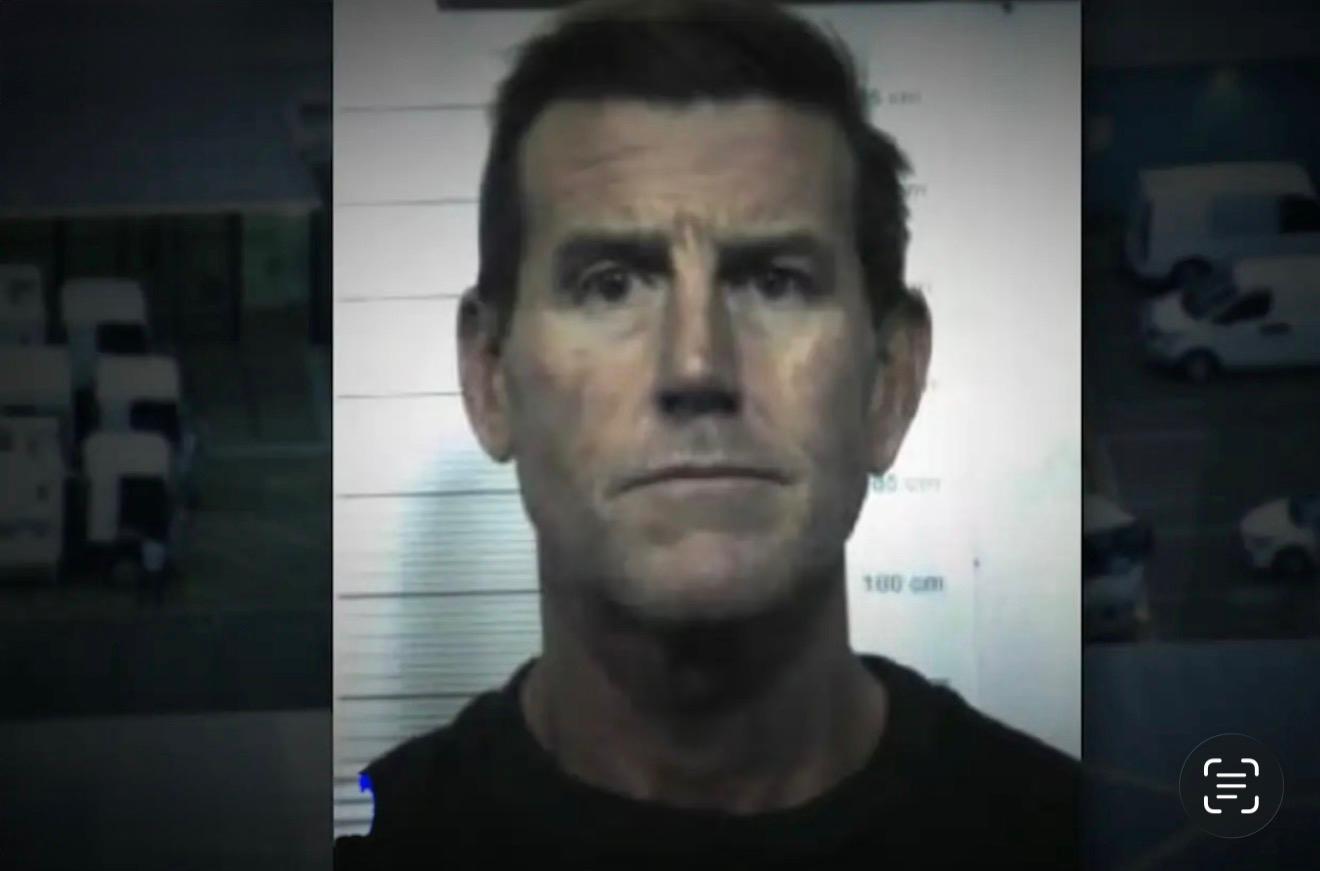
An internal investigation cleared up the circumstances of Ben Roberts-Smith’s release from custody after corrections officers were accused of shielding the disgraced war hero from waiting photographers, newly released documents have revealed.
The findings, obtained by Australian broadcaster 9News under transparency laws, lay bare for the first time the unease inside the New South Wales prison system over how the former special forces soldier was handled — both during his brief spell on remand and at the moment he walked free on bail.
According to 9News, Corrective Services NSW regarded Roberts-Smith as a high-profile protection inmate and, in the words of one internal assessment, “the most prominent encountered” by the agency. The trove of paperwork handed to the broadcaster even included the 47-year-old’s prison mugshot.
Roberts-Smith, a Victoria Cross recipient once celebrated as Australia’s most decorated living soldier, was arrested at Sydney Airport in April after stepping off a flight. He was charged with five counts of the war crime of murder relating to operations in Afghanistan between 2009 and 2012, allegations he denies. He spent nine days on remand before being granted bail.
The documents show that senior staff were acutely conscious of who they were holding. A memo to the police commissioner weighed the risks attached to his stay in protective custody, taking into account his elite military training. Despite that background, officials concluded the risk of escape was not high.
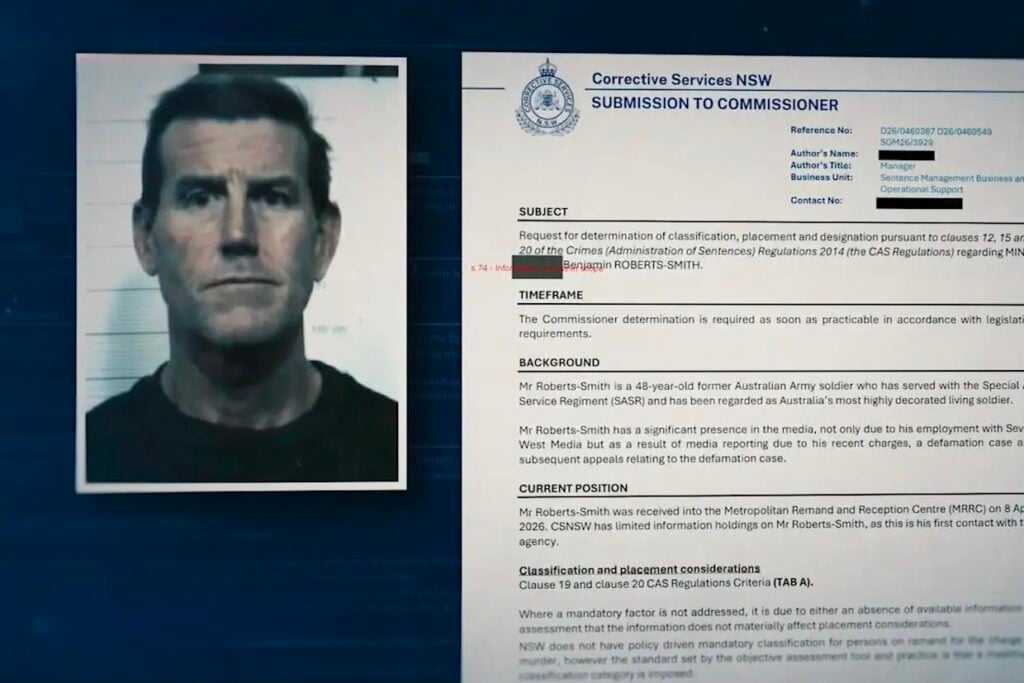
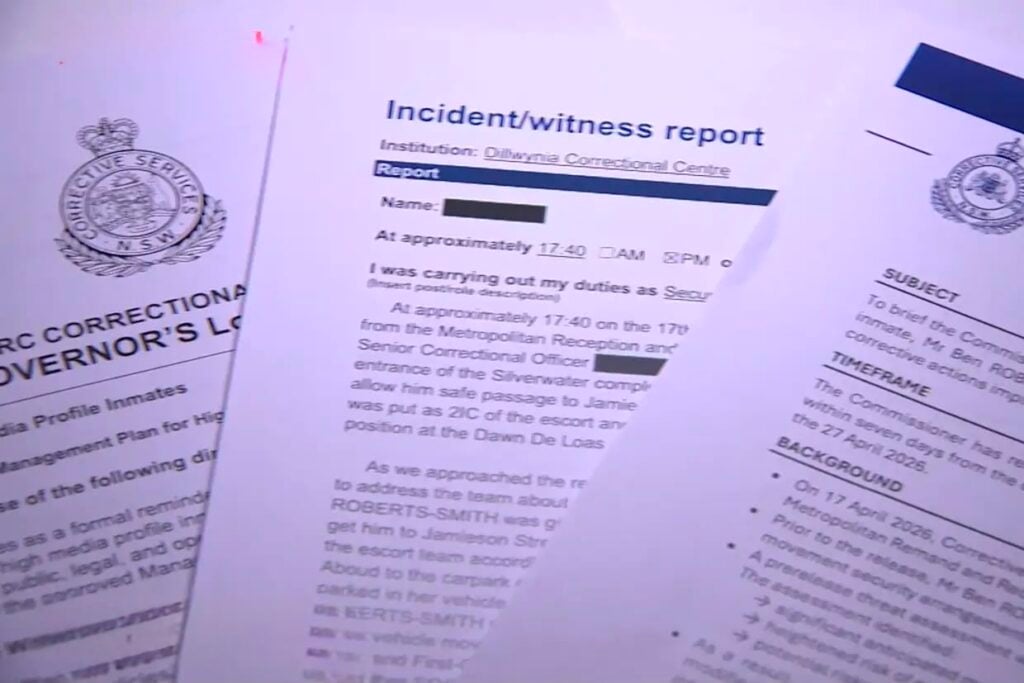
Prison bosses appear to have been equally alert to the scrutiny the case attracted. Officers were urged to manage the former corporal strictly by the book and to resist any temptation to bend the rules. “Emotions are running high both internally and externally, but professionalism must remain our standard,” one of the documents stated. “He is to be managed like any other inmate.”
It was what happened on the day of his release, however, that prompted the formal review.
According to 9News, Roberts-Smith’s partner was allowed to drive directly inside the prison grounds, after which the governor, Patrick Aboud, personally escorted the couple out via a rear route. Members of the Security Operations Group were then accused of running interference, physically positioning themselves to block his moving car from the cameras of waiting press.
The NSW prison chief ordered an inquiry into the episode, but its conclusions had remained private until 9News secured them through a formal request under freedom-of-information rules.
The review identified a series of failings. Staff did not switch on their body-worn cameras and did not file the official incident reports the situation required. Investigators also found that officers had not properly understood the limits of their authority when physically intervening between a released civilian and members of the media.
In response, Corrective Services NSW has said staff will be given additional training, and a new set of guidelines is being drawn up specifically for the handling of high-profile prisoners.
The disclosures add a fresh chapter to a saga that has gripped Australia for years. Roberts-Smith’s reputation unravelled in a landmark defamation case he brought against Nine-owned newspapers and the journalists who reported the war crimes claims, including Nick McKenzie and Chris Masters. He lost at trial in 2023 and again on appeal in 2025, with the courts finding the allegations of unlawful killings substantially true to the civil standard of proof.
The criminal case carries far higher stakes. Prosecutors must establish guilt beyond reasonable doubt, and the war crime of murder carries a maximum penalty of life imprisonment. Roberts-Smith is only the second Australian to face such charges, and by far the most prominent.
He has consistently maintained his innocence. The matter is due to return to court later this year.
