


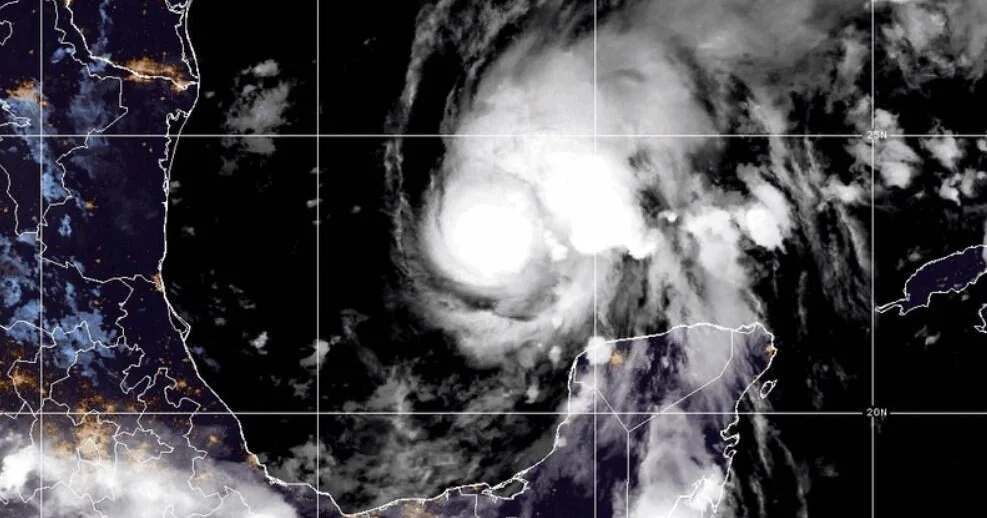
Hurricane Isaias has formed in the Atlantic and is threatening the US Gulf Coast, with landfall expected in Mississippi, Alabama or the western Florida Panhandle late on Friday or early Saturday.
It is the first hurricane of the 2026 Atlantic season and developed unusually late, tying the record for the latest first hurricane in 111 years. Isaias reached maximum sustained winds of 75mph while about 460 miles south-west of the mouth of the Mississippi River, the National Hurricane Center said.
A hurricane warning is in place from Ocean Springs, Mississippi, across Alabama to the Florida Bay and Gulf county line. Tropical storm warnings extend from Jefferson and Plaquemines Parish in Louisiana to Ocean Springs, and from the Florida Panhandle to the Aucilla River.
A storm surge warning has also been issued from the mouth of the Mississippi River to Yankeetown, Florida.
Florida governor Ron DeSantis declared a state of emergency in more than two dozen counties, directing resources towards preparations for the storm. Alabama governor Kay Ivey issued a similar declaration covering 40 counties.
Hurricane Isaias forecast to bring heavy rain
Forecasters expect Isaias to pass north of Mexico’s Yucatan Peninsula on Thursday before moving towards the Gulf Coast on Friday. Parts of Florida, Alabama and Georgia could see moderate to substantial rainfall over the weekend and into next week.
Between three and seven inches of rain is forecast along the central Gulf Coast, from south-eastern Louisiana to the Florida Panhandle, with isolated totals of up to 10 inches possible. Rainfall of one to five inches could reach much of the south-eastern US, extending as far north as the Tennessee Valley and the Carolinas.
The hurricane’s name is pronounced “ees-ah-EE-ahs”, according to forecasters.
Late start to the 2026 Atlantic hurricane season
Isaias marks the latest first hurricane of an Atlantic season since 1905, when the first hurricane formed on October 8, according to National Oceanic and Atmospheric Administration data.
The Atlantic hurricane season runs from June 1 to November 30. Forecasters had predicted less storm activity than usual in 2026, but the season has been quieter than anticipated so far.
Meteorologists have linked the subdued activity largely to a strong El Niño over the summer. The weather pattern is typically associated with cooler Atlantic waters and greater fluctuations in wind patterns, both of which can hinder the development of tropical systems.
