


Israel’s alleged killing of Iranian political figure Ali Larijani has raised questions over whether the country is deliberately removing the people most capable of negotiating an end to its wars, according to Sir John Sawers, the former head of Britain’s foreign intelligence service.
Sir John said in early September that Larijani was targeted not because he directed Iran’s military campaign, but because he was among the few figures able to reach an agreement acceptable to both sides. The assessment has prompted wider scrutiny of a series of assassinations involving potential mediators and political intermediaries.
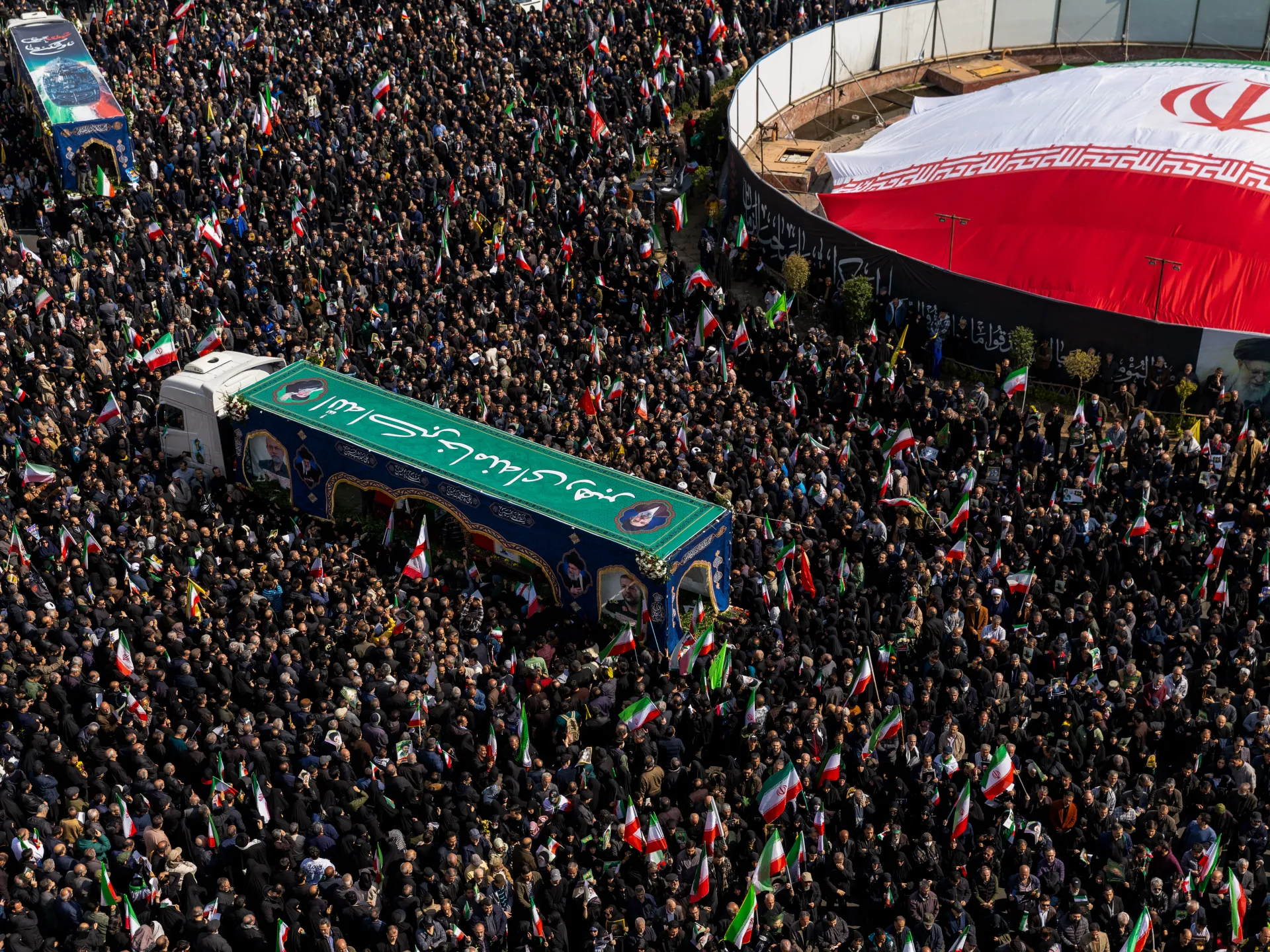
Larijani was killed in March 2026, after the assassination of Iran’s Supreme Leader Ali Khamenei on the first day of the war had left him as the country’s effective decision-maker. He had previously served as Iran’s nuclear negotiator and defended the 2015 nuclear agreement while speaker of parliament.
Western diplomats who dealt with Larijani regarded him as tough but pragmatic. That combination, the argument goes, made him a possible counterpart for an American-brokered route out of the conflict.
Assassinations and the loss of negotiation channels
The removal of a negotiator can create a different kind of power vacuum from the one caused by the killing of a military commander or head of government. Instead of simply disrupting an organisation, it can eliminate a channel through which compromise might have been reached.
Successors are not necessarily more willing to negotiate. In some cases, harder-line figures inherit authority, making diplomacy more difficult and reinforcing the belief on both sides that a settlement was never realistic.
The historical precedent cited is the assassination of Count Folke Bernadotte, the United Nations mediator for Palestine, in Jerusalem in September 1948. Members of Lehi, the Zionist underground whose leaders included future Israeli prime minister Yitzhak Shamir, killed Bernadotte as he pursued truce and partition proposals.
A similar interpretation has been applied to the killing of Mohsen Fakhrizadeh, a leading figure in Iran’s nuclear programme, near Tehran in November 2020. The operation was widely attributed to Israel and came weeks after Joe Biden was elected US president on a commitment to revive the 2015 nuclear agreement.
Critics viewed the timing as evidence that the killing was intended to obstruct diplomacy, although Israel’s stated rationale in such cases has been military and preventive rather than diplomatic.
Hamas and Hezbollah leaders also targeted
The same pattern has been identified in Israel’s operations against non-state groups. In February 1992, Israel killed Abbas al-Musawi, Hezbollah’s secretary-general. He was succeeded by Hassan Nasrallah, who built the organisation into the region’s most capable non-state armed force over the following three decades.
In July 2024, Israel assassinated Ismail Haniyeh, the head of Hamas’s political bureau and its lead negotiator in talks on a Gaza ceasefire. Authority subsequently passed to Yahya Sinwar, while the negotiating process failed to regain momentum. Israel killed Nasrallah several weeks later.
In each case, the target was a senior figure responsible for coordination and, at times, negotiation. The immediate effect was disruption, while the longer-term consequences included the rise of successors who were less inclined towards compromise.
Israel’s approach is presented as consistent with its wider strategic objective. If the Iranian system is regarded as an existential threat, a negotiated accommodation would preserve the political order Israel wants to see collapse and could reduce the pressure for continued American military action.
External pressure has instead strengthened the position of Iran’s security establishment, according to the assessment. The removal of more pragmatic figures risks deepening the divide between leaders concerned about the costs of war and those who see continued attacks as confirmation that defiance is necessary.
There is no conclusive proof that the assassinations were intended specifically to prevent negotiations. Larijani was not a dove, having helped run a war effort and presided over harsh repression at home, while Haniyeh led Hamas, the organisation responsible for the October 2023 attack.
Nor is the strategy guaranteed to produce a favourable result for Israel. The killing of al-Musawi demonstrated that eliminating a leader can bring a more powerful and uncompromising successor rather than a figure willing to make concessions.
But the continuing removal of politicians and intermediaries who might offer a route to compromise has left a central question over the conflict: if the people capable of negotiating an end to the war are eliminated, who remains with the authority to make peace?
