


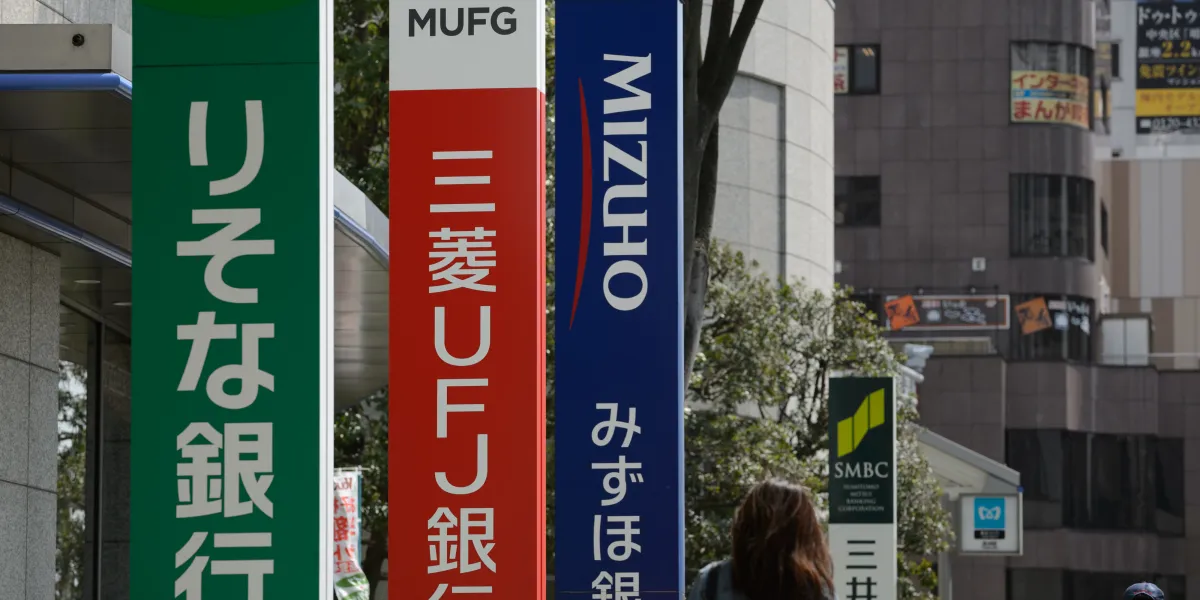
Japan’s three biggest banks are planning to launch a jointly issued yen-backed stablecoin next March, in a bid to make cross-border payments easier and give the Japanese currency a greater role in global business.
Mitsubishi UFJ Financial Group, Sumitomo Mitsui Financial Group and Mizuho Financial Group are behind the project, which comes as bankers argue that digital currencies could provide the yen with a new route to international use.
Tomoya Hasebe, global head of digital and innovation at Sumitomo Mitsui Banking Corporation, said at a roundtable in Singapore that competition between currencies was increasingly being shaped by technology.
“The currency competition is now a software competition,” Mr Hasebe said. “Currency dominance is increasingly determined not only by central bank policy or regulatory policy, but by which currency is easiest to use as code.”
The yen is the world’s third most-used currency, behind the US dollar and the euro. However, yen-pegged stablecoins have so far attracted little usage, despite Japan being the first G7 country to introduce a comprehensive framework for regulating them.
US dollar-denominated stablecoins account for more than 97 per cent of the market, leaving Japanese banks and fintech companies attempting to establish a stronger role for the yen in digital finance.
Other Asian economies are also developing stablecoins for companies seeking alternatives to the dollar. Hong Kong issued its first two Hong Kong dollar-backed stablecoin issuer licences in April, to HSBC and Anchorpoint Financial, a joint venture involving Standard Chartered Bank, HKT and Web3 company Animoca Brands.
Tim Way, senior director of global banking at digital asset infrastructure firm Fireblocks, said the continued dominance of the dollar did not mean all businesses wanted to use it for trade.
“The majority of global trade is still in USD, but there is certainly a group of firms around the world that want to not use U.S. dollars for trade,” he said. “It’s an opportunity for Asia to stand up and have more trade in Asia running in Asian currencies.”
Japanese start-ups are also entering a market traditionally dominated by established financial institutions. JPYC launched the country’s first yen-pegged stablecoin in October 2025, while Makoto Shibata, head of Japanese fintech accelerator Finolab, said more private companies and start-ups were moving into the sector.
It remains uncertain whether yen-backed stablecoins issued by banks or digital asset companies will gain lasting traction. Unlike dollar stablecoins, which can generate returns from high-yielding US Treasury bills, yen-pegged tokens operate on very narrow margins.
JPYC, founded in 2019, has faced significant obstacles to growth, with users often redeeming the token for traditional money rather than keeping it in digital wallets.
