


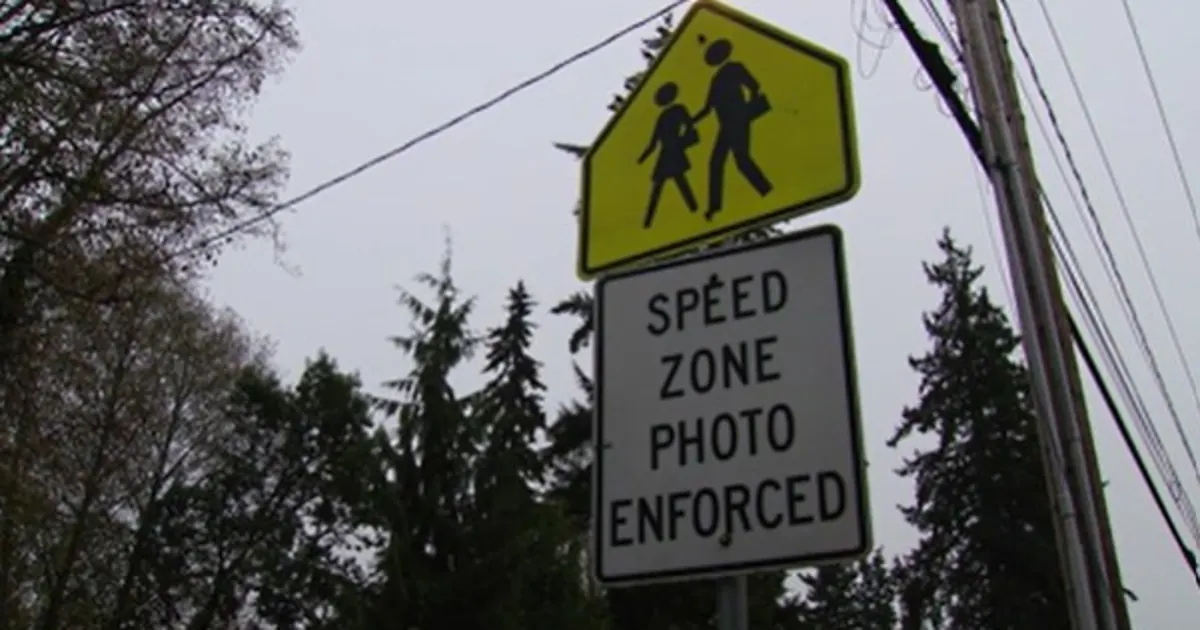
Lynnwood city councillors are considering a proposal to install speed cameras operating around the clock in several school zones, prompting a debate over road safety, privacy and the city’s finances.
The plan was discussed during a budget work meeting on Wednesday night after strong public reaction. Police and some council members said the cameras would encourage safer driving, while opponents argued the scheme was primarily a way to raise revenue.
If approved, the cameras could operate even when schools are closed. Police said they would enforce the existing posted speed limit, currently 30mph except when school-zone beacons are flashing, rather than the lower school-zone limit outside those hours.
Possible locations include areas near Lynnwood Elementary and Spruce Elementary, as well as the Meadowdale area and the S-Curves in Lynnwood.
Han McDonald, a Lynnwood resident, said receiving a ticket could change motorists’ behaviour but questioned the decision to link the proposal to the budget.
“It’s certainly a public safety behaviour change. I think the timing is really poor to bring it up as a filler for the budget,” McDonald said.
Mayor George Hurst said a recently passed state law had enabled more cities to introduce speed cameras operating 24 hours a day. He also said the system would provide significant revenue after the council approved an increase in property tax.
“Already this month the council passed property tax, the increase in the property tax, so now the large amount of revenue beyond that will come from the traffic enforcement cameras,” Hurst said.
Supporters of the proposal say the money could help prevent cuts to council services. Council member Isabel Mata said the administration had warned that failing to approve the plan could lead to 25 full-time city jobs being removed.
“I’m frustrated that it’s the only option and that it has nothing to do with public safety but it’s merely just a revenue generator,” Mata said.
Elizabeth Lunsford, a resident and activist, said the budget should be balanced through other measures and questioned how local taxes were being used. She also expressed concern that camera enforcement could push traffic on to residential side streets.
Hurst said he did not expect that to happen because there were no straightforward alternative routes beyond the main roads.
The council has also discussed raising utility rates as a possible source of income, although the mayor and some council members said the public works director opposed that option.
Police have been working on the camera proposal for about a year and said the primary purpose would be traffic safety. The mayor said warning signs would be installed several weeks before enforcement began.
If the Lynnwood City Council approves the scheme, police said enforcement could begin as early as February.
