


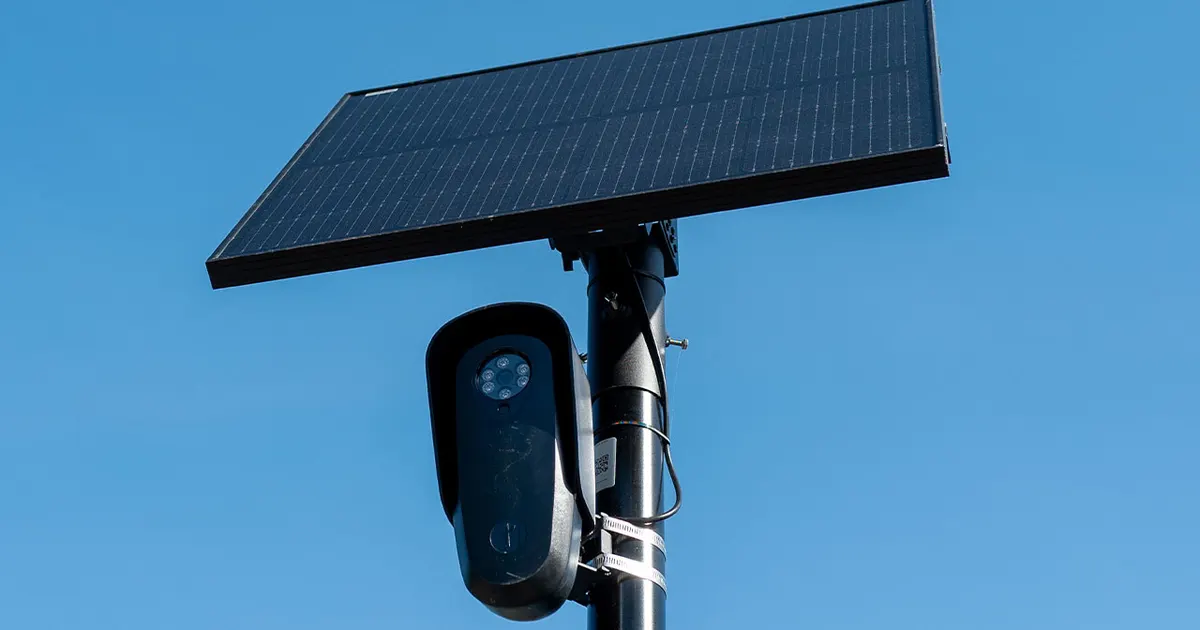
Flock cameras are spreading across US communities, with an estimated 110,000 automated licence-plate readers now scanning vehicles nationwide amid growing concern over privacy and police surveillance.
The cameras photograph passing vehicles and use artificial intelligence to record details including registration numbers, make, model, colour and the time a vehicle was seen. They are sold by Atlanta-based Flock Safety to police departments, sheriff’s offices, neighbourhood associations and private businesses.
Flock says each organisation that buys the system decides who can access the footage and how long it is retained, subject to local laws.
How many Flock cameras are in each county?
Flock has not published a public map of its network. An analysis by the Pew Research Centre used locations recorded by volunteers on OpenStreetMap to estimate the number of cameras in different parts of the country.
The figures are understood to be conservative because they rely on crowdsourced entries rather than an official company count. Flock told The Washington Post in August 2026 that it operated more than 120,000 cameras across 6,000 communities, while a separate map compiled by cybersecurity researcher Joshua Michael listed roughly 175,000 cameras.
In Minnesota, the Pew analysis identified 1,249 cameras across 49 counties. Hennepin County had the largest number, with 375, followed by Washington County with 181, Anoka County with 139, Ramsey County with 100 and Dakota County with 79.
Privacy concerns over automated plate readers
Several Minnesota communities have challenged the use of the technology. Columbia Heights, Crystal, Duluth, North Branch and West St Paul cancelled, paused or declined to renew their Flock contracts in 2026.
St Paul removed two cameras, while Winona decided not to replace eight that had been stolen.
The local disputes form part of a wider national argument over the use of automated licence-plate readers by police. The American Civil Liberties Union launched its “Get The Flock Out” campaign during the summer, calling on communities to cancel contracts and support state bans.
The organisation argues that officers can search and share motorists’ travel histories with limited oversight. It has also said fewer than 1 per cent of scanned vehicles are linked to a crime.
A Data for Progress survey conducted shortly before the November midterm elections found that 52 per cent of likely voters viewed the cameras unfavourably. That rose to 60 per cent after respondents were given a brief explanation of how the system operates.
Flock promises tighter controls
Flock and law enforcement agencies that support the technology maintain that the cameras are an important tool in tackling crime. Company spokesperson MoMo Zhou said in September that the system had helped solve roughly one million crimes and reunite about 10,000 missing people with their families.
In response to privacy concerns and documented cases of misuse by officers, Flock announced changes to its platform in August 2026. The measures are due to become mandatory for law enforcement agencies on 1 January 2027.
The company is reducing its standard data-retention period from 30 days to seven, unless footage is connected to an active case. Police buyers will also have to use an audit tool designed to identify unusual search patterns and lock users out while an internal review takes place.
