


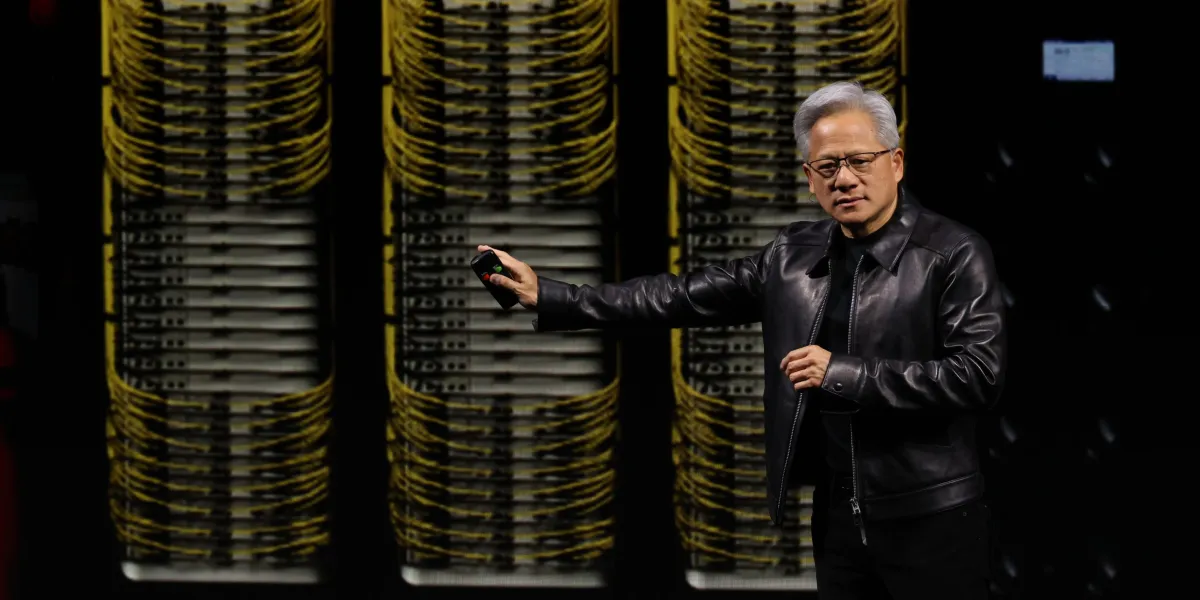
Jensen Huang’s resignation from Nvidia has exposed the extent to which the world’s most valuable chipmaker, and much of the artificial intelligence boom around it, depended on its long-serving chief executive.
Huang stepped down on November 12 after 33 years at the company, following reports of alleged personal relationships and concerns about his links to Alice Huang, a former executive at Singapore-based neocloud Megaspeed whom US officials suspected of being a Chinese intelligence asset. Alice Huang is not related to Jensen Huang.
Huang admitted to staff that he had been unfaithful to his wife. The New York Times subsequently reported a second affair involving an Nvidia executive who had reported directly to him. Congress summoned Huang, while federal agencies opened investigations.
Nvidia’s board appointed chief financial officer Colette Kress as interim chief executive, but the company has no president or chief operating officer and no obvious successor to take the role permanently.
Nvidia faces life after Jensen Huang
The leadership crisis has highlighted the company’s reliance on Huang at a moment when Nvidia’s market value had reached more than $5.7 trillion and his public appearances and views regularly influenced the wider technology sector.
His departure has also raised questions about Nvidia’s role in financing the AI industry. The company invested almost $50 billion in model developers including OpenAI, Anthropic and xAI, while making about $170 billion in financing commitments.
Nvidia has faced criticism over a complex system in which it invests in start-ups, AI laboratories and cloud companies that can then use the money to buy its chips. Critics have described the arrangement as “circular financing” and warned that weaknesses among those companies could expose the wider market.
Kress signalled that the company would take a more cautious approach to future deals during Nvidia’s first earnings call without Huang. “As the market matures and additional sources of capital become available, we are rigorously evaluating future investments, commitments, and guarantees,” she told analysts.
She added: “We are proud of the role that we have played so far in supporting the ecosystem.”
Nvidia’s latest results showed that the business itself could continue to perform without its founder. The company reported quarterly revenue of $115.8 billion, more than double the figure from a year earlier, and forecast about $130 billion for the current quarter. Profit exceeded $65 billion, while demand for its Vera Rubin platform was described by Kress as “off to an explosive start”.
Shares nevertheless fell after the results. The forecast assumes no revenue from China and includes an extra week in the quarter.
Huang had publicly indicated that he would be “honored” to return amid pressure from parts of the technology industry for his reinstatement. Nvidia chairman Harvey Jones said on the day of the earnings announcement that the board did not intend to bring him back.
Huang’s absence is also expected to be felt in Washington, where he had been Nvidia’s most effective lobbyist and a close ally of President Donald Trump. He had repeatedly criticised export controls.
Within days of his departure, the US Commerce Department moved to close a loophole that allowed Chinese companies to rent access to US chips through overseas data centres. Megaspeed is suspected of operating such a business, according to the reports that preceded Huang’s resignation.
The immediate performance of Nvidia has eased concerns about the company’s ability to operate without its founder. The more difficult question is whether businesses that have become dependent on Nvidia’s investment and financing will continue to prosper under a more disciplined regime.
