


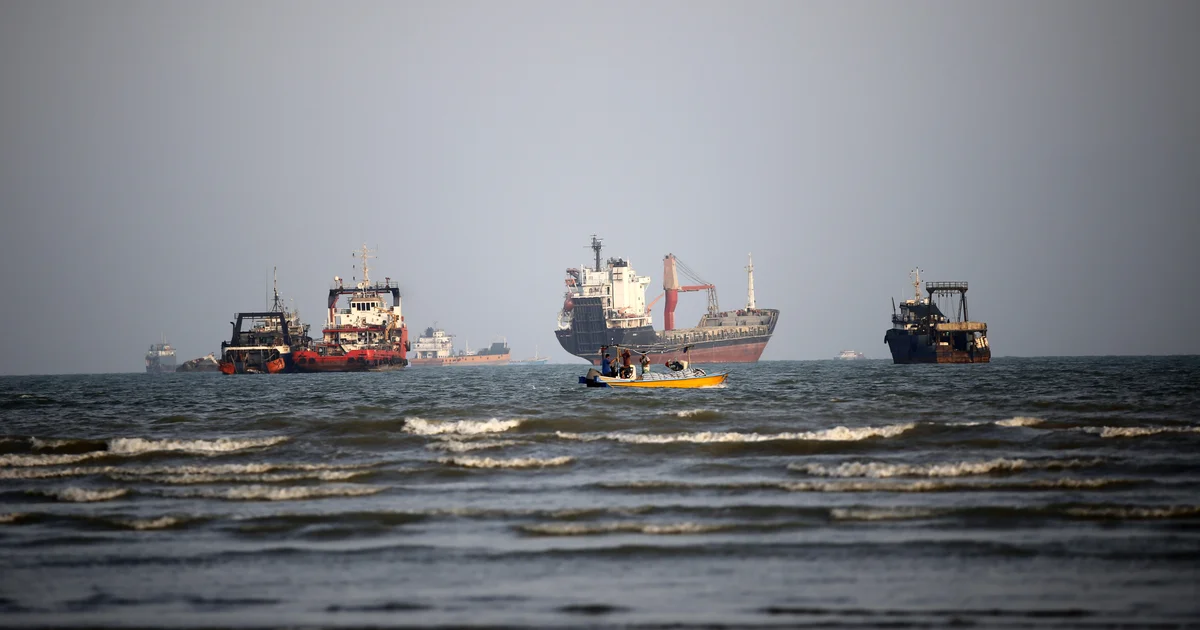
Fighting has intensified in Yemen after Iran-backed Houthi rebels expanded their control of a key shipping route, raising fresh concerns over oil supplies as the Strait of Hormuz remains severely disrupted by the US-Iran war.
Yemen’s government forces launched attacks against the Houthis along the Red Sea coast, while the rebels fired into neighbouring Saudi Arabia, which supports the government. Officials in Yemen said more troops would be sent to the coastal region.
The escalation follows the Houthis’ capture last week of the port city of Mokha and an island in the Bab el-Mandeb Strait, the southern gateway to the Red Sea. The waterway has become a crucial alternative route for Saudi energy products while shipping through the Strait of Hormuz is impeded.
The developments have added pressure to global oil markets, with crude prices moving towards four-month highs amid concerns that Saudi Arabia’s exports could face further disruption.
Brent crude rose 3.2 per cent to 107.94 dollars a barrel early on Monday, compared with about 72 dollars before the war in Iran began in late February. US benchmark crude also gained 3.2 per cent to 103.26 dollars.
Strait of Hormuz talks postponed
A planned meeting in Muscat between Iran, Oman and other regional countries to discuss managing shipping through the Strait of Hormuz was postponed. Oman’s Foreign Minister, Badr Albusaidi, said the delay was made “in the interests of consensus”.
Iranian foreign ministry official Mohammad Ali Bak said the talks had been postponed at the request of some regional countries. Saudi Arabia has submitted amendments to a proposed Iran-Oman agreement, citing concerns about its possible long-term effects on other Gulf Co-operation Council countries, according to a Gulf official familiar with the matter.
Iran, Oman and Pakistan had previously expressed optimism that a new mechanism for controlling commercial traffic through the waterway could be agreed.
Separately, Iran’s president, Massoud Pezeshkian, said Tehran and the United Arab Emirates wanted to repair relations that had deteriorated since the conflict began. After meeting Abu Dhabi Crown Prince Sheikh Khaled Bin Mohamed Bin Zayed Al Nahyan in India, he said: “It was agreed that we would turn the page, look to the future and build it together.”
