


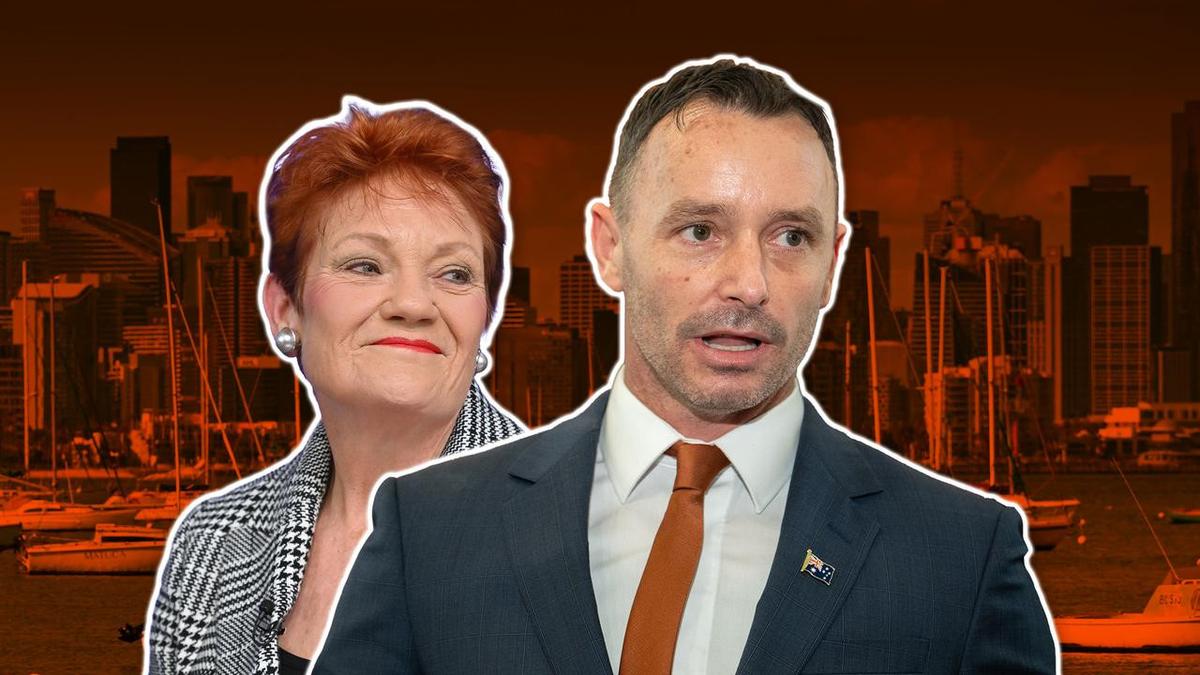
One Nation could wield significant power in Victoria’s upper house after the state’s voting reforms made it harder for minor parties to win seats, even if the party’s hopes of dominating the lower house fade.
With support for the Coalition under Liberal leader Jess Wilson strengthening at One Nation’s expense, the upper house may become the arena in which the party exerts its greatest influence over the next government’s legislation.
One Nation deputy leader and upper-house candidate Colleen Harkin said the party would take a firm position on government spending, emissions reductions and recognition of First Nations people.
“People are going to be relying on One Nation to do the difficult things that are going to need to be done in order to restore Victoria to a safe and a prosperous place,” she said.
Ms Harkin rejected the suggestion that One Nation would simply support the Liberal Party, insisting it would pursue its own agenda.
“We’re not the Liberal Party’s patsy,” she said. “We’re nobody’s patsy.”
Voting reforms reshape Victoria’s upper house contest
Changes introduced in August mean voters can no longer select a single party above the line. They must now number at least five parties above the line or five candidates below the line.
The previous system allowed parties to submit group voting tickets setting out their preferences. That arrangement was scrapped after criticism that it enabled “preference harvesting”, allowing candidates to win seats with only a very small share of the primary vote.
The revised system is expected to favour the major parties and could help One Nation secure at least one seat in each of the eight upper-house regions across Victoria.
Monash University political commentator Zareh Ghazarian said a primary vote of about 20 per cent was unlikely to deliver One Nation many lower-house seats.
“I think One Nation is destined to have a fairly disappointing or sombre election night,” he said.
But the same level of support could translate into six to eight of the upper house’s 40 seats, or potentially more, giving One Nation substantial influence over voting on legislation.
The gains would come at the expense of candidates such as Georgie Purcell of the Animal Justice Party, who was elected in 2022 with 1.5 per cent of the primary vote.
Ms Purcell and other minor-party candidates now face a reduced chance of re-election, with their seats expected to be contested by One Nation or another major party with stronger primary support.
“Because this benefits the major parties, and One Nation is polling so high, they will ultimately be the benefactors of this,” Ms Purcell said.
She warned that a unified One Nation bloc could leave any future government with little room to negotiate. Ms Purcell said she did not support the old preference system either, but argued the Labor government had failed to consider a third proportional model before introducing the changes.
“It really will make the cross bench extinct in Victoria, and I don’t think Victorians realise how bad that is,” she said.
