


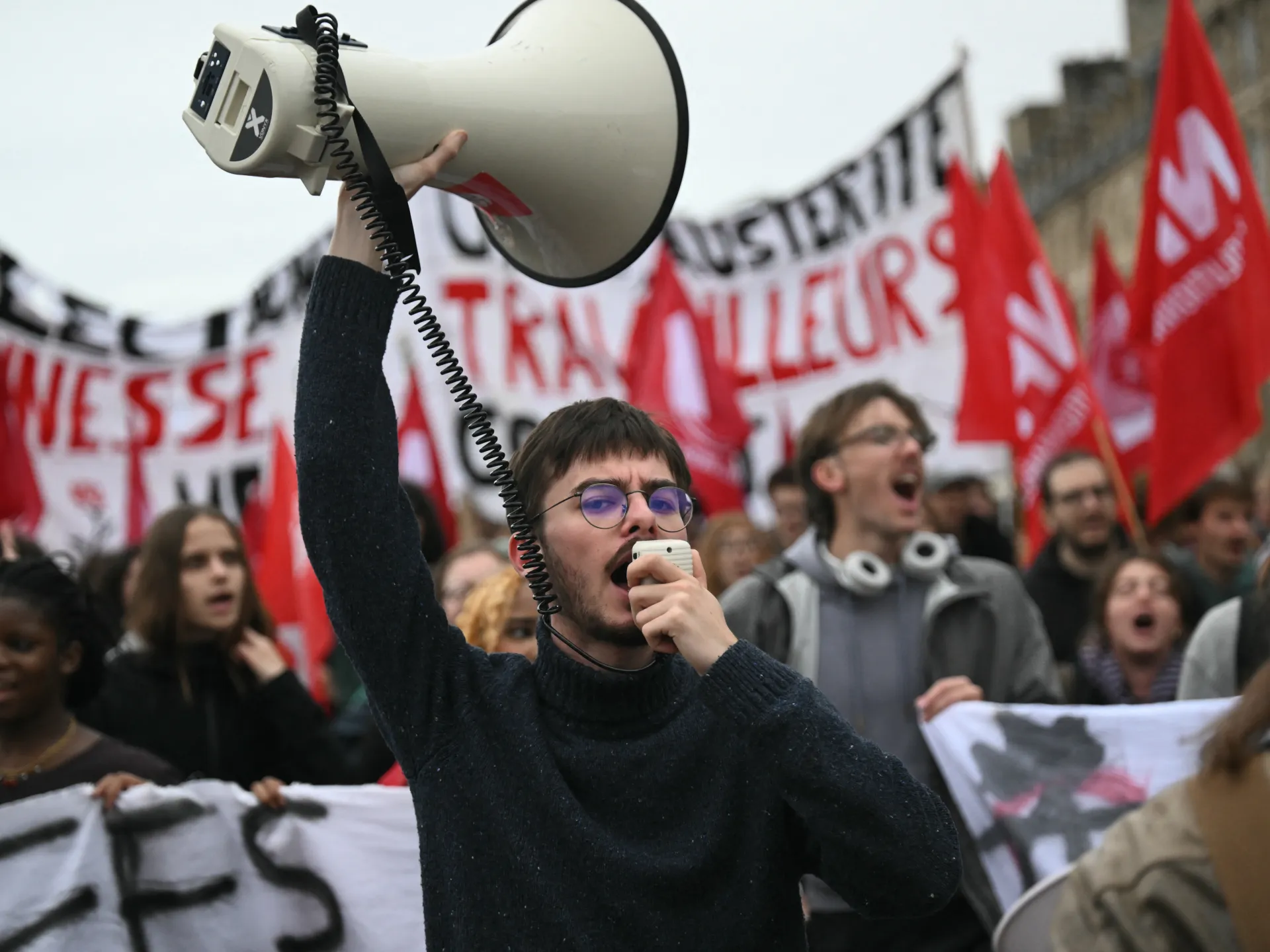
More than 100,000 people joined protests across France over the rising cost of living and public-sector pay, with the Interior Ministry estimating the nationwide turnout at 146,000 and the CGT union putting it at more than 500,000.
The ministry said 28,000 people demonstrated in Paris alone. Public-sector workers were joined by school pupils and university students during a day of strikes and rallies called by several trade unions.
The action follows failed talks between unions and Prime Minister Sebastien Lecornu on Friday. Union representatives said the measures proposed at the meeting did not address the urgency of the pay situation facing France’s 5.8 million public-sector employees.
It was the third united day of public-sector strikes and demonstrations since September, as unions demand across-the-board pay rises following last week’s increase in the minimum wage for private-sector workers.
Unions demand action on public-sector pay
Public-sector workers are seeking the unfreezing of the pay scale point used to calculate their basic salaries. The government has ruled out a general pay rise for the fourth consecutive year in its draft budget.
Unions say public servants have lost 16 per cent of their purchasing power since 2017. They argue that inflation has left growing numbers of public employees on, or close to, the minimum wage.
Protesters have said they are struggling to make ends meet and want the government to provide more support through higher salaries and an increased minimum wage. The government has already offered an increase of about 30 dollars a month on the minimum wage, but demonstrators said that was insufficient as prices continue to rise.
The government is facing limited room for manoeuvre because of France’s growing debt, while also attempting to push through a budget containing cost-cutting measures.
Demonstrations have affected the country for more than a month. Student-led protests that began in mid-September over conditions in education have broadened to include concerns about fuel prices, wages and social housing.
Campaigns for higher wages, lower living costs and improved public services have also spread across Europe.
