


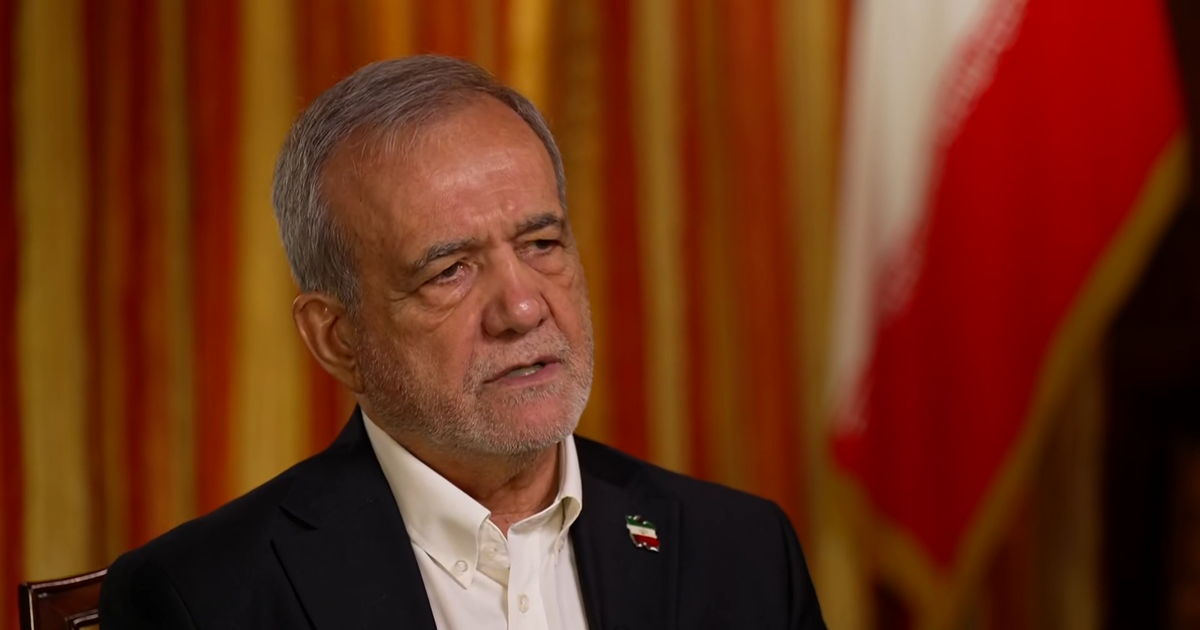
Iranian president Masoud Pezeshkian has said Tehran would honour a proposal to reopen the Strait of Hormuz and resume nuclear talks, while warning that deep distrust makes a meeting with Donald Trump difficult.
Speaking in a televised interview, Mr Pezeshkian said Iran would “abide by whatever we commit to” if the United States accepted the offer, which envisages reopening the strategic waterway after seven days and restarting negotiations towards a final nuclear agreement.
The proposal was put forward by Iran’s foreign minister during the United Nations General Assembly in New York. Mr Trump said on Saturday that he had rejected it, arguing that Iran wanted the strait opened immediately because it was “losing so badly”.
“They want to make a deal,” Mr Trump told reporters. “I think that’s fine, I like making a deal too. But that deal [they offered] would not be acceptable.”
He also claimed the US had “total control” of the Strait of Hormuz and that 29 ships had passed through the waterway the previous night.
Mr Pezeshkian said he would first need to understand “what exactly we want to reach an understanding on” before considering a face-to-face meeting with Mr Trump. He pointed to what he called an “atmosphere of distrust that has developed between Iran and the United States”.
“As long as they don’t cease doing what they’re imposing on us every day, it’s difficult to trust them,” he said, citing sanctions, threats, military strikes and what he described as failures to honour written commitments.
The Iranian president blamed the US for the collapse of a 60-day ceasefire agreement reached over the summer. The arrangement had been intended to create time for talks over Iran’s nuclear programme, but broke down after Iran targeted commercial shipping vessels and the US responded with attacks on Iran.
The US has said Iran should not control waterways leading into the Strait of Hormuz, including those passing through Omani territory, or impose tolls on shipping. Iran has insisted that vessels seek permission and use an Iranian-approved route.
Iran offers access for nuclear inspections
Mr Pezeshkian also said Iran would allow United Nations nuclear inspectors into the country, after being asked whether weapons inspectors would now be permitted to enter.
He said agreements could be reached during negotiations over the details of inspections. Iran has enriched uranium to levels close to weapons grade but denies seeking to build a nuclear weapon.
“Developing nuclear weapons is haram,” Mr Pezeshkian said, using the Islamic term for forbidden. He maintained that even if some people in Iran wanted to pursue such a programme, they were not permitted to do so on religious grounds.
Mr Trump has previously demanded that Iran stop enriching uranium altogether. That position is tougher than the Obama-era nuclear agreement, which allowed limited, low-level enrichment subject to restrictions and international inspections.
Asked about Iran’s supreme leader, Mojtaba Khamenei, Mr Pezeshkian said he had no specific health problems and that injuries to his face and legs had healed. The president said the two men had met twice, including once for more than seven hours.
Mr Pezeshkian said diplomatic decisions were being discussed by a six-member team including representatives from security forces, parliament and government agencies, with decisions reached through consultation and co-ordination.
