


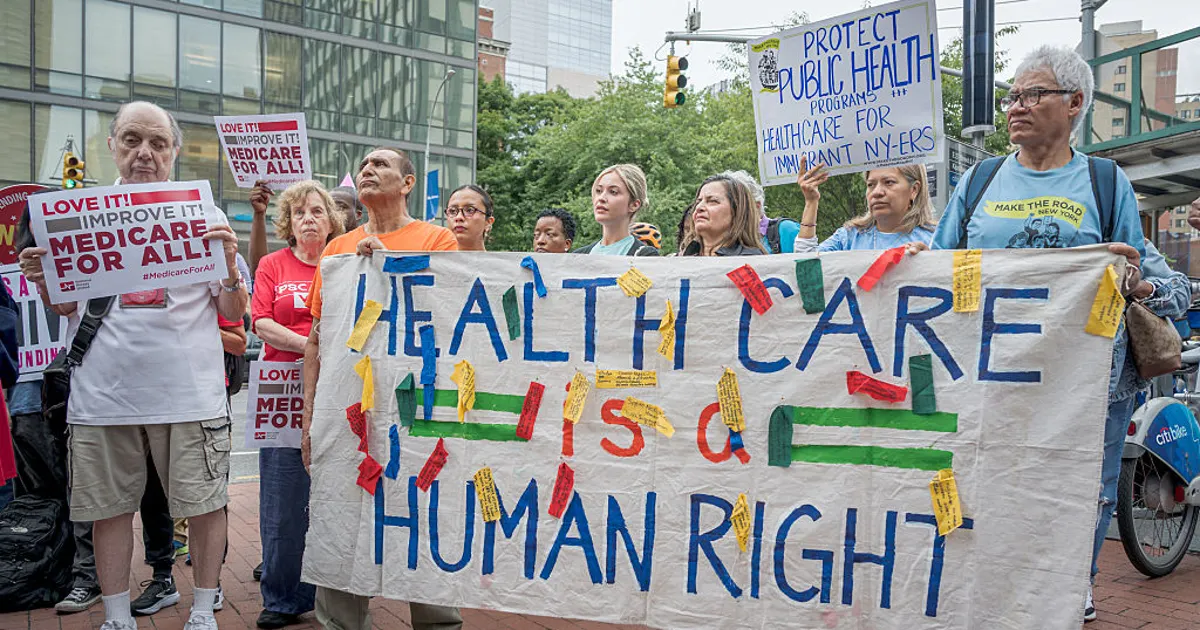
Two-thirds of Americans now support a government-run health insurance system commonly known as Medicare-for-all, according to a new poll that recorded the highest level of backing for the proposal since KFF began tracking it.
The September survey found 66% of US adults favoured a national health plan under which everyone would receive cover from a single government scheme. Support has risen from 53% when KFF last asked the question in October 2020.
However, the findings also showed a sharp political divide. Support reached 84% among Democrats and 72% among independents, while 66% of Republicans opposed the idea, including 48% who said they strongly opposed it.
Healthcare costs remain a major concern
The poll was conducted as healthcare costs emerged as one of the leading economic worries for Americans. Six in 10 voters said they were very or somewhat concerned about affording medical expenses for themselves and their families, including insurance premiums, prescription medicines and out-of-pocket payments.
More broadly, 79% of adults said they wanted the federal government to do more to help provide health insurance to more people. That view was shared by 94% of Democrats, 82% of independents and 61% of Republicans.
KFF said support for Medicare-for-all was the highest it had recorded since polling on the proposal began in 2016. The idea has also returned to political debate during the 2026 midterm election campaign, with some progressive Democratic candidates making it a central part of their platforms.
Yet the apparent majority in favour was sensitive to how the plan was described. Support fell substantially when respondents were told it could lead to delays in medical tests or treatment, increase taxes or threaten the existing Medicare programme.
Conversely, backing rose to 76% when people were told the system would make health insurance a legal right, and to 75% when they were told it would remove insurance premiums and reduce out-of-pocket costs. Support stood at 52% when respondents were told private health insurance companies would be eliminated.
Americans divided over the personal impact
Respondents were less certain about how Medicare-for-all would affect their own finances and access to care. Some 35% believed their ability to afford the healthcare they needed would improve, while 28% expected it to worsen and 37% thought it would remain about the same.
Taxes were viewed more negatively. About 61% said the amount they paid would become worse under a Medicare-for-all plan, compared with 10% who expected it to improve and 29% who thought it would stay roughly the same.
Among those who already supported the proposal, 48% expected their ability to afford healthcare to improve, but the same proportion believed their tax burden would worsen. At least half of supporters expected access to providers, waiting times and insurance paperwork to remain broadly unchanged.
The poll also highlighted a widespread misunderstanding among people with private cover. Some 57% of privately insured adults said they thought it was likely they would be able to keep their existing insurance under Medicare-for-all, including about seven in 10 supporters of the proposal.
KFF said most versions of Medicare-for-all, including legislation introduced by Senator Bernie Sanders in 2017, would replace most existing private health insurance with a single government plan.
The KFF Health Tracking Poll was carried out online and by telephone between September 16 and September 21 among 1,328 US adults. The sample was nationally representative and included interviews conducted in both English and Spanish.
