


Donald Trump’s promise of a $5,000 “dividend” for every adult American if Republicans retain control of Congress has met resistance from some members of his own party, who warned the plan could fuel inflation and deepen the country’s fiscal problems.
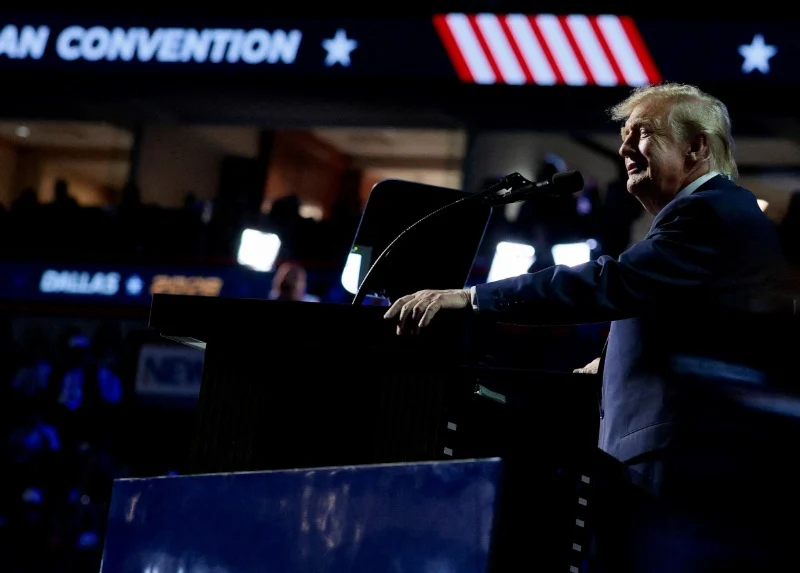
The president made the pledge during a Republican midterm convention in Dallas on Wednesday, saying the payments would follow a Republican victory in both the House of Representatives and Senate in the November 3 election.
Trump said the money would reflect what he called America’s “tremendous strength and success economically”, and would be known as the “Trump dividend”. He provided no detailed funding mechanism or explanation of how the scheme would be authorised.
David Schweikert, an Arizona Republican congressman, said he would oppose the proposal, arguing that injecting such a large sum into the economy would hurt the very workers it was intended to help.
“It would continue to raise interest rates,” Mr Schweikert told Reuters, warning that the cost would ultimately be placed on the country’s credit card and worsen America’s financial position.
The payments would cost about $1.2 trillion before interest, according to estimates cited in the debate. Republicans and economists have raised concerns that distributing the money while living costs remain high could intensify inflationary pressures.
Senate Majority Leader John Thune said it was unclear whether the proposal could secure the 60 votes needed to overcome a filibuster in the Senate. He nevertheless defended the broader aim of putting more money in Americans’ pockets and said Republicans would examine ways to let people keep more of their earnings.
Other Republicans have embraced the idea. Senator Bernie Moreno of Ohio said he was preparing legislation to establish the dividend after the election, presenting it as a measure to energise the party’s supporters.
Vice-President JD Vance suggested the plan could be funded partly by revenue from tariffs and indicated that it was intended primarily for American workers rather than wealthy households. But the proposed payout would far exceed the tariff income collected by the US government, while a substantial portion of that revenue has been subject to refunds following legal challenges.
Marc Goldwein, senior policy director at the Committee for a Responsible Federal Budget, said Congress would need to approve the payments. He noted that the United States was running a deficit of roughly $2 trillion a year and had accumulated national debt of about $40 trillion, leaving no obvious surplus from which to distribute a dividend.
Trump has previously floated payments funded by tariff receipts and savings attributed to the Department of Government Efficiency, but those proposals have not materialised. A separate payment to military personnel last year, described by the president as a “warrior dividend”, was funded by repurposed housing allowances.
Stephen Moore, a conservative economist who has advised Trump and White House officials, said it remained uncertain whether the announcement was a firm policy commitment or simply campaign rhetoric. The White House defended the president, saying critics had repeatedly underestimated his ability to deliver results.
