


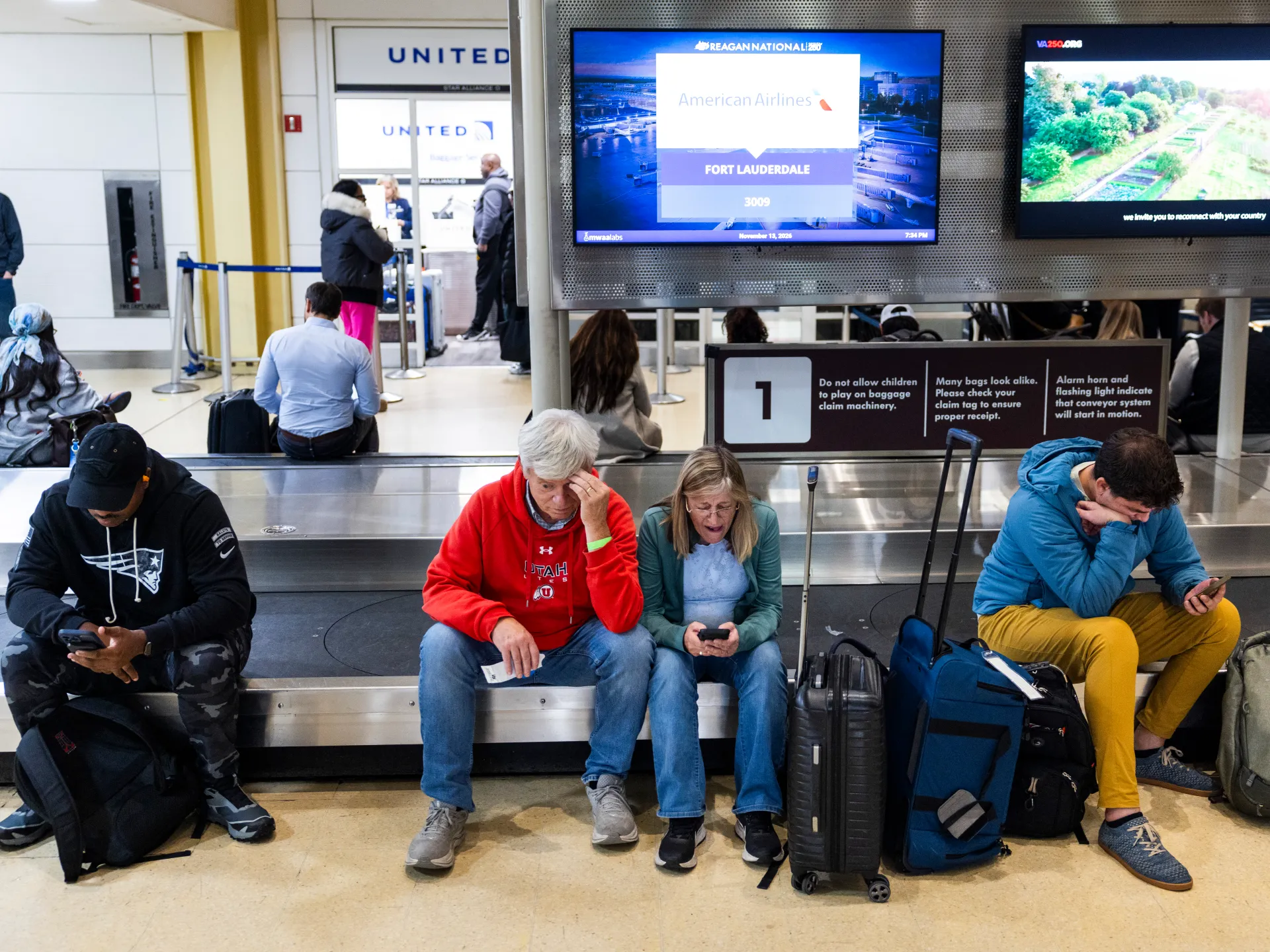
US airlines are working to clear a huge backlog after a nationwide ground stop was traced to a router failure during routine air traffic control maintenance, rather than a cyberattack.
More than 5,000 flights were cancelled on Saturday, following the scrapping of more than 9,000 flights the previous day. The stoppage, which lasted more than four hours, was the longest and only the second nationwide halt to US flights since the attacks of September 11 2001.
How the US ground stop unfolded
The Federal Aviation Administration (FAA) ordered all flights to remain on the ground at 3.54pm Eastern Time on Friday, citing a telecommunications outage affecting air route traffic control centres.
The restriction was lifted at 8.15pm, although hundreds of flights were still cancelled or delayed that evening. Aircraft already in the air were allowed to land, while international departures were assessed individually.
The disruption continued after the ground stop ended, leaving passengers stranded at airports and facing higher hotel and car-rental costs as airlines attempted to restore their schedules.
Router overload caused communications failures
Transportation Secretary Sean Duffy said a contractor had been replacing old copper wire with fibre optic lines at a remote site. A router at the location then began overloading the air traffic control network.
The resulting communications and radar gaps affected 17 of the FAA’s 22 en route centres. Officials were unable to immediately identify the source of the overload, prompting the nationwide halt as a safety precaution.
“When we see that, your safety is paramount. We shut down the airspace,” Mr Duffy said.
He said the router had been generating about 1,000 connection attempts every four to five seconds, and that officials were investigating whether the incident resulted from contractor error or faulty equipment.
The Professional Aviation Safety Specialists union said the problem was isolated to two routers upgraded on Friday. It also said technicians represented by the union were not involved in the work.
Officials rule out cyberattack
The sudden grounding initially prompted concern in Washington that the disruption might have been caused by a cyberattack, leading White House officials to hold an emergency meeting in the Situation Room.
However, the US government said it had found no evidence of a malicious cyber incident. Mr Duffy said the systems returned to service once the work at the affected location had been isolated.
“So we don’t believe this was cyber at all,” he said.
FAA Administrator Bryan Bedford said there was “zero evidence of anything nefarious and zero evidence of anything AI-related”.
L3Harris faces questions over the failure
L3Harris, the aerospace and defence company contracted to carry out the upgrade, has been named by the US Department of Transportation as the company responsible for the work.
Mr Duffy said the company had carried out decades of work for the FAA but “didn’t meet the moment”. He added: “Frankly, we’re going to hold people accountable.”
The secretary said investigators had not yet established whether the failure was caused by an installation mistake or a defective router.
L3Harris said it had been working closely with the FAA and that safety and reliability were its highest priorities. The company said it was supporting the investigation and had completed more than 70 per cent of the planned conversion from legacy copper wiring to fibre optics.
The FAA said it was carrying out additional testing with L3Harris to assess whether any further risks remained.
When will flights return to normal?
Mr Bedford said crews and aircraft had been left out of position after about 12,000 flights were lost, meaning pilots and cabin crew needed to reconnect with their schedules.
He said he believed “the worst is behind us”, while Mr Duffy said airlines were expected to restore their full schedules by Sunday night.
Airlines have offered travel waivers allowing affected passengers to rebook at no extra cost, as carriers continue efforts to bring operations back to normal.
