


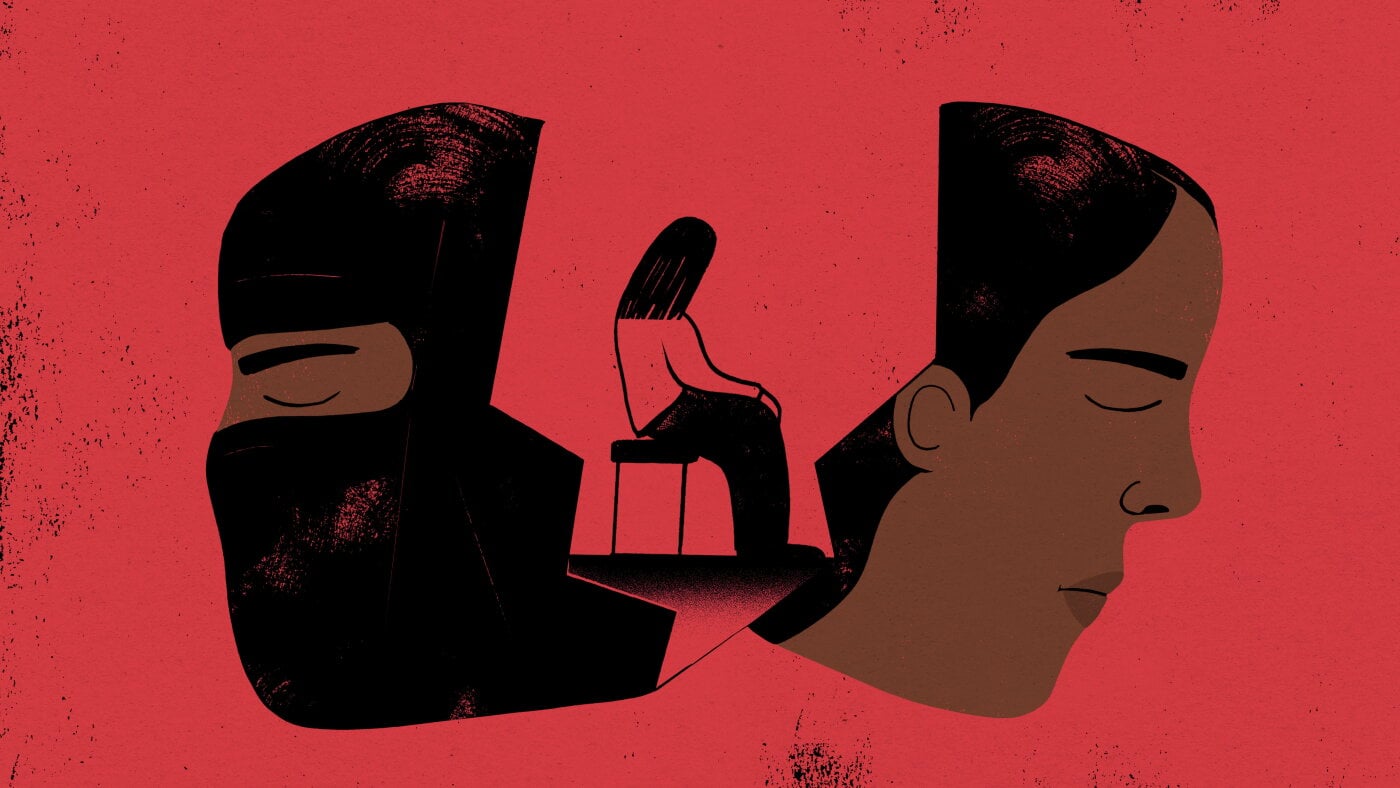
A Canadian woman who joined Islamic State in Syria as a young adult has described how she escaped the group, survived years of war and captivity, and later became an informant helping authorities locate ISIS fighters and children.
Known only as S., she was born in Pakistan to Somali parents and raised in Canada from the age of two. She is not being identified by her real name or home city because of fears over repercussions from her past.
S. said she turned increasingly towards religion after her brother was shot dead by an acquaintance who was high on drugs. She became more devout and began wearing a hijab and long dress, but said she also experienced Islamophobic abuse, including an attack in which her family were sprayed with bear mace.
At a religious boarding school in eastern Canada, she befriended a woman who had returned from Somalia after joining al-Shabab, an armed group with links to al-Qaida. S. said the woman encouraged her to leave the West and travel to a Muslim country.
“I’m Canadian as it gets,” S. said. But, she added, hearing religious scholars warn that Muslims in the West would be targeted was “doing something to my brain that made me feel like running away from here”.
Canadian intelligence agencies began approaching her at work and at home because of the people she was associating with, according to S. She said the attention left her frightened and uncomfortable, while pressure on her family eventually contributed to her leaving their home.
In 2014, shortly before starting university, S. flew to Turkey. She believed she was travelling to support Muslims and practise her faith more freely, but was connected with smugglers in Istanbul and taken across the border with other recruits.
The group was delivered to armed men who took their passports before sending them on to Raqqa, then the centre of ISIS’s self-declared caliphate. S. said she saw severed heads as she approached the city, a glimpse of the brutality that awaited her.
Escape from ISIS-controlled Syria
She was placed in an overcrowded guest house near the Euphrates, where a couple tried to force her into marriage with one of four men. When she refused, she said they threatened her, withheld clothes and showers and confined her to a room.
S. escaped through a back door with another Canadian woman who was pregnant. They took a taxi to another guest house, where she was able to contact her family in Canada for the first time in months.
Her relatives urged her to return, saying Canadian authorities had told them she would face no repercussions. But S. said she remained trapped, with few options for leaving Syria. She eventually agreed to marry a Moroccan man who worked at the guest house because it offered her a route out.
She later gave birth to their daughter in a hospital during bombing. As the child grew, S. said her husband became abusive and objected to her bringing up their daughter in what he considered a Western manner.
When she sought a divorce, she said an Islamic State judge told her: “You think you are a free woman, but you’re not. You are a slave to your husband.”
As fighting intensified around Raqqa, S. fled with her husband and daughter. She described rationing flour, olives and dates while her two-year-old became malnourished, and said some people were reduced to eating grass.
The family eventually reached Baghuz, the final stronghold of ISIS. When Kurdish forces offered women and children the chance to surrender, S. left with her daughter while her husband chose to remain and fight.
They were taken to al-Hol camp, where thousands of women and children linked to ISIS were held. S. said she began working secretly with the Kurds, wearing military clothing and covering her face, because she feared the children in the camp were being groomed to become the next generation of extremists.
“I didn’t want to see the children growing up in a prison camp,” she said.
Peter Galbraith, a former US ambassador who was helping doctors, diplomats and law enforcement officials trace ISIS children and return them to their families, said S. initially sought a deal that would secure her release in exchange for information. He refused to promise one, but said she provided intelligence regardless.
S. said the work placed her in grave danger. “If these women would ever suspect me of cooperating with Kurds, Americans, whoever, they would try to kill me,” she said.
She helped identify an American child being held inside a tent, allowing Kurdish forces to retrieve the girl. S. was then moved to a Kurdish prison, where she spent weeks in solitary confinement with her daughter.
Her daughter was eventually taken to Canada with help from Galbraith. S. said the separation was devastating, but promised the child that she would follow. It took another year for S. to return to her family.
Now 35, she lives in Canada and works with skincare clients. She said she has no contact with people from her former life and continues to co-operate with Canadian and US authorities, including by helping track down ISIS fighters and sympathisers and testifying in court.
Her daughter, now nine, remembers parts of her early childhood but does not understand the full story. Asked what she wants to become, she gives an answer far removed from the world in which she began her life: “I want to be a scientist or an astronaut.”
