


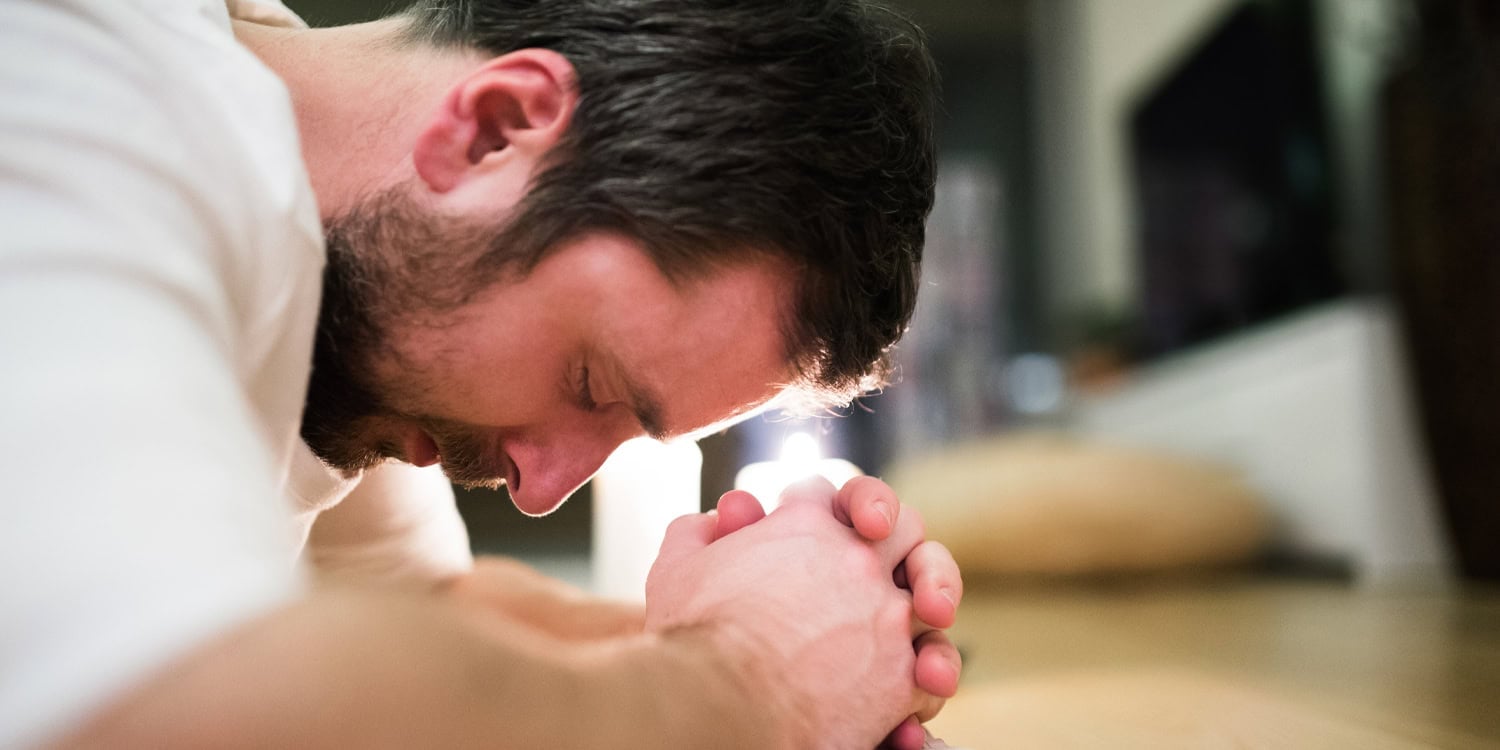
A new study tracing Christians’ day-by-day experience of reconciliation with God after personal wrongdoing finds that repentance and feelings of absolution rise rapidly in the initial days, then gradually level off over about two weeks. The research, conducted by Richard G. Cowden of Harvard and Kaye V. Cook of Gordon College, tracks adults in the United States who acknowledge a recent personal sin and feel initially unforgiven.
Reconciliation with God is understood as the psychological and spiritual process of restoring harmony with the divine after a believer perceives a breach of moral or religious standards. Within Christian traditions, maintaining a sense of intimate communion with God is a central aim, and awareness of wrongdoing can disrupt that bond, triggering guilt and spiritual strain.
The study clarifies two linked processes in repairing this strain: repentance, an active turning back toward God, and absolution, the internal sense that God offers mercy and has wiped away guilt. The researchers note that these experiences are distinct, even though they are connected in the broader journey toward spiritual closeness.
Historically, psychologists have explored forgiveness largely in interpersonal contexts; less is known about divine forgiveness. Prior work has noted that seeking God’s pardon can predict feeling forgiven weeks later, while broader shifts in feeling pardoned can influence daily life, including attitudes toward loved ones.
The new investigation adds a finely grained, incident-focused dimension to this literature. The researchers used an online platform to screen 2,481 practicing Christian adults and selected 175 who described a specific sin within the past 24 hours and reported little or no assurance of forgiveness. These participants then completed surveys on Days 1, 2, 4, 8 and 16 after the misstep.
A distinctive feature of the study is that participants assessed the same instance of wrongdoing across multiple days, allowing for within-person change to be tracked rather than cross-sectional comparisons alone.
The sample ranged from 19 to 78 years old, with an average age of about 42; about 59 per cent were female and 74 per cent identified as White. Participants identified with a range of Christian traditions, most commonly Catholic (38 per cent), nondenominational (23 per cent) or Baptist (16 per cent). The described wrongdoings were most often rated as of moderate severity, with sexual sin, anger or resentment, and dishonesty among the frequent categories.
At each wave, participants rated their current levels of repentance and absolution on a four-point scale, and their sense of communion with God on a five-point scale. On Day 1, researchers also measured broader perceptions of God as benevolent versus strict, plus baseline tendencies to feel forgiven and ongoing divine struggles such as conflict or fear of punishment.
After accounting for factors such as age, gender, race, education, marital status, region, prayer and Bible-reading habits, church attendance, adverse childhood experiences, personality traits and baseline anxiety or depression, the researchers found that repentance and absolution both followed a logarithmic trajectory over the 16-day window. In plain terms, both increased most quickly in the first few days and then slowed over the second week, though they did so at different paces.
On Day 1, average repentance stood at 2.52 out of 4, while absolution began lower at 1.90 out of 4. Across the period, absolution rose more steeply (growth of 0.28) than repentance (0.19), though individual patterns varied greatly and starting points on Day 1 did not strongly predict the pace of change.
“Among Christians, taking appropriate responsibility for personal sin before God and experiencing God’s forgiveness are connected, but they are not the same thing,” the researchers said. “A Christian may acknowledge wrongdoing and turn toward God in repentance while still struggling to experience absolution from God.”
The findings also showed that although both processes tended to rise together, they were not synchronised for all participants, and there was no universal timetable for when forgiveness should be felt.
When identifying predictors of faster spiritual recovery, the study found that the quality of ongoing relational experiences with God mattered more than abstract beliefs about God’s character. General perceptions of God as benevolent and a person’s overall tendency to feel forgiven did not meaningfully alter the speed of change. By contrast, participants reporting fewer divine struggles on Day 1 experienced steeper increases in both repentance and absolution.
A stronger baseline sense of communion with God on Day 1 also predicted a faster rise in feeling absolved over the 16 days, suggesting that feeling close to God and free from spiritual conflict may support internalising forgiveness after a misstep.
“One particularly interesting finding was that the quality of participants’ lived relationship with God was more consistently associated with rates of change than their more general beliefs about God,” the researchers noted. “An important contribution is showing why it helps to ask about both engaging in repentance with God and experiencing absolution from God.”
The study also examined how fluctuations within individuals from one survey to the next predicted responses on the subsequent survey. A higher-than-usual spike in repentance tended to be followed by higher absolution, whereas spikes in absolution did not predict subsequent changes in repentance.
Looking ahead, the researchers found that a larger increase in absolution at one point modestly forecast a stronger sense of communion with God at the next, while changes in repentance alone did not directly predict communion. The overall pattern aligns with a sequence in which repentance precedes forgiveness, which in turn can lead to renewed closeness with God, though the evidence for the final step remains weaker.
Practically, the researchers suggest that supporting Christians after personal sin may involve addressing both sides of reconciliation: acknowledging wrongdoing through repentance with God while also helping individuals to receive and internalise forgiveness.
Caveats are acknowledged. The study was not preregistered, and because participants were selected for feeling unforgiven up to 24 hours after the transgression, the findings may not apply to believers who feel forgiven immediately. The sampling approach may also bias results toward conditional forgiveness rather than unconditional forgiveness, potentially explaining why repentance preceded absolution in the timeline.
As well, the researchers could not determine whether God had forgiven someone or when forgiveness occurred, given the observational design. About half of the participants completed all five surveys, and those who did tended to attend church more often and perceive higher baseline forgiveness, raising concerns about attrition bias. Further research across other Christian traditions and other religions is planned.
In the meantime, Cowden and Cook are pursuing practical tools to aid believers navigating spiritual distress after wrongdoing, including a freely available self-directed intervention known as the RECEIVE Forgiveness workbook. They report initial efficacy in a randomized trial among Indonesian Christians and say further trials in diverse contexts are planned.
Ultimately, the researchers emphasise that their aim is to understand how repentance, absolution and reconciliation with God differ across cultures and traditions, and to uncover why some believers internalise forgiveness more readily than others. They also seek to determine whether changes in reconciliation contribute to broader flourishing in life.
The study, titled Temporal Dynamics of Experiencing Reconciliation With God After Personal Wrongdoing: An Incident-Anchored Longitudinal Study of U.S. Christian Adults, was authored by Richard G. Cowden and Kaye V. Cook.
