


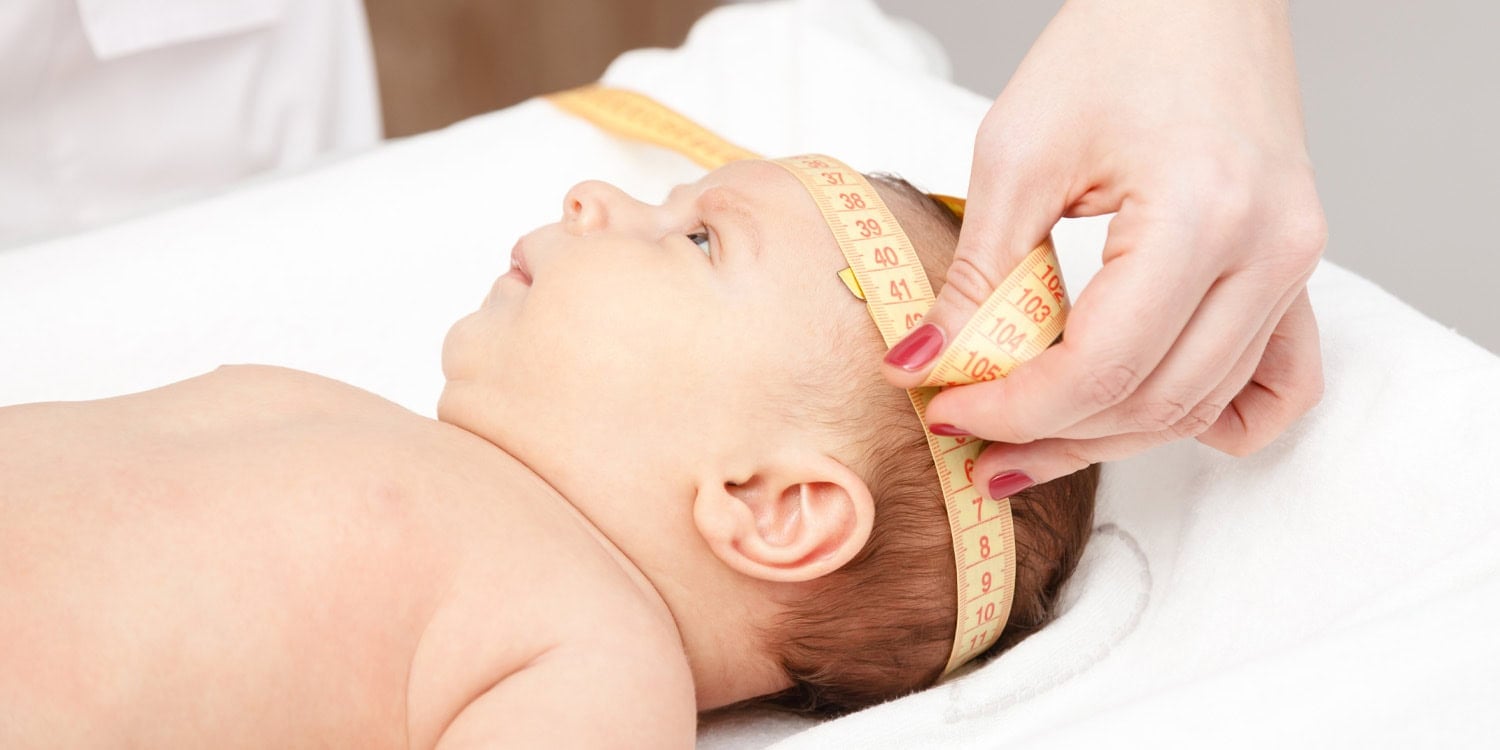
A UK study following thousands of children from birth through adolescence finds that those who go on to develop psychotic disorders tend to have smaller head circumferences throughout early life, a pattern largely explained by overall body height. The Avon Longitudinal Study of Parents and Children (ALSPAC) team, led by Sarah A. Ashley and Kate Merritt of University College London, reports that head growth differences appear across the early years and remain visible into late adolescence, with distinct trajectories for males and females with milder psychotic symptoms.
Psychosis describes a state in which a person loses contact with reality, often featuring hallucinations and delusions. While clinical psychotic disorders such as schizophrenia typically emerge in late adolescence or early adulthood, many people experience isolated psychotic symptoms at various points in life. The researchers emphasise that head size, measured as circumference, serves as a simple proxy for early brain growth because head size is correlated with brain volume.
“The study was motivated by the need to identify inexpensive and accessible biomarkers of psychosis risk,” said co-author Kate Merritt, a lecturer in human neuroscience in the Division of Psychiatry at University College London. “If we can identify people who are more likely to develop psychosis, this could eventually help us target preventative interventions toward those at greatest risk.”
Merritt said the team initially considered MRI markers but recognised MRI’s expense and limited accessibility. “We therefore wondered whether a much simpler measure, head circumference, might provide useful information. Head circumference is correlated with brain volume, so we looked at whether differences in head growth might be associated with psychosis risk.”
Previous research on infant head size and later mental health produced mixed results, with some studies linking smaller head measurements at birth to higher schizophrenia risk, while others found no link or even larger heads in some groups. Much of that work relied on birth measurements or early infancy, leaving longitudinal patterns into adolescence less understood. The current study sought to map head growth trajectories across the full psychosis spectrum and determine whether any differences were independent of overall height.
To do this, the researchers analysed data from ALSPAC, a population-based project tracking children born in the Southwest of England from April 1991 to December 1992. The analysis covered 3,866 participants—2,177 females and 1,689 males—who had complete background information and at least one head circumference measurement from birth to age 15, with measurements up to 22 time points.
When participants reached ages 17 or 18, trained psychologists conducted semi-structured interviews to assess hallucinations, delusions or thought interference since age 12. Of the total, 339 participants (8.8 per cent; 218 females and 121 males) were classified as having definite psychotic experiences, while 62 (1.6 per cent; 49 females and 13 males) met the criteria for a psychotic disorder. The remaining 3,527 served as a comparison group. A subset of 347 participants also underwent structural MRI at age 20 to measure total intracranial volume as a cross-check of head size as a brain proxy.
The researchers controlled for several maternal and birth factors—mother’s education level, pre-pregnancy body mass index, length of pregnancy and baby’s birth weight. In a secondary analysis, they added the child’s height trajectory to determine whether head size differences persisted after accounting for body size.
The imaging analysis supported head circumference as a reliable proxy for adult brain size: birth head circumference correlated moderately with total intracranial volume at age 20, while head measurements at ages 7 and 15 correlated strongly with adult intracranial volume in both sexes.
Across development, those who later met criteria for a psychotic disorder at 18 had consistently smaller head circumferences than controls from birth through age 15. In the statistical model, the psychotic disorder group averaged about 0.26 centimetres smaller head circumference than controls, a small fraction of overall head size, and the gap persisted across time.
The difference narrowed to about 0.20 centimetres after adjusting for height and birth-related factors, and in that step it fell just short of statistical significance. Analyses of head size at birth, age seven and age 15 independently showed smaller heads in the psychotic disorder group at each milestone, with significance at ages seven and fifteen.
Examining the larger group with psychotic experiences revealed sex-specific patterns. Females with psychotic experiences consistently had smaller head circumferences than female controls, by about 0.27 centimetres in the unadjusted trajectory. Conversely, males with psychotic experiences showed larger heads across the overall trajectory, averaging about 0.35 centimetres larger than male controls. Age-by-age checks indicated that these males were smaller at birth but larger at ages seven and 15; these patterns remained after accounting for maternal and birth characteristics.
After adjusting for height across development, the female differences largely disappeared, suggesting that the smaller heads in females with psychotic experiences reflect broader body growth restriction rather than isolated brain growth. For males with psychotic experiences, height adjustment did not alter the outcome, indicating the pattern there was not explained by overall stature alone.
The authors emphasise that hormones governing early growth, such as insulin-like growth factor-I, may help explain the observed sex differences and the link between general growth and psychosis risk. They also note that early environmental stressors, including maternal infections or nutritional deficiencies during pregnancy, could influence both growth and future mental health risk.
However, the researchers caution against interpreting head circumference as a predictor for any individual. “The key takeaway is that head circumference is a potentially useful, inexpensive measure for understanding developmental differences associated with psychosis risk,” Merritt said. “However, these findings reflect differences between groups and cannot currently be used to predict psychosis in an individual.”
They also point to limitations: nearly two decades of follow-up meant not every child had measurements at every age, and the diagnosis of psychotic disorder at age 18 was based on structured interviews rather than a medical diagnosis. With 62 cases of psychotic disorder and only 13 male cases, the statistical power to explore sex differences in full disorders is limited, underscoring the need for larger, independent birth cohorts to verify these patterns.
Looking ahead, Merritt suggested that head circumference could be combined with other developmental, genetic and environmental risk measures to improve identification of individuals who might benefit from early intervention.
The study, “Course of head growth from birth to adolescence across the psychosis spectrum,” was authored by Sarah A. Ashley, Kate Merritt, Francesca Solmi, Pedro Luque Laguna, Yanakan Logeswaran, Derek K. Jones, David Linden, Anthony S. David, and Abraham Reichenberg.
