


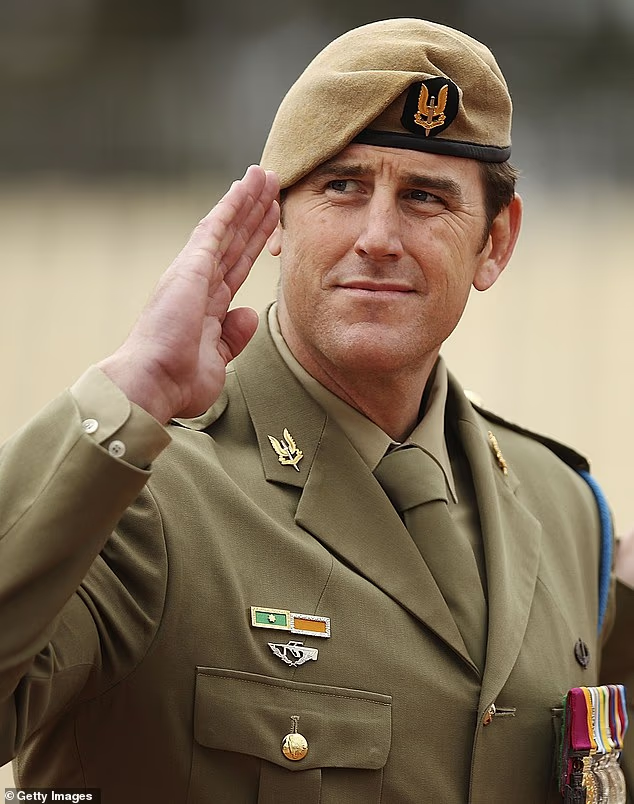
Ben Roberts-Smith has denied murdering prisoners or witnessing Australian soldiers shoot detainees, telling radio host Ben Fordham that he had never breached the rules of engagement during his military service.
The 47-year-old, Australia’s most decorated living soldier, faces five murder charges linked to alleged incidents in Afghanistan between April 2009 and October 2012. He denies the allegations.
Asked whether he had shot prisoners, Roberts-Smith replied: “No.” When asked whether he had seen anyone else do so, he said: “No, I did not.”
“I didn’t bloody murder anyone,” he added during what he described as his first interview since charges were laid.
Roberts-Smith was awarded Australia’s highest military honour, the Victoria Cross, for his service in Afghanistan. He said he would not change anything about his military career.
“I wouldn’t change a single thing,” he said. “I would do it all exactly the same way because I know that I did the right thing.”
He said he had been prepared to die for Australia and had done everything he could to protect fellow soldiers, adding: “I never broke the rules of engagement.”
Ben Roberts-Smith denies allegations about detainees
Roberts-Smith was also questioned about “throwdowns” — weapons allegedly placed on dead bodies to make those killed appear to have been armed.
He said soldiers had been instructed by military leaders to gather weapons and equipment with bodies for intelligence photographs. “Put the weapon on the body,” he said, describing it as “the process of the day”.
The allegation against some soldiers is that weapons were carried specifically to be planted on dead civilians and portray them as enemy fighters. Several SAS witnesses told a defamation trial that patrols carried items including folding-stock AK-47s, Russian grenades, spare webbing and handheld radios.
Two witnesses also told the trial that Roberts-Smith had instructed others in the practice. He denied the allegations.
He rejected claims of a culture in which inexperienced soldiers were encouraged to make their first kill, a practice known as “blooding”. He agreed that loyalty to fellow soldiers could not override the laws of armed conflict and that killing a prisoner would be a war crime.
“If you murder a prisoner, then you’re going to be charged and go through the process,” he said, adding that any soldier who witnessed such conduct would have to report it immediately.
Roberts-Smith said he had not reported unlawful conduct because he had never witnessed any involving fellow soldiers.
He also disputed suggestions of a “cowboy culture” in the Australian Special Air Service, saying some soldiers’ behaviour was a way of letting off steam.
“When it was game time, when it was actually happening, the majority of guys were the most professional soldiers you’ll ever meet,” he said.
Roberts-Smith said he first became aware of allegations against him after a journalist contacted him about bullying before raising an alleged war crime. He said the accusations had initially centred on claims that he had not received sufficient recognition.
He also recalled an allegation that he had killed a child in Afghanistan in 2006, describing it as “completely disproven” during the defamation case and “completely fabricated and false”.
