


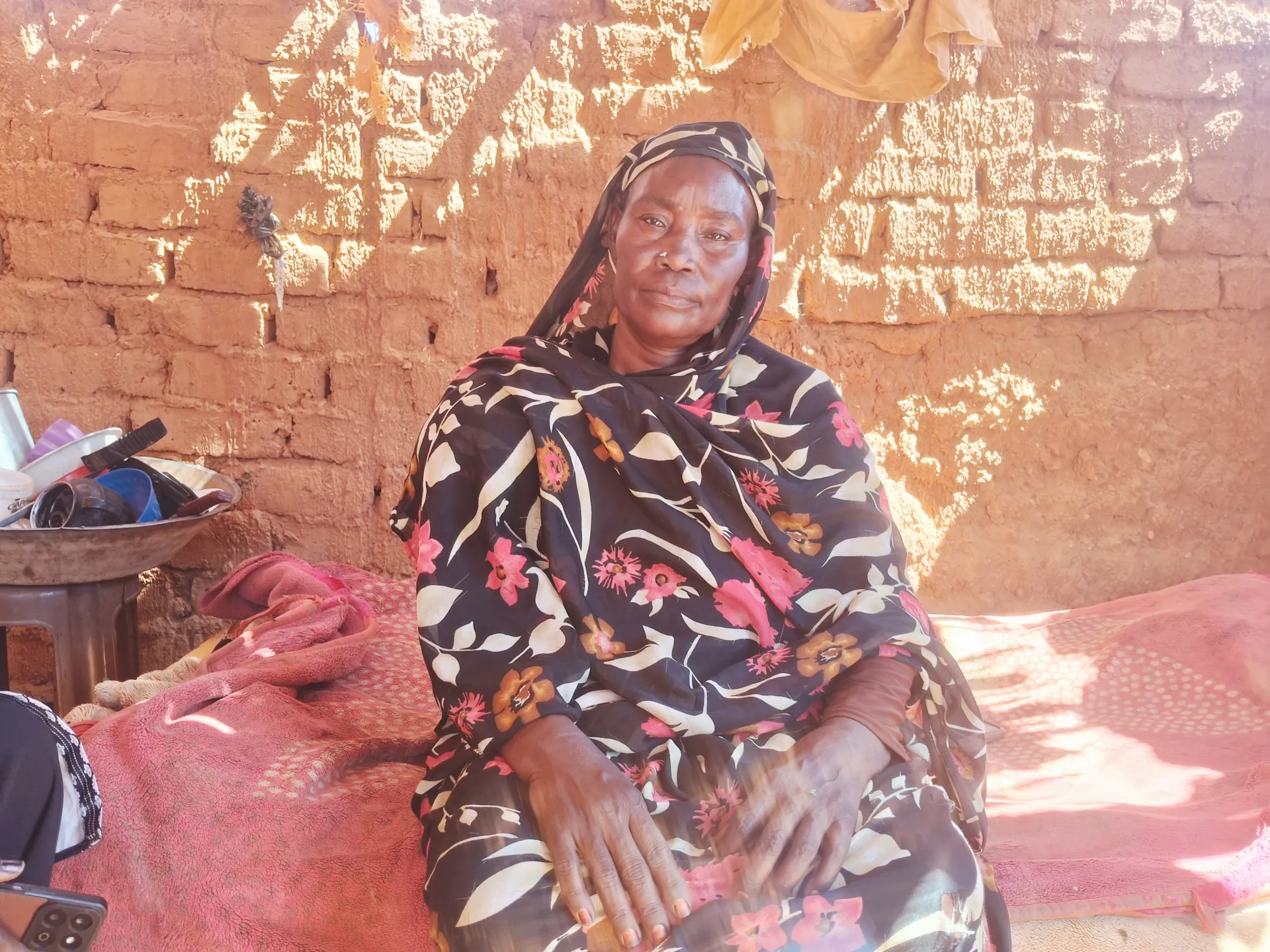
Displaced families in Sudan are facing a worsening winter crisis as shortages of humanitarian funding leave millions without adequate shelter, blankets, warm clothing or basic household supplies. In al-Ghadir, north of Omdurman, families who fled fighting in Darfur say they are already struggling to find food, water and medicine.
Fatima Mohamed Haroun, believed to be about 60, was displaced from West Darfur at the start of the war in 2023. Her son has been missing for a year and, after his wife died following childbirth, Haroun became the sole guardian of her four grandchildren.
The family now lives in a crumbling mudbrick building and has received no humanitarian assistance since being displaced. Haroun said they rely on neighbours for food, although those offering help are themselves sometimes unable to eat.
“I cannot work or earn money, so we depend on neighbours who occasionally give us food. But even our neighbours sometimes have nothing to eat. When they have no food, my grandchildren and I go to bed hungry,” she said.
With winter approaching, the family has no blankets or other supplies to protect the children from the cold. “We sleep on the ground with only the sky above us. The cold is severe, and the children are suffering,” Haroun said, appealing for food, blankets, covers and other necessities.
Funding shortages deepen Sudan’s humanitarian crisis
Temperatures can fall sharply in Omdurman during winter, while al-Ghadir’s location near mountainous areas can make nights particularly cold. Displaced people living in unfinished buildings and temporary shelters are especially exposed because they lack heating, warm clothing and bedding.
The war between the Sudanese Armed Forces and the Rapid Support Forces, which began in April 2023, has forced more than 8.5 million people to flee their homes within Sudan, according to the International Organization for Migration’s Displacement Tracking Matrix.
Khartoum state was hosting 414,252 internally displaced people as of July 30. Although the state is now relatively more stable than at the height of the fighting, it continues to receive people fleeing violence in southern and western Sudan, including Darfur.
About 15.4 million people across Sudan need emergency shelter and basic household items. The IOM and the United Nations refugee agency have warned that funding shortages mean aid organisations can prioritise assistance for only 10 per cent of those in need.
Fighting, insecurity, drone attacks on civilian infrastructure and camps, and logistical difficulties are also obstructing aid deliveries. Less than half of the 2.9 billion dollars required under Sudan’s 2026 Humanitarian Response Plan had been received, forcing agencies to scale back some services.
Abdelaziz Suleiman Ori, director of culture and information for the Darfur regional government, said his administration was monitoring displaced people’s conditions in host states and coordinating assistance.
A winter plan covering blankets, clothing, food and children’s supplies has been prepared, but Ori said resources remained insufficient. “Our resources are not enough to meet the needs of the large number of displaced people. We appeal to humanitarian partners to provide more support,” he said.
Ori said responsibility for supporting displaced people was shared by the Darfur administration, host states, local authorities, communities and humanitarian organisations. He said convoys had been sent from Port Sudan to El Fasher and that officials were in contact with international organisations and UN agencies.
Kheira Matar Hassan, another woman from Darfur living in al-Ghadir, has been supporting her seven children by washing and ironing clothes for local families. She became separated from her husband after he travelled to a gold-mining area in Chad to look for work and has heard nothing from him since.
Hassan said she had received no support from the government or non-governmental organisations. Her income is irregular, and when she has no customers, the family goes hungry.
“We came from an area where we were not poor. We had our land, cultivated it and lived off what it produced. But the war brought us here,” Hassan said. “Please look at us and consider our circumstances. We are really suffering.”
