


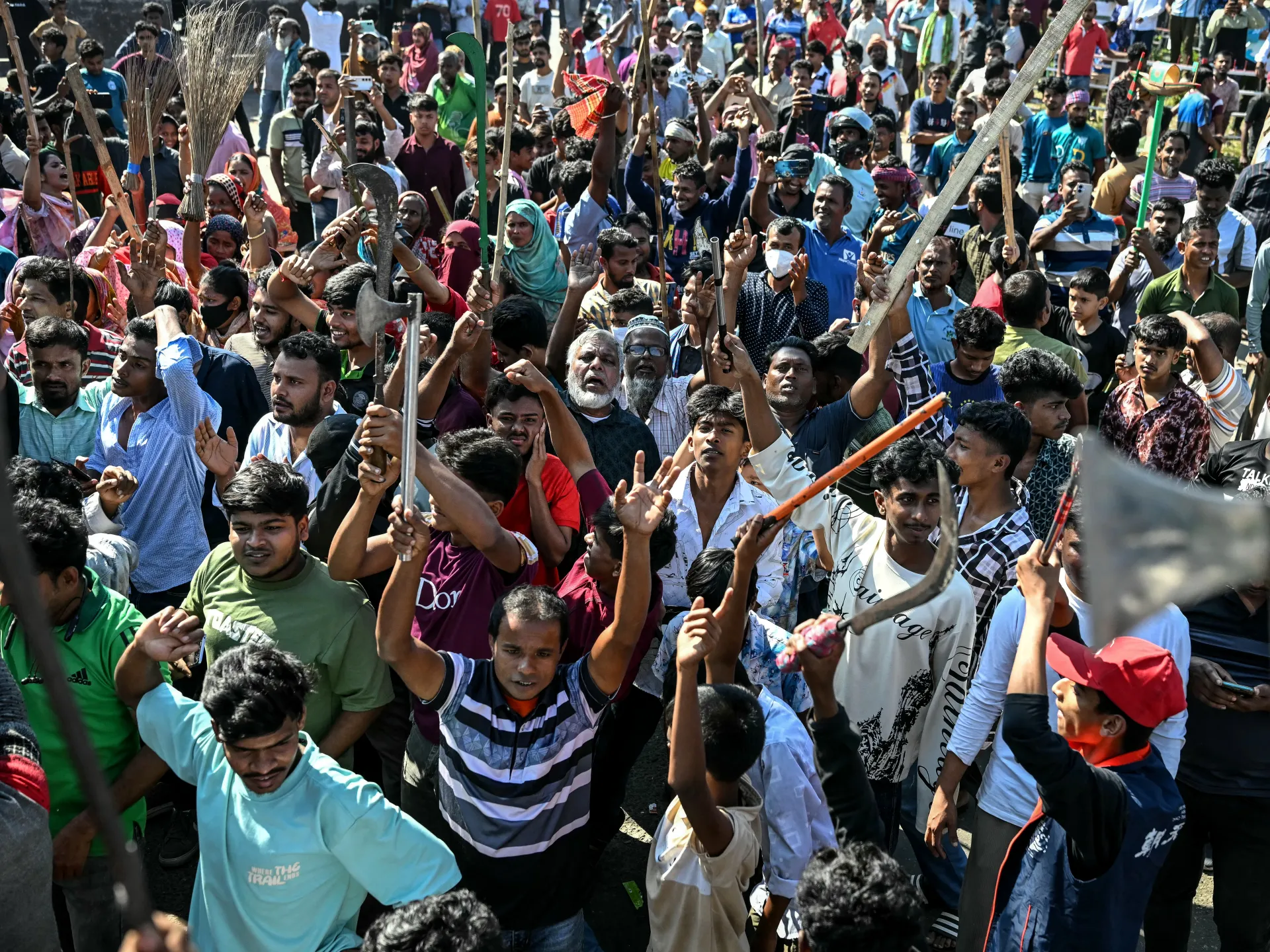
Bangladesh violence involving supporters of ousted prime minister Sheikh Hasina and members of the governing Bangladesh Nationalist Party (BNP) has left two people dead, the home minister said.
The clashes came as Hasina’s supporters protested after she announced that she wanted to return to the country. Her party, the now-banned Awami League, had called for a two-day lockdown over what it described as political retribution.
Violence was reported in Hasina’s hometown of Gopalganj and in Shariatpur district, about 90km (56 miles) from the capital, Dhaka.
Home Minister Salahuddin Ahmed said two people were killed in Shariatpur. He told reporters that a group had gone to the Padma Bridge area, apparently intending to erect a barricade, before an internal dispute or clash broke out.
Police identified one of those killed as Ibrahim Sepahi, who was believed to be an Awami League member. Senior police officer Md Zakaria Rahman said Molotov cocktails were exchanged during the confrontation and that Mr Sepahi died on the way to hospital.
Videos circulating on social media appeared to show Awami League supporters blocking roads with tree trunks and small fires.
Sheikh Hasina supporters demand end to party ban
Hasina went into exile in August 2024 after a student-led mass uprising brought her 15-year rule to an end. She was later sentenced to death in absentia for crimes against humanity after ordering a crackdown on protests in which hundreds of people were killed.
Hasina has rejected the verdict and said she was prepared to fight the case after returning to Bangladesh. Her supporters are calling for the government to overturn the ban on Awami League activities.
Bangladesh Watch, a non-profit group monitoring conflicts across the country and linked to the International Crimes Strategy Forum, said at least 3,520 Awami League leaders, activists and supporters, including members of affiliated organisations, had been arrested since November 1.
The group also said residents in Gopalganj had been cut off from mobile financial services, describing the move as “collective punishment” by the BNP government.
