


NASA’s Voyager One has crossed the one-light-day threshold, with a radio signal from the spacecraft taking 24 hours to reach flight controllers at the Jet Propulsion Laboratory in California.
The signal travelled more than 26 billion kilometres at the speed of light, confirming the spacecraft as the first human-made object to reach the milestone.
“Travelling a light-day is a singular feat for a spacecraft, but Voyager is so much more than a distant traveller,” said Joe Westlake, director of NASA’s heliophysics division.
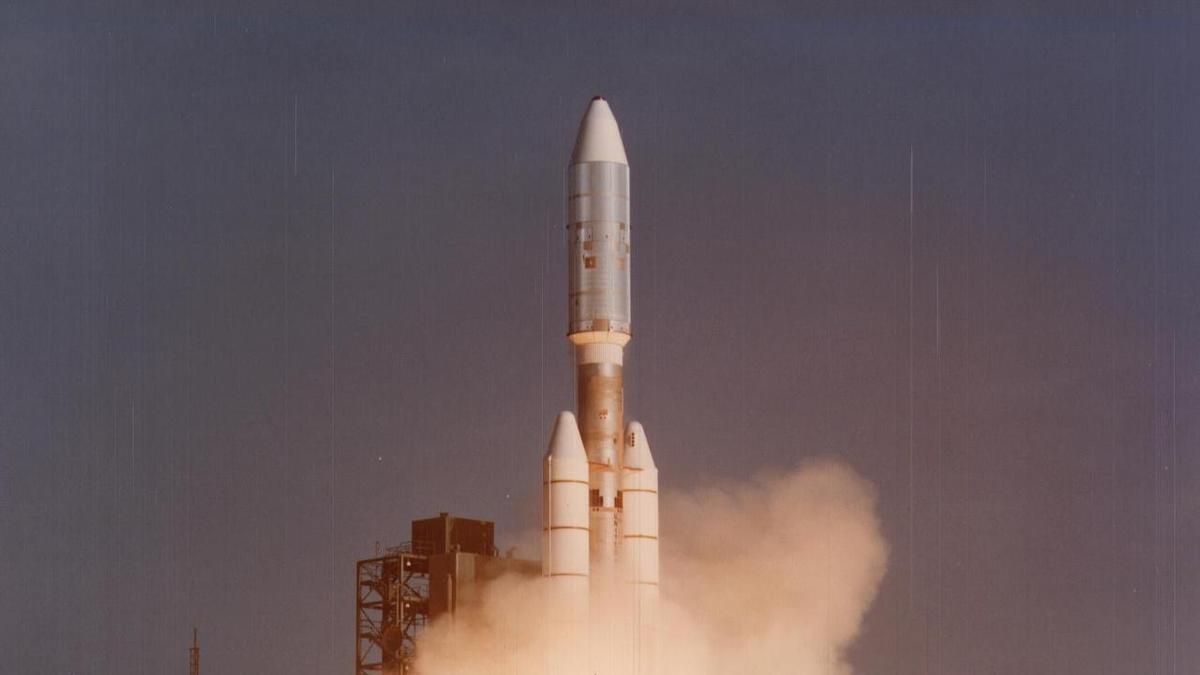
Voyager One launched in 1977 and flew past Jupiter in 1979 and Saturn in 1980. In 1990, it captured the most distant photograph ever taken of Earth and became the most distant human-made object in 1998.
It crossed out of the Sun’s sphere of influence and into interstellar space in 2012. NASA could not confirm its latest distance record until the radio transmission reached the control team.
Dave Gallagher, director of the Jet Propulsion Laboratory, said the achievement was “yet another historic feat on an extraordinary voyage of discovery”.
Voyager spacecraft continue sending data
Voyager One and its twin, Voyager Two, remain NASA’s longest-operating space missions. Most of their instruments have been switched off to preserve power, but both continue to send back data about an environment that has never previously been explored.
Voyager Two entered space two weeks after its twin, but took a longer route that included fly-bys of Jupiter, Saturn, Uranus and Neptune. It reached interstellar space in 2018 and is expected to cross the one-light-day threshold in 2035.
Both spacecraft are travelling at about 61,000 kilometres per hour and are powered by plutonium. Their cameras stopped operating long ago, although they typically transmit small amounts of scientific data almost every day.
Each carries a gold-plated phonographic record containing sounds from Earth. The project was led by the late Cornell University astronomer Carl Sagan, who also coined the phrase “pale blue dot” for Voyager One’s final view of Earth.
NASA expects the records, designed as time capsules for anyone or anything that might encounter them, to last for more than a billion years.
