


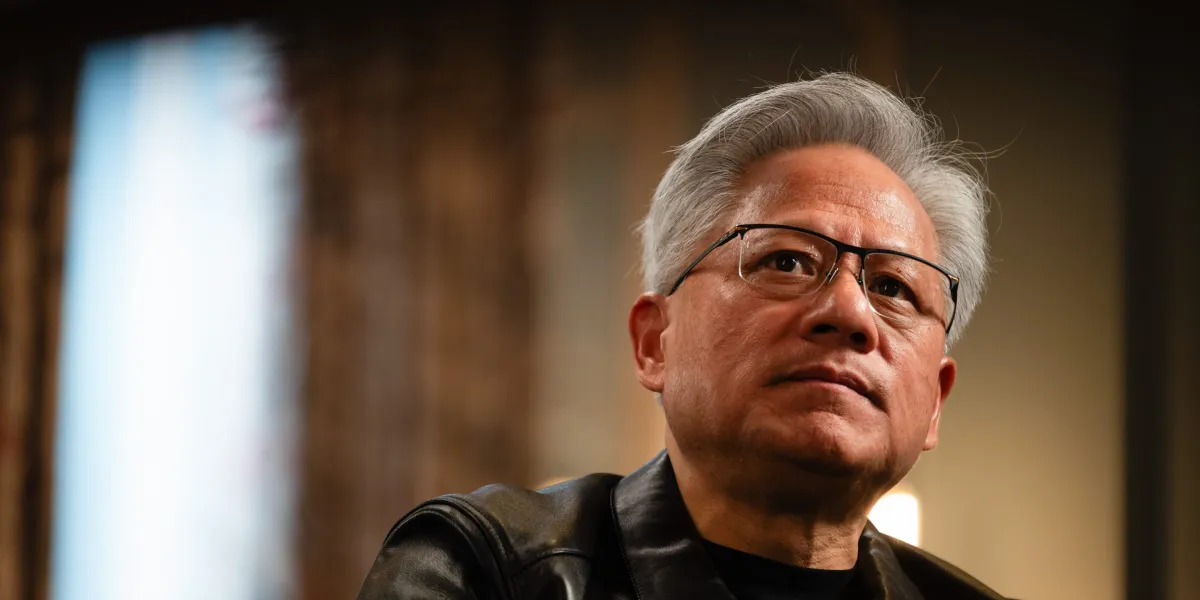
Bill Ackman has criticised Nvidia’s board for ruling out the reinstatement of Jensen Huang, arguing that directors acted too quickly over the chief executive’s departure. The board has defended its position, saying Huang resigned voluntarily after disclosing conduct inconsistent with company standards.
Nvidia announced an independent inquiry on November 8 and expressed confidence in Huang. Three days later, according to a regulatory filing, the board accepted his resignation with immediate effect, announcing his departure the following day.
The limited public explanation and speed of the decision have prompted scrutiny. However, the information released so far does not establish what the directors knew, or precisely when they became aware of the issues surrounding Huang.
The board’s decision not to reinstate Jensen Huang is separate from the question of how his departure was handled. Nvidia must now give interim chief executive Colette Kress clear authority, rather than leave employees, customers and potential successors uncertain about whether Huang might return.
Kress remains the company’s chief financial officer while serving as interim chief executive. The permanent successor will face the more difficult task of deciding where authority should sit and establishing a leadership structure capable of lasting beyond the current crisis.
Huang’s management style could make that transition particularly challenging. Bloomberg has reported that he had roughly 60 direct reports, giving him an unusually broad flow of information and influence across Nvidia.
That structure helped underpin the company’s success, but it may also have limited the independence of senior executives who were accustomed to turning to Huang for decisions. Replacing a founder with such a central role is therefore likely to involve more than simply appointing another chief executive.
Why Nvidia’s board is resisting a return
The strongest argument for Huang’s continued involvement is his record in building one of the most important technology companies of the modern era. His strategic and technical expertise may be exceptionally difficult to replace.
But Nvidia’s directors also face a shareholder derivative lawsuit naming Huang alongside numerous directors and executives. Ongoing investigations and the possibility of further legal proceedings create uncertainty over the demands on his time and the consequences of any findings.
Stavros Gadinis, a professor at Berkeley Law, has warned that bringing Huang back before the investigation is complete could expose directors to fiduciary risk. A negative finding after his reinstatement could also force Nvidia into another abrupt leadership change.
Nvidia is not a distressed business in need of an immediate rescue. The company reported quarterly revenue of about $115.8 billion on November 17, more than double the figure recorded a year earlier.
Those results largely reflect work carried out before Huang’s departure and do not guarantee that the transition will succeed. They do, however, underline the importance of preventing a leadership dispute from destabilising an exceptionally successful company.
Harvey Jones, Nvidia’s chairman, has reiterated that the board does not intend to reinstate Huang. The company has hired Heidrick & Struggles to assist with the search for a permanent chief executive.
The decision does not necessarily rule out any future role for Huang. If the investigations conclude favourably and a new chief executive wants his assistance, the board could consider tightly defined advice on technical matters or customer relationships, subject to governance and conflict concerns.
A board position or limited consultancy could also be examined later. But any such arrangement would need to preserve the authority of the person leading Nvidia, rather than create a standing possibility that Huang could return and unsettle the new structure.
If the company continues to prosper under a permanent successor, customers remain loyal and executives become confident in making decisions independently, bringing Huang back could create more uncertainty than it resolves. If the transition falters, the board would still have options.
For now, Nvidia’s priority is to ensure that its next chief executive has a genuine opportunity to establish authority, while retaining the ability to draw on Huang’s expertise only if circumstances and governance considerations clearly permit it.
