


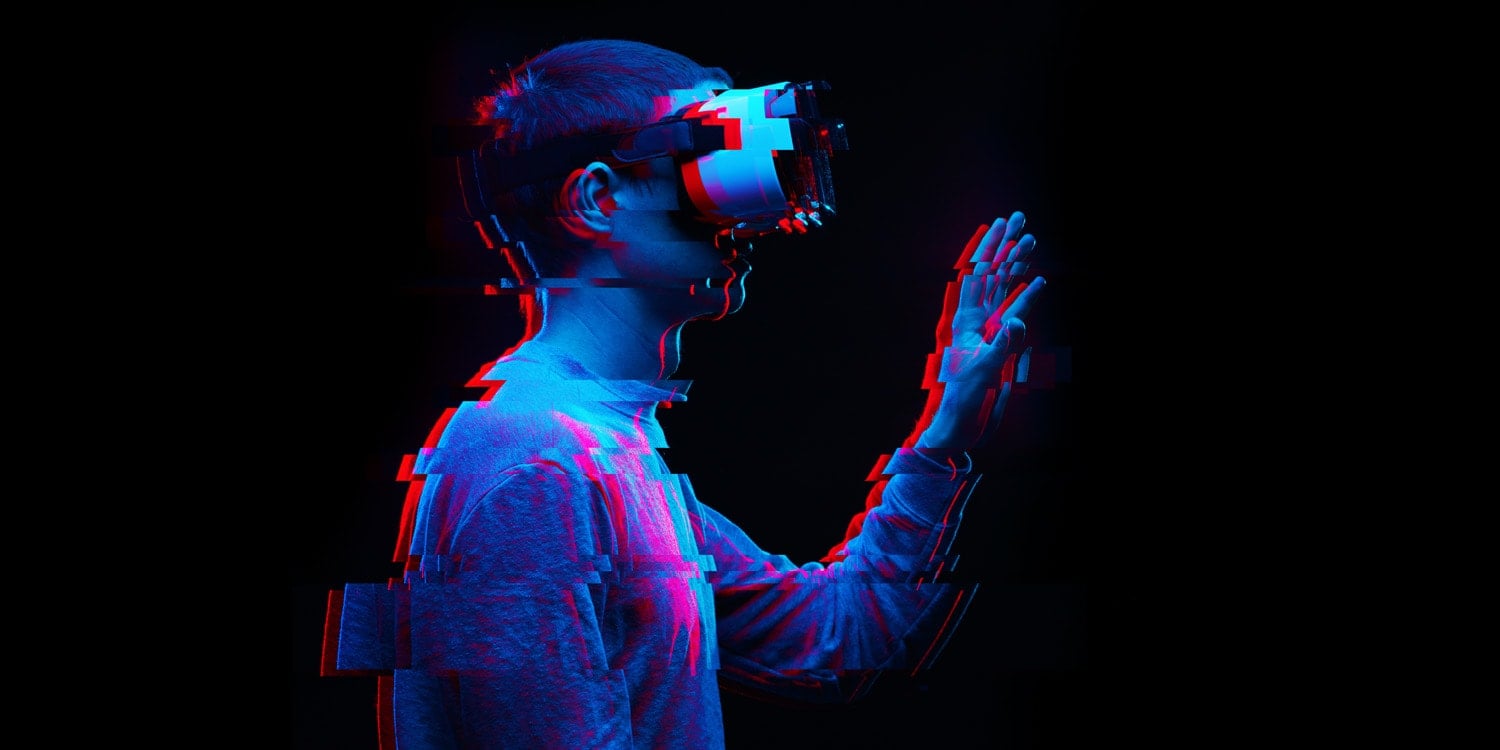
Immersive virtual reality headsets have been shown to reliably induce feelings traditionally associated with deep spiritual practice—or even psychedelics—according to a new study from Western University. The research, published in Psychology of Consciousness: Theory, Research, and Practice, compares virtual reality experiences with a standard computer monitor to see which format more effectively prompts “mystical” states.
A mystical experience, researchers explain, is a profound mental event marked by a sense of unity with the universe, altered perceptions of time and space, and intense positive emotions. The study notes that such experiences are often described as ineffable, and may involve a sense of nonduality where the sense of a separate self dissolves.
Historically, scientists have struggled to reliably trigger these states in laboratory settings using traditional methods such as meditation, fasting, or hypnosis. While psychedelic substances have been used to evoke self-transcendent experiences, finding non-pharmacological methods has remained a challenge for researchers studying human consciousness.
To test the potential of digital environments, Western University researchers Rebekka Miller, Tallulah Nyland, and Paul Frewen set out to determine whether fantastical VR imagery or a realistic meditation in a naturalistic VR setting would better provoke mystical states. The team also sought to go beyond self-report by capturing bodily responses during the experiences.
The researchers recruited 80 young adults and assigned them to two groups. All participants viewed their experiences via Nature Treks: Together, a programme that simulates interactive natural environments such as islands and underwater scenes. In the VR version, users appeared as bodiless spirits wearing tribal masks and gloves as they drifted through the landscape.
One group listened to a guided imagery script describing a fantastical encounter, beginning with ordinary daytime activity and shifting to surreal nighttime imagery, including animal spirits and a cosmic black hole. The other group followed a standard breath-focused guided meditation, with the surreal elements removed.
To control for order effects, each participant experienced both VR and a flat computer monitor, with the same audio script and visuals, in a counterbalanced order. In VR, participants wore a fully immersive headset; in the monitor condition, they stared at the screen with eyes open.
During the sessions, researchers recorded brain activity with wearable electroencephalography sensors placed on the forehead and behind the ears, and tracked heart rate and heart rate variability with chest straps. After each session, participants completed extensive surveys about their emotions, sense of presence inside the digital environment, and any mystical feelings.
The results showed a striking difference between formats. Among those using the VR headset, 28 per cent of the guided imagery group and 18 per cent of the guided meditation group reported a complete mystical experience, defined as scoring at least 60 per cent on four dimensions: feelings of unity, transcendence of time and space, intense positive mood, and ineffability. By contrast, no participant achieved a complete mystical experience when viewing the same environments on a standard monitor.
VR also amplified positive emotional responses. Participants reported stronger awe, serenity, interest, and perceived beauty while wearing the headset, along with a heightened sense of presence inside the digital world. In the flat-screen condition, boredom and fatigue were more commonly reported, suggesting the two-dimensional display failed to engage participants to the same extent.
Physiological data aligned with these subjective reports. VR sessions produced higher brain wave activity across theta, alpha, beta, and gamma bands, indicating increased cognitive and emotional engagement. Heart rate rose and heart rate variability declined during the second half of the VR experiences, signaling a heightened physiological arousal in response to the immersive environment. The monitor condition showed comparatively lower amplitudes in these measures.
When directly comparing the fantastical imagery with the realistic meditation within VR, the study found few differences. Participants reported similar levels of mystical experiences and positive emotions in both cases, and the EEG and heart rate data were nearly identical across groups. It appears the immersive quality of the VR experience itself—rather than the presence of magical content—drives the profound feelings.
One caveat noted by the researchers is that the meditation condition, even when presented as a realistic virtual environment, was still described as dreamlike and surreal by participants. This overlap could partly explain the similar outcomes between fantastical and realistic scripts. The visual beauty of the digital world may be a powerful trigger for awe on its own.
The study also acknowledges technical caveats. The physical movement inherent in VR, as participants turned their heads to look around, might introduce electrical noise into the brain data. In contrast, the monitor condition kept participants seated and facing forward, which could contribute to the differing measurements. Future work will need to account for movement-related noise to isolate psychological effects more clearly.
Additionally, participants completed the identical scripted exercises twice, which may have diluted intensity due to expectations formed after initial exposure. The researchers suggest testing participants’ reactions to first experiences of digital mysticism and exploring responses across diverse populations and spiritual backgrounds to understand cultural influences on these digital encounters.
The study, titled Mystical experiences in virtual reality 2: Fantasy versus realism and psychophysiological correlates, was authored by Rebekka Miller, Tallulah Nyland, and Paul Frewen, with the research supervised by Frewen at Western University.
