


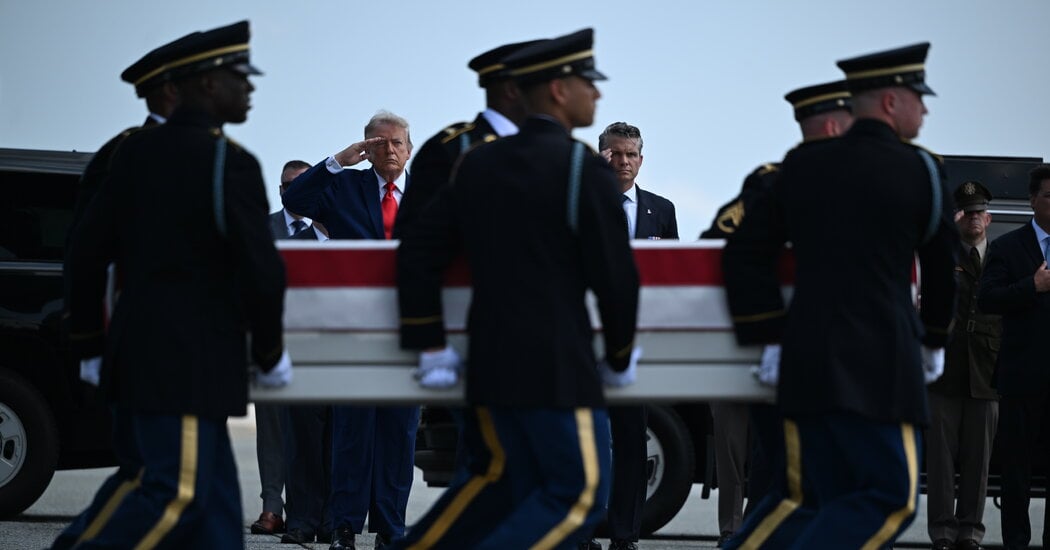
A Pentagon inspector general report on the Iran war has disclosed extensive damage to US military and diplomatic facilities, significant weapons inventory shortfalls and 18 American deaths alongside 824 wounded.
The independent oversight report covers the first four months of the conflict, from February 28 to June 30. It also indicates that the Pentagon’s complete mission statement remains classified, suggesting that the publicly stated aims may not represent the full scope of the operation.
The White House and Pentagon have said the campaign is intended to destroy Iran’s nuclear programmes, attack its drones and ballistic and cruise missiles, and disrupt production of those weapons.
War costs and damage
The inspector general said calculating the overall cost was difficult because the Pentagon had not received a separate congressional appropriation for the conflict. Defence Secretary Pete Hegseth did not request additional funding before combat operations began, meaning existing money for training and maintenance has been used.
On June 24, the White House submitted a 67 billion dollar request for supplementary war funding. Of that sum, 21 billion dollars was intended to replace munitions already used.
A separate Congressional Budget Office assessment said the conflict had cost the United States about 38 billion dollars by August 1.
The State Department estimated that US embassies, consulates and other diplomatic sites across the Middle East had suffered around 184 million dollars in damage. The US diplomatic mission in Iraq was hit by “more than 600” Iranian attacks during the first four months, causing damage estimated at more than 157 million dollars.
Iranian counterattacks damaged or destroyed hundreds of buildings and other structures at American bases in Bahrain, Iraq, Jordan, Kuwait, Oman, Qatar, Saudi Arabia and the United Arab Emirates.
US munitions and military deployments
The Pentagon’s senior acquisition officials told the inspector general that weapons expenditure had created “strategic inventory shortfalls”. Production has been accelerated, but the defence industrial base needs “significant lead time” to expand capacity.
Manufacturing bottlenecks remain in solid rocket motors, as well as in the supply of high-grade explosives and propellants. The Congressional Budget Office also reported that US munitions stocks had been significantly depleted.
Pentagon spokesman Sean Parnell rejected that assessment, saying: “Claims of U.S. munition shortages are false.”
About 50,000 US service personnel have supported the war in the Middle East, with units rotating through deployments. The operation has involved about a dozen fighter squadrons, destroyers and air defence batteries, along with mobile launchers for artillery rockets and guided missiles including ATACMS and PrSM.
Four aircraft carrier strike groups have been deployed, alongside a partial deployment of the 82nd Airborne Division.
Dozens of American aircraft were damaged or destroyed, including 30 Reaper drones, 12 KC-135 aerial refuelling aircraft, four F-15 fighters and an A-10 attack aircraft.
Casualties and logistical strain
The US military has established limited medical treatment facilities at each regional deployment site and more advanced surgical facilities in several countries. For treatment beyond their capacity, American forces have relied on hospitals in host nations.
Medical evacuation helicopters in Iraq and Kuwait were moved after Iranian strikes. The report said the nature of the fighting meant that most American casualties were transported by road and ambulance.
The destruction of the Navy’s main logistics hub in Bahrain forced the Pentagon to find additional vessels equipped to move fuel and supplies to warships at sea.
The Navy has used the British-owned island of Diego Garcia as a replacement logistics centre. Supply ships now take two to two and a half weeks to reach the island, load fuel and goods, and return to operating areas outside the Persian Gulf.
The conflict has also placed demands on other US military commands. US European Command transferred munitions, equipment, aircraft and personnel to the Central Command, which oversees operations in the Middle East, and arranged supplies including fuel, food and medical provisions.
Pacific Command was ordered to pursue and board suspected Iranian merchant ships in the Indian Ocean and to provide six warships for the operation. They included the carrier strike group centred on the USS Abraham Lincoln, which spent roughly nine months at sea without a port call before beginning its return to its home port in southern California.
