


The International Court of Justice is due to rule on Thursday on whether Myanmar committed genocide against its Rohingya Muslim minority, in a case brought by The Gambia.
The judgment in The Hague will be the court’s first ruling on the merits of a genocide case for more than a decade. It could also influence other proceedings, including South Africa’s case accusing Israel of genocide in Gaza, a charge Israel contests.
What the ICJ must decide
The judges are being asked to determine whether Myanmar, as a state, breached the 1948 Convention on the Prevention and Punishment of the Crime of Genocide. The court will not decide whether individual soldiers or commanders are criminally guilty.
Under the convention, genocide involves acts including killing or causing serious harm with the specific intention of destroying all or part of a national, ethnic, racial or religious group.
The Gambia argues that the pattern of violence against the Rohingya can only reasonably be understood as evidence of genocidal intent. Myanmar maintains that its military was carrying out a counter-terrorism operation against fighters from the Arakan Rohingya Salvation Army, rather than targeting the Rohingya population as a whole.
The case was filed in November 2019 by The Gambia on behalf of the 57-member Organisation of Islamic Cooperation. Myanmar had argued that The Gambia could not bring the proceedings because it was not directly involved in the conflict, but the court rejected that challenge in 2022.
In January 2020, the ICJ ordered Myanmar to take emergency steps to prevent genocidal acts. Hearings on the substance of the case took place in January this year, with seven countries, including the United Kingdom, Canada and France, supporting The Gambia.
The Rohingya displacement
Myanmar’s military began what it described as clearance operations in Rakhine State in October 2016, followed by a much larger campaign in August 2017 after attacks on police posts by a Rohingya armed group.
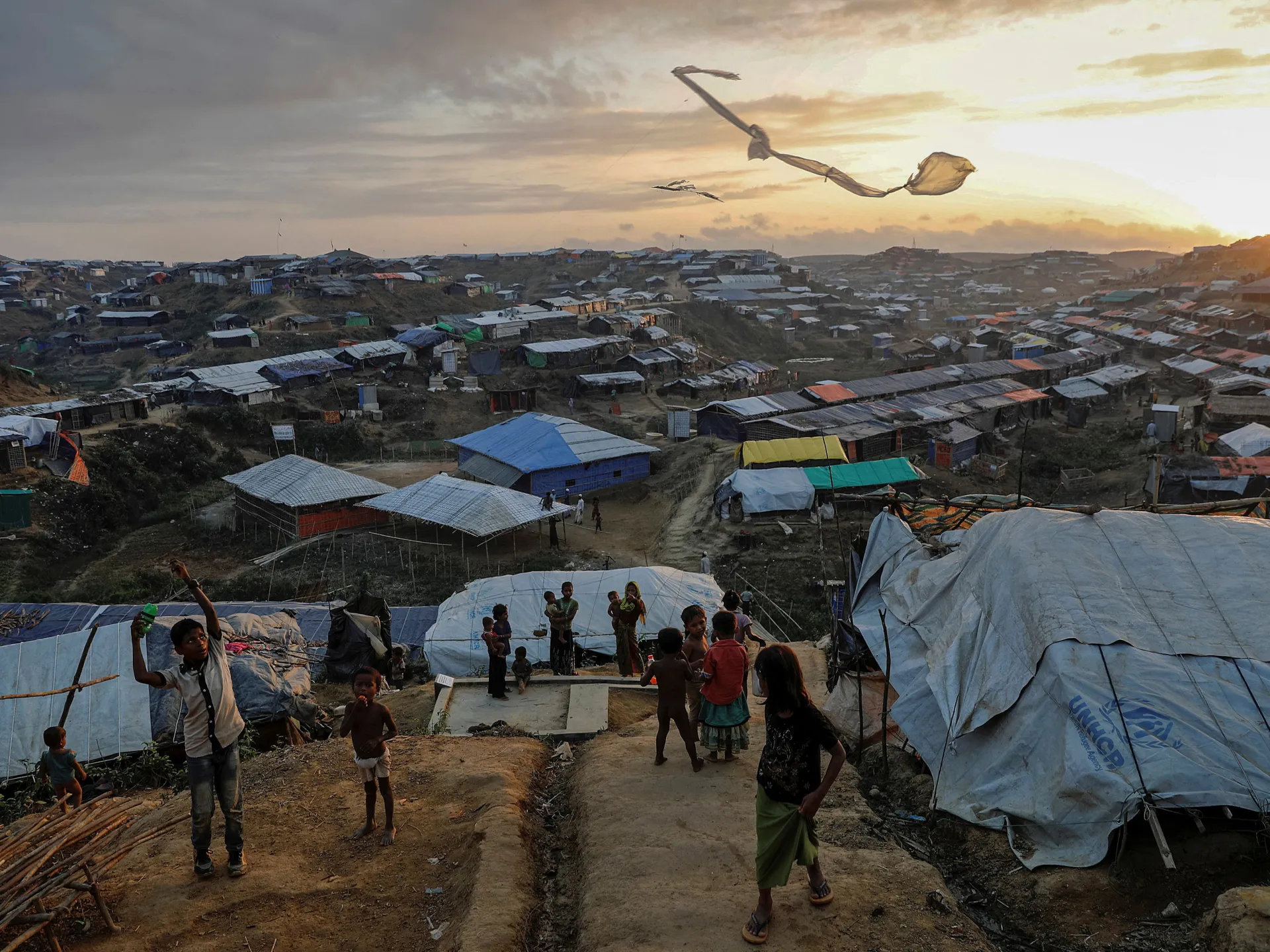
The United Nations has estimated that about 10,000 Rohingya were killed and 740,000 were forced to flee to Bangladesh. UN investigators reported that soldiers destroyed hundreds of villages and carried out mass killings, while sexual violence against women, girls and boys pointed to genocidal intent.
Myanmar’s military has announced convictions in only two cases arising from the violence. In one case, seven soldiers convicted over the killing of 10 Rohingya men and boys at Inn Din village were released after serving less than a year of their ten-year sentences.
The Rohingya had faced decades of discrimination before the 2017 crackdown. Myanmar excluded them from its 135 recognised ethnic groups in 1982, describing them as immigrant Bengalis, and almost all have since been denied citizenship.
Renewed fighting in Rakhine State since 2023 has brought further displacement. The UN human rights office said both Myanmar’s military and the Arakan Army had committed widespread and systematic abuses, while more than 155,000 Rohingya had fled to Bangladesh since early 2024.
That has brought the Rohingya refugee population in Bangladesh to about 1.2 million. Most live in crowded camps in Cox’s Bazar, where falling international aid has led to reduced food rations and the closure of many camp schools.
What a genocide ruling could mean
A finding against Myanmar would formally recognise the harm suffered by the Rohingya, but its immediate practical effect could be limited. The Gambia has asked the court to require Myanmar to enable displaced Rohingya to return safely, compensate them and rebuild or replace destroyed homes and property.
Michael Becker, an international law professor at Trinity College Dublin and a former ICJ legal officer, said the court might impose those requirements only in part or in general terms, leaving Myanmar to decide how to comply.
“Even if the ICJ were to order far-reaching forms of relief, the political conditions on the ground in Myanmar are not amenable to realising that relief anytime soon,” he said.
William Schabas, an international law professor at Middlesex University, described the measures sought by The Gambia as “robust”. He said they could have “significant positive effects on the security, dignity and livelihoods of the Rohingya in Myanmar” if implemented.
The judgment will be the first final ruling in one of five genocide cases pending before the ICJ. Mr Becker said it could clarify how judges should infer genocidal intent from a pattern of conduct, particularly where a state argues that its actions took place during an armed conflict.
Mr Schabas said the decision would have “very dramatic effects” on the other cases, including South Africa’s proceedings against Israel. “In my opinion, the South African case against Israel is much stronger than the case of Gambia against Myanmar. If Gambia wins against Myanmar, we can be confident that South Africa will prevail over Israel,” he said.
