


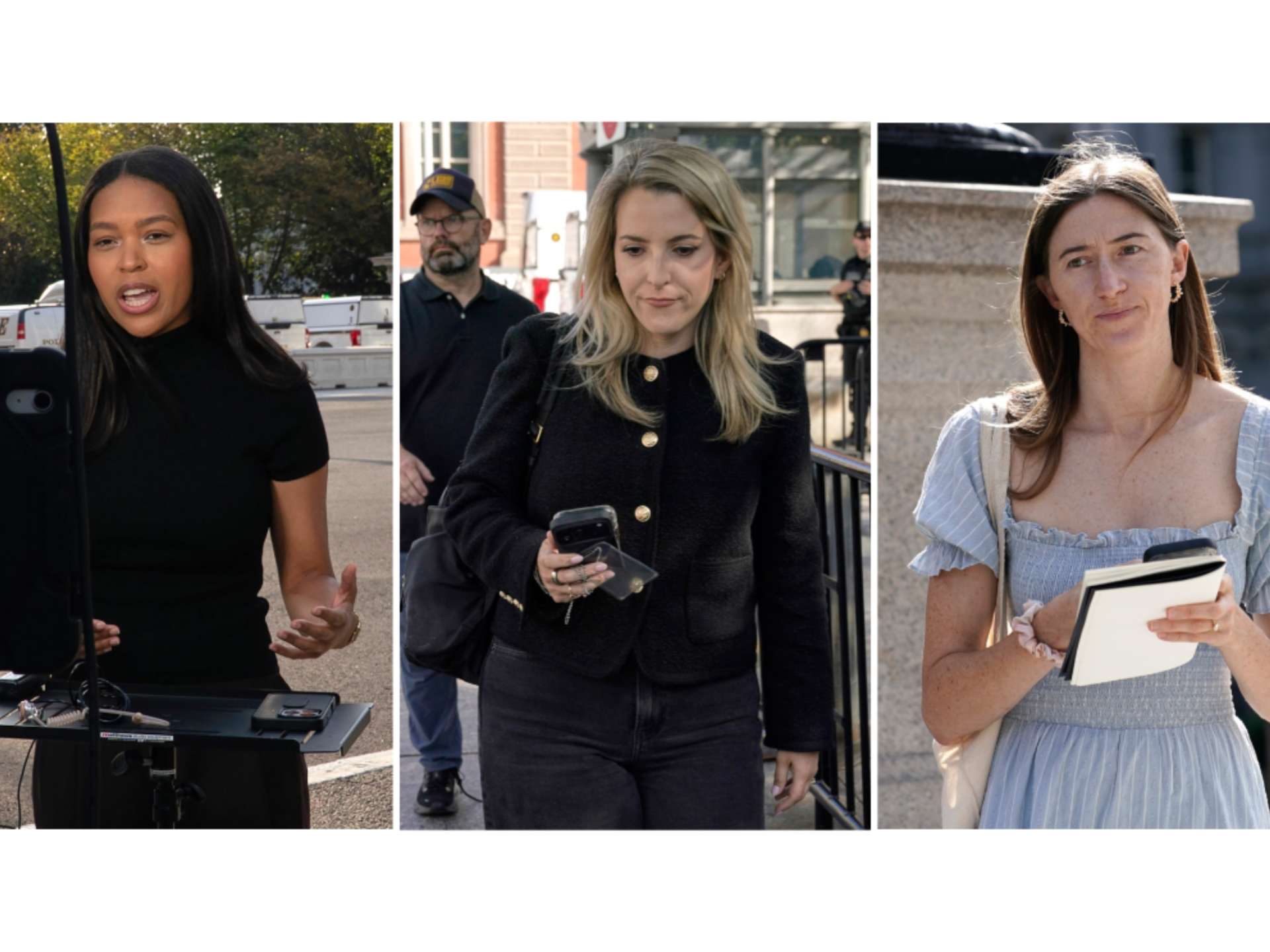
Journalists from CNN, MS NOW and Politico have been barred from the White House after Donald Trump accused the three organisations of publishing “fake news”, with reporters’ press credentials deactivated or confiscated.
The White House ban took effect on Saturday, when reporters were turned away from the grounds. Mr Trump announced the measure on Friday and has said other news organisations could also be excluded.
CNN White House reporter Betsy Klein and MS NOW correspondent Akayla Gardner said on air that they had been denied entry. Ms Gardner said an officer confiscated her badge after telling her it had been disabled and that the decision was “above him”.
An MS NOW photographer also had their badge disabled, she said.
Politico reporter Cheyenne Haslett was later refused entry. Politico said the Secret Service denied her access to the complex and confiscated the pass that allowed her to enter the White House.
“A few minutes ago, our colleague Cheyenne Haslett attempted to enter the White House to do her job as a POLITICO reporter,” the organisation said.
“Secret Service denied her entry to the complex and confiscated the pass that allows her access to the White House.”
Politico added: “We stand by her and all reporters here covering the White House. As we said yesterday, we will vigorously defend our First Amendment rights.”
MS NOW said the White House belonged to the American people and that decisions made inside it were funded by taxpayers. “MS NOW intends to take any and all steps necessary to defend our First Amendment rights and the essential role of independent journalism in our democracy,” it said.
White House press access faces constitutional challenge
CNN media analyst Brian Stelter described the decision as “a direct threat to press freedom in the United States”. He added: “It’s so much bigger than CNN. This is a free speech test in America.”
The White House Correspondents’ Association said constitutional protections for the press did not depend on whether a president approved of a news organisation’s coverage. It noted that Mr Trump had described his own planned action as a “ban on the free press”.
The move is the latest confrontation between Mr Trump and news organisations during his first and second terms. In 2025, his administration restricted Associated Press access to the Oval Office and presidential travel after the agency declined to use the administration’s preferred name, “Gulf of America”, for the Gulf of Mexico. That dispute remains ongoing.
A 1977 federal appeals court ruling, Sherrill v Knight, established that once the White House creates press facilities for credentialed journalists, access cannot be denied arbitrarily or without compelling reasons. It also said journalists refused credentials must be told the factual basis for the decision, given an opportunity to respond and provided with a final written explanation.
It remains unclear what legal action CNN, MS NOW or Politico may pursue, or how courts would apply that ruling to the withdrawal of existing credentials.
Jameel Jaffer, executive director of Columbia University’s Knight First Amendment Institute, said the decision raised constitutional concerns. If Mr Trump intended to remove the organisations from the White House press pool, he said, the action was “doubly unconstitutional” because the pool was a “public forum” under the First Amendment.
“The president can’t exclude journalists from it on the basis of their viewpoints,” Mr Jaffer said.
Seth Stern, chief of advocacy at the Freedom of the Press Foundation, said: “It’s difficult to imagine a more blatant violation of the First Amendment than Trump banning news outlets from the People’s House for criticising the government.”
