


A Queensland woman who gave her terminally ill husband a combination of drugs after he asked her to end his suffering has pleaded guilty to aiding his suicide and received a two-year suspended sentence.
Kylie Ellina Truswell-Mobbs, 52, was sentenced in the Supreme Court in Brisbane over the death of David Ronald Mobbs in December 2023. Prosecutors accepted her plea to the lesser charge as an alternative to murder.
Justice Tom Sullivan took into account her early guilty plea and the 14 months she had spent in custody before sentencing. He said her actions had been motivated by “love and affection”.
The court heard Mr Mobbs had been diagnosed with motor neurone disease in April 2023, after he and Truswell-Mobbs had been together for 20 years and raised a family.
Although doctors initially believed he could have 15 years to live, his condition deteriorated rapidly. He lost the ability to walk or move independently, communicated using a letter board and required constant care.
Deputy Director of Public Prosecutions Caroline Marco said the family had discussed his care after he returned home from hospital to Alexandra Hills. Truswell-Mobbs raised the fact that voluntary assisted dying would take several weeks.
Mr Mobbs later suffered an episode of incontinence, which caused concern among his family. One of his sons told him he would understand if he no longer wanted to continue suffering, and Mr Mobbs subsequently communicated to his wife that he wanted to die.
After other family members and carers had left the immediate area, Truswell-Mobbs administered medication including morphine and diazepam, the court heard. She later told carers and others that she had given him an overdose to end his suffering.
Mr Mobbs died on December 6, 2023. His cause of death was recorded as mixed drug toxicity, with motor neurone disease listed as a significant contributing condition.
During a police interview, Truswell-Mobbs said her husband had repeatedly asked her to end his life and had communicated his wishes through the letter board. She said she could not bear to watch him suffer and believed she was carrying out his wishes.
Ms Marco told the court that Truswell-Mobbs had acted out of compassion for a terminally ill loved one and a desire to relieve his suffering, rather than for any selfish or improper reason.
Defence barrister Ruth O’Gorman KC said Mr Mobbs had become reliant on a wheelchair and needed one or two people to move him. In the week before his death, he was unable to use his iPad, could not tolerate oral medication and had become entirely reliant on a ventilator.
Ms O’Gorman said he was in significant pain and had suffered incontinence. A carer had described him as being in more pain than anyone she had encountered, the court heard.
“That night Mobbs could not continue and begged his wife to end his life. She did that by administering pain medication over the course of the night,” Ms O’Gorman said.
She said the act had not been secretive and had taken place in the knowledge of people in the household, including one of the couple’s sons and several carers.
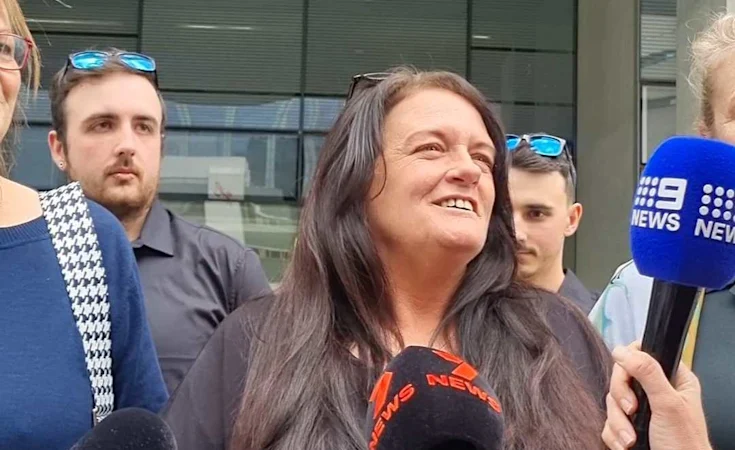
After leaving court, Truswell-Mobbs was cheered by supporters. She told reporters she was glad the legal process was over and that it felt as though a weight had been lifted.
Asked about her husband, she said: “He was beautiful, never ever forgotten about.”
