


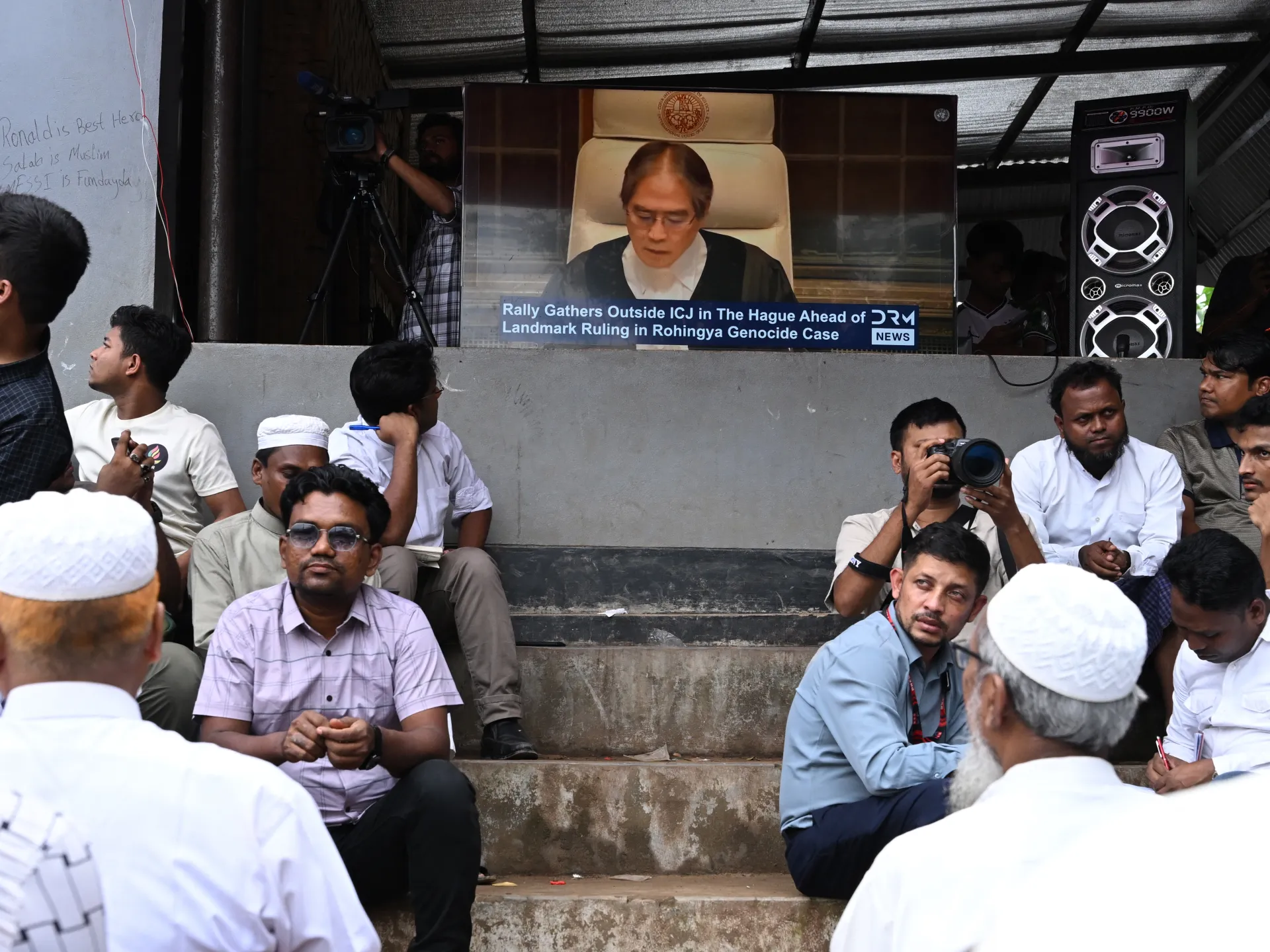
The International Court of Justice has ruled that Myanmar committed genocide against the predominantly Muslim Rohingya minority in 2017, in a landmark judgment delivered in The Hague.
It is the first time the court has held a state responsible for genocide. The case was brought by The Gambia in 2019, with the support of the Organisation of Islamic Cooperation, and has been closely watched by governments, lawyers, rights groups and Rohingya communities.
The court said Myanmar must compensate the Rohingya for the violations it committed, with the terms of compensation to be decided at a later date.
Reactions to the ICJ ruling
The Gambia welcomed the decision with “profound satisfaction”, describing it as “a historic day for international justice”. Its government said all states party to the 1948 Genocide Convention shared an obligation to prevent and punish genocide, and called on Myanmar to comply “fully and without delay”.
The Organisation of Islamic Cooperation said the judgment provided “redress for victims” and upheld “the principle of no impunity”.
United Nations secretary-general Antonio Guterres called the decision a “demonstration of international justice” and said it reaffirmed that impunity for “such horrific acts must not stand”. He also urged Myanmar to comply with the ruling.
UN human rights chief Volker Turk said the judgment “clearly concludes” that Myanmar was responsible for “one of the most egregious crimes known to humankind”. He added that the Rohingya people’s “suffering is a stain” on humanity.
UK Foreign Secretary Ed Miliband said Britain had ordered the expulsion of Myanmar’s defence attaché and summoned the country’s chargé d’affaires. He also called for an urgent United Nations Security Council meeting to discuss the ruling.
Mr Miliband said further measures would be announced in the coming days to ensure those responsible were held accountable.
Rohingya activists call for action
Yanghee Lee, the UN special rapporteur on Myanmar, described the ruling as a “deeply emotional day for all Rohingya people”, but warned that “justice has been decided, but not yet delivered”.
Nay San Lwin, a Rohingya activist and co-chair of the Arakan Rohingya National Council, said justice required the restoration of Rohingya citizenship, recognition of their identity and a safe and dignified return home.
He said the struggle would continue until those demands were met.
Wai Wai Nu, executive director of the Women’s Peace Network, said the judgment had shattered what she described as the military’s decades-long efforts to erase Rohingya identity, deny their existence and dismiss their suffering.
“By finding that Myanmar committed genocide, ordering a guarantee of non-repetition, and ordering restitution and compensation, the world’s highest court has permanently shattered that state-sponsored lie,” she said.
Amnesty International called the judgment a “historic and authoritative recognition of the atrocities committed against the Rohingya and a rare moment of justice for survivors, victims and their families”.
Maria Elena Vignoli, senior international justice counsel at Human Rights Watch, welcomed what she called a “long-awaited recognition of the suffering the Rohingya have endured from Myanmar’s military”.
Myanmar’s response
Myanmar’s shadow National Unity Government, which includes remnants of former leader Aung San Suu Kyi’s National League for Democracy party, said it respected the authority of the International Court of Justice and its judgment.
It pledged to consider the court’s findings and orders, and reaffirmed its commitment to accountability and preventing further atrocities.
