


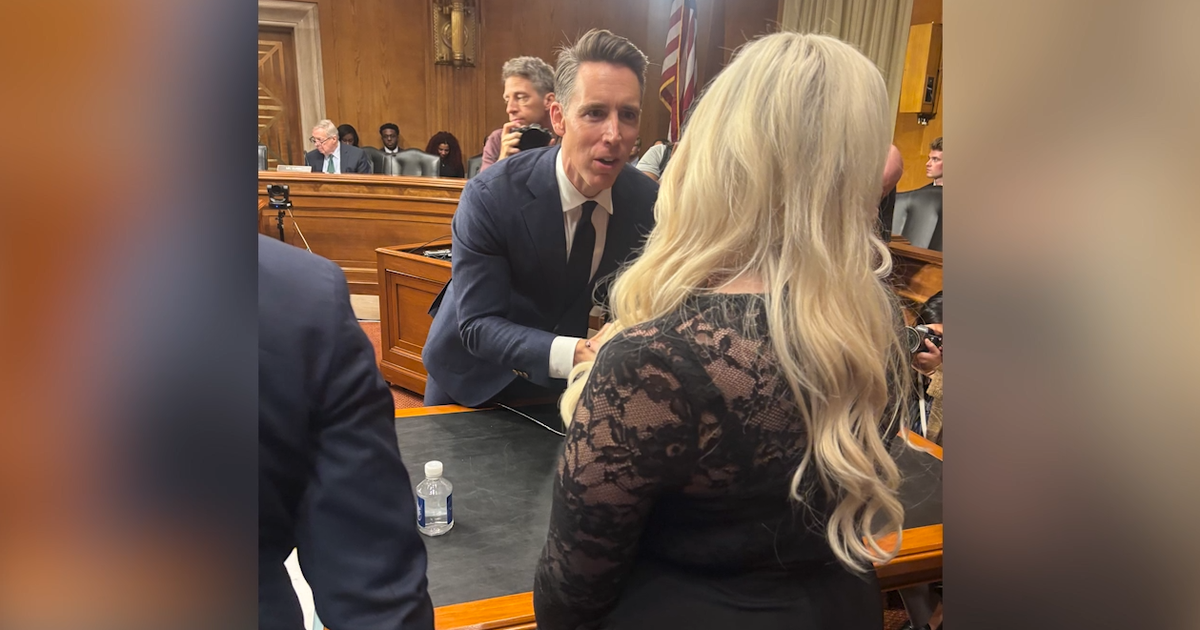
A Florida woman who spent 13 days in jail after being wrongly accused of a fatal hit-and-run has told a US Senate hearing that automated number-plate surveillance must not be used without independent checks.
Lindsey Isaacs, 23, addressed the Senate Judiciary Committee’s Subcommittee on Crime and Counterterrorism in Washington on Wednesday, 23 September, during a hearing entitled “Always Watching: Flock’s Nationwide AI Surveillance Network”. The committee lists the hearing as part of its 2025–26 programme. ([judiciary.senate.gov](https://www.judiciary.senate.gov/committee-activity/hearings/past-hearings))
Isaacs was arrested in April after Florida Highway Patrol investigators accused her of driving a Dodge Durango involved in a chain-reaction crash on Interstate 4 in October 2025. Three people died in the collision.
She spent nearly two weeks in custody before the charges were dropped. A subsequent investigation led to the arrest of another woman, Alisa Montalvo, who authorities now allege was driving the vehicle responsible.
“Surveillance technology does not exist in a vacuum,” Isaacs told senators. “Information collected by technology can become part of an investigation that affects a real human being.”
She said officers seized her vehicle despite it being in “immaculate condition”, telling her it had been involved in a crash in which three people had died.
“It was the worst 13 days of my life,” Isaacs said. “I wouldn’t wish it on anyone. It was very scary.”
Florida wrongful-arrest case puts Flock cameras under scrutiny
Isaacs is suing the Florida Highway Patrol and two troopers in federal court. Her complaint accuses the officers of failing to follow proper investigative procedures and of claiming that her vehicle bore damage linked to the crash.
The arrest report referred to “smudge or rub marks” on the Durango. Isaacs’s lawyers say photographs showed no damage consistent with a collision, while a separate FHP team later found no crash damage at all. The lawsuit seeks compensation for alleged emotional distress, mental anguish, humiliation, reputational damage and loss of liberty. ([wftv.com](https://www.wftv.com/news/local/woman-cleared-charges-deadly-i-4-crash-demands-jury-trial-wrongful-arrest-case/3C43A3WZPJAHHLR5X4NM3W4QHM/))
Earlier reporting by WFTV said the initial case relied in part on the vehicle appearing on an automatic number-plate reader near the crash scene. A later review found that witnesses had described a maroon vehicle rather than Isaacs’s black Durango, while investigators also examined evidence concerning Montalvo’s vehicle and its speed before the collision. ([wftv.com](https://www.wftv.com/news/local/questions-mount-over-fhp-investigation-after-charges-dropped-deadly-i-4-crash-case/YFHQNLN3EVGUBCOZXEKEBI3HIA/))
Isaacs told the hearing that Congress should require police to verify number-plate reader evidence before making an arrest or impounding a vehicle. She has suggested the measure could be known as “Lindsey’s Law”.
“They shouldn’t just look on the camera and immediately make an arrest or impound a vehicle for no reason,” she said.
The case has become a central example for critics of Flock Safety and other automatic number-plate recognition systems, who argue that the technology can enable intrusive tracking and place too much weight on unverified digital leads.
Police chiefs and sheriffs have defended the systems as valuable tools for locating stolen vehicles, missing people and suspects. But the Senate hearing comes amid growing scrutiny over who can access the data, how long it is retained and whether information collected for one investigation can be used for another.
