


AI productivity gains are prompting business leaders to reconsider how the benefits of faster, more efficient work should be divided between companies and their employees.
Executives from PepsiCo, Indeed, Dropbox and Bristol Myers Squibb said the technology’s value should not be judged solely by immediate financial returns, with some exploring whether extra capacity should be directed towards innovation, employee wellbeing and maintaining workers’ mental sharpness.
Athina Kanioura, PepsiCo’s global chief strategy and transformation officer and chief executive of PepsiCo Latin America, warned that demanding a business case for every AI application could overlook benefits that are difficult to quantify. She described the constant pursuit of return on investment as “death by a thousand cuts”.
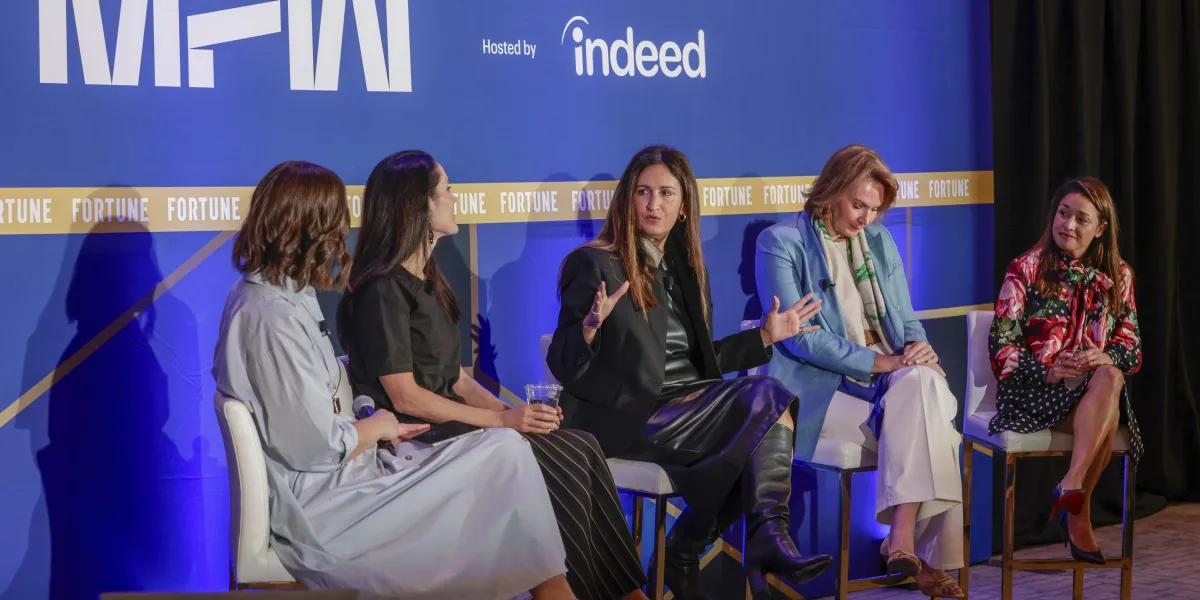
The comments were made during a panel at the Fortune Most Powerful Women conference last week, as companies seek to capture the efficiency gains offered by AI while considering its wider effect on the workplace.
How AI productivity gains could benefit employees
At Indeed, software engineers are producing 50% more code and employees are saving six hours a week, according to chief revenue officer Maggie Hulce. The company wants to use that additional time for creative work and innovation.
“We’re moving faster, we can innovate faster, we can invent faster, we can do fun work more and more,” Hulce said.
However, the increased use of AI is also raising concerns about employee wellbeing. US workers who use AI frequently report higher levels of burnout than those who do not, according to 2026 data from Quantum Workplace.
Melanie Rosenwasser, Dropbox’s chief people officer, said the cloud company was examining the risk of “cognitive atrophy” as workers increasingly hand over elements of their thinking to AI tools.
Dropbox has introduced memory exercises, attention-span training and puzzles, as well as experimenting with device-free off-sites. It has also brought a breathwork specialist to work with its executive team.
“When you outsource your thinking to AI, you become less intelligent in the process,” Rosenwasser said, referring to research from MIT professor Eric So. “So we need to be very deliberate about how we’re using these tools.”
At Bristol Myers Squibb, executive vice-president and chief people officer Amanda Poole is considering how much of the productivity generated by automating repetitive or “joyless” work should be returned to employees.
The company has begun exploring a “well-being quotient” to help determine how efficiency gains should be shared between the business and its workforce.
“Let’s say we’re going to get 20% productivity [with AI]: What part are we going to take back as a company, and what part are we going to give back?” Poole said. “We haven’t solved it, so more to come.”
