


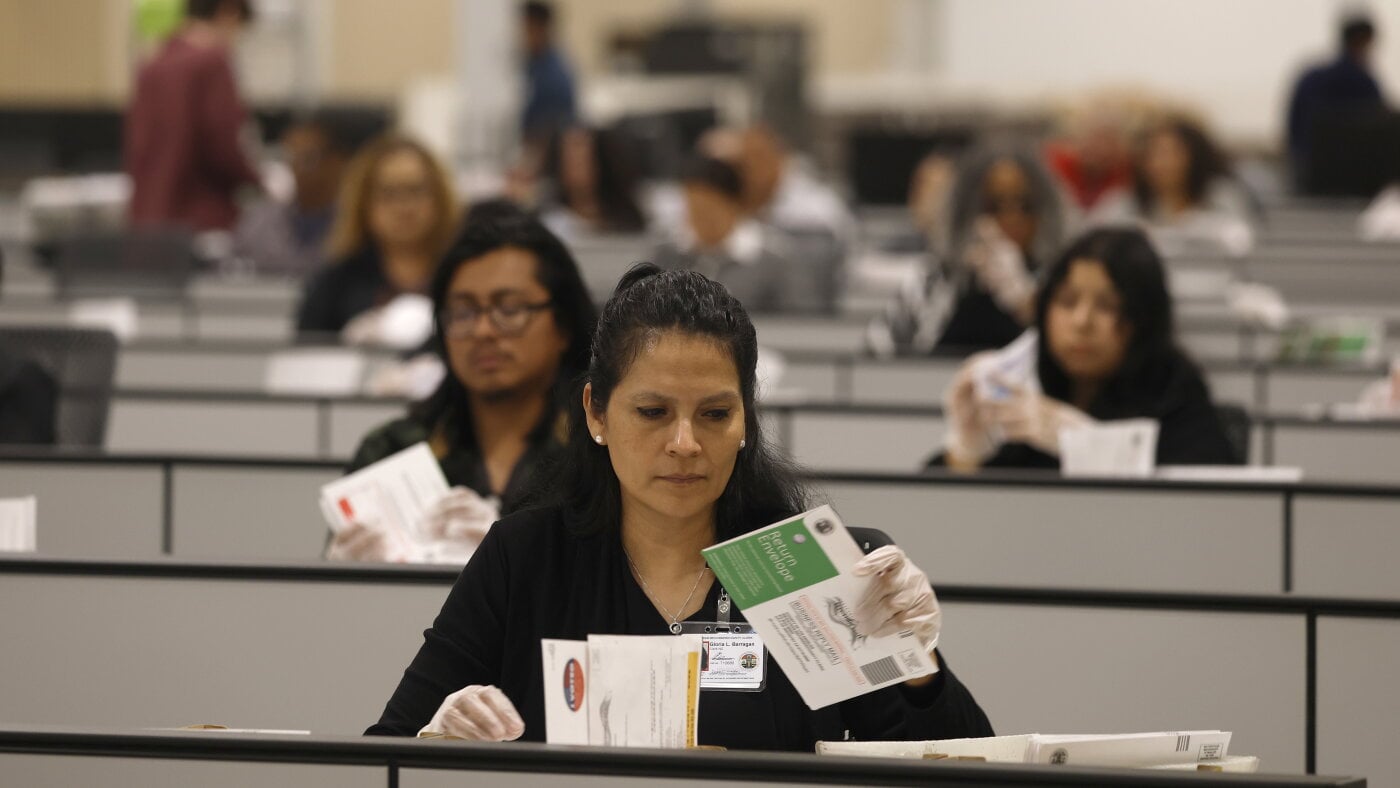
California’s slow vote count could delay the result of closely fought US congressional races for days after Election Day, creating fresh opportunities for conspiracy theories and misinformation, election experts have warned.
The state combines a high number of competitive districts with one of the country’s slowest counting processes. That means analysts must wait for a substantial share of ballots before deciding which candidates have won.
Stephen Richer, a Republican who previously served as clerk and recorder in Arizona’s Maricopa County, said the pressure placed on election officials intensifies whenever results remain uncertain.
“Those days, those were hell for me,” Mr Richer said, recalling nights when more than a million ballots remained to be processed. He said officials faced accusations of incompetence and corruption despite working with limited staff and space.
The apparent speed of an election result does not necessarily reflect how quickly every ballot has been counted. News organisations, including The Associated Press, call races using early returns, demographic information and the size of a candidate’s lead.
Wide margins allow those decisions to be made quickly. Close contests require analysts to see far more of the vote, meaning that the pace of counting becomes much more significant.
Why California’s vote count takes longer
California sends a ballot by post to every active registered voter, while also accepting ballots that are postmarked by Election Day. Those access arrangements can extend the time needed to complete the count.
Kim Alexander, who runs the California Voter Foundation, said the most significant problem was a late rush of postal ballots. Millions can arrive on Election Day, creating what she described as a “pig in the python” logjam.
Postal ballots require envelopes to be opened and signatures checked before they can be counted. In some counties, as many as half of all postal votes are returned on Election Day, leaving much of the processing until later in the week.
“We have all these amazing rights and opportunities that we give to our voters, and the price we’re paying is a longer vote count,” Ms Alexander said. “But that doesn’t mean that it has to be this long.”
California has allocated 40 million dollars to speeding up the process this year, including voter education encouraging people to cast their ballots earlier or use methods that can be processed more quickly.
Research in San Joaquin County found that voters who received postcards urging them to vote earlier were more likely to meet the recommended deadline for election-night counting.
Mr Richer said California’s political profile also made it particularly vulnerable to false claims about the election process. “It just all adds up to a fairly incendiary situation,” he said.
Charles Stewart, an elections expert at the Massachusetts Institute of Technology, said: “California just has a big target on its back.”
There may nevertheless be less national focus on the state than in previous elections. Ahead of the 2022 vote, nine California districts were regarded as competitive; this year, that number has fallen to three after voters approved a mid-cycle redistricting plan.
Alaska could also delay control of Congress
Alaska is another state where a close contest and a slow count could keep the country waiting. It was the last state to reach 95 per cent of ballots counted in 2024.
The state’s sole House race that year was not called until November 20, 15 days after Election Day. Republican Nicholas Begich won by fewer than 10,000 votes.
Polling indicates a tight Senate race in Alaska this year. If the contest is close and other results are narrowly divided, the final balance of power in the US Senate could remain unknown for weeks.
