


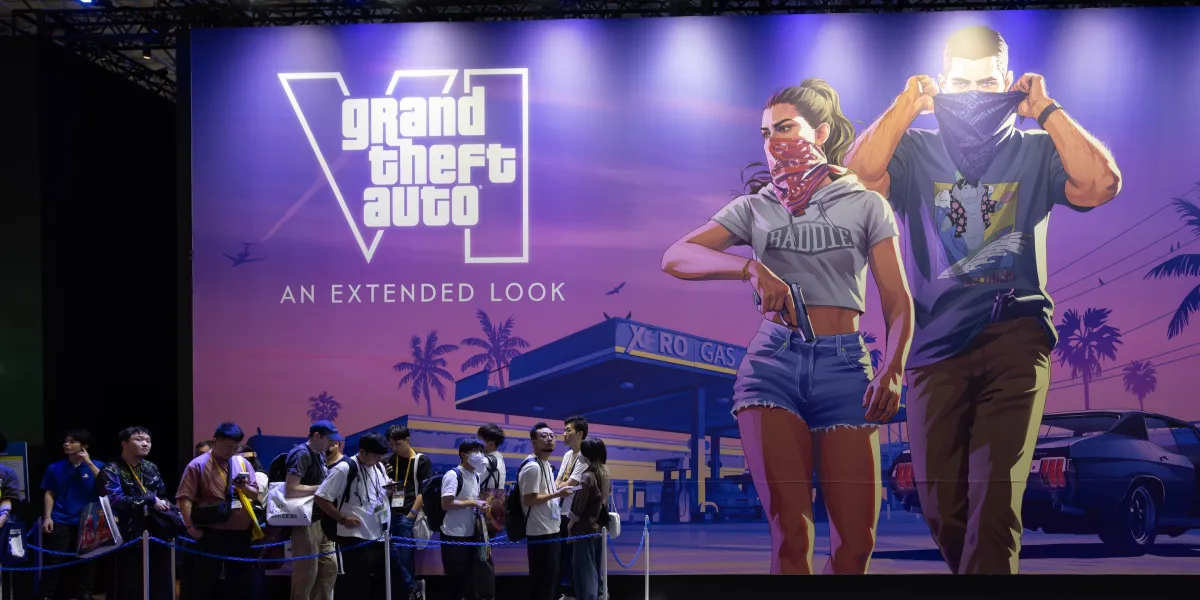
Miami-Dade County officials are divided over whether public property should be used to promote Grand Theft Auto VI, as Rockstar Games prepares to release the highly anticipated title set in a fictionalised version of Miami.
The county administration has proposed a series of promotional events and installations, while the sheriff and several commissioners have urged officials to reject any association with a game whose storyline is centred on crime and violence.
Miami-Dade’s proposed Grand Theft Auto VI promotion
A pitch presented to Rockstar in June outlined possible activations on county-owned sites. They included a “Vice City Airport” arrival experience at Miami International Airport, branded Metromover trains, a mural at PortMiami, customised manhole covers in downtown Miami and Brickell, and a car festival at Tropical Park.
The mayor’s office said the proposals could generate revenue for Miami-Dade while promoting the area to the game’s large audience. Carlos Suarez, a spokesman for Mayor Daniella Levine Cava, said no agreement had been formally approved and that any proposal would be subject to the usual review process.
“Given Miami-Dade’s clear influence on the game, we think there could be a unique opportunity to generate revenue for the County while showcasing Miami-Dade to a massive audience,” he said.
But Sheriff Rosie Cordero-Stutz and Commissioner Juan Carlos Bermudez have called for the county to keep public resources away from the campaign.
“We should be promoting the Miami-Dade we have worked so hard to build, not a fictional version of our community defined by crime and violence,” Mr Bermudez said.
Ms Cordero-Stutz described Grand Theft Auto as “a video game franchise built around criminal activity”. Their joint statement concluded: “Miami-Dade County is not Vice City.”
Dispute over county property and promotional deals
The issue returned to the County Commission on 6 October, when several commissioners, led by René Garcia, objected to county staff negotiating paid promotions at public facilities.
Commissioner Oliver Gilbert used a procedural move to defer a vote until the board’s meeting on 20 October. Commissioners also noted that agreements worth more than $1 million must be approved by the board.
One major deal has already been completed below that threshold. On 22 September, a helicopter placed a large pink “Welcome to Vice City” sign on the roof of the county-owned Kaseya Center, home of the Miami Heat.
The agreement with Rockstar was worth $975,000, leaving it $25,000 below the level at which a commission vote would have been required.
Other local authorities have embraced the campaign. Miami Beach approved a deal worth up to $4 million in a 4-3 vote, allowing Vice City branding on beach chairs and umbrellas between 15 October and 31 December. The City of Miami approved temporary banners worth up to $1.2 million.
Rockstar expands its Miami campaign
Rockstar’s wider marketing effort includes a Goodyear blimp in Vice City colours and a convoy of real cars modified to resemble vehicles from the game, complete with number plates from the fictional state of Leonida.
The company has also partnered with the Miami Heat for “A Night in Vice City” on 18 November, the day before the game’s release. The team will face the Milwaukee Bucks in redesigned uniforms on a specially themed court.
A separate partnership with Wynwood Walls has offered free admission to Miami-Dade residents from 13 October through 2028. Visitors must show photo identification bearing a Miami-Dade address, while the outdoor art museum has also unveiled 10 new murals commissioned for the game.
Grand Theft Auto VI is due to arrive on PlayStation 5 and Xbox Series X|S on 19 November, following two delays and eight years after Rockstar’s last major release, Red Dead Redemption 2.
Market research firm Newzoo has estimated that the game could generate between $3.25 billion and $5.2 billion in its first week, based on early pre-order data. A gaming platform has separately put its combined development and marketing budget at about $2 billion, although Rockstar’s parent company, Take-Two Interactive, has not disclosed the figure.
Miami-Dade commissioners will now decide whether the county should pursue further paid promotions or keep its public facilities separate from the Vice City campaign.
