


Shaquille O’Neal has described how he turned his name and likeness into a personal brand worth more than $100 million, while insisting he has never had a “real job”.
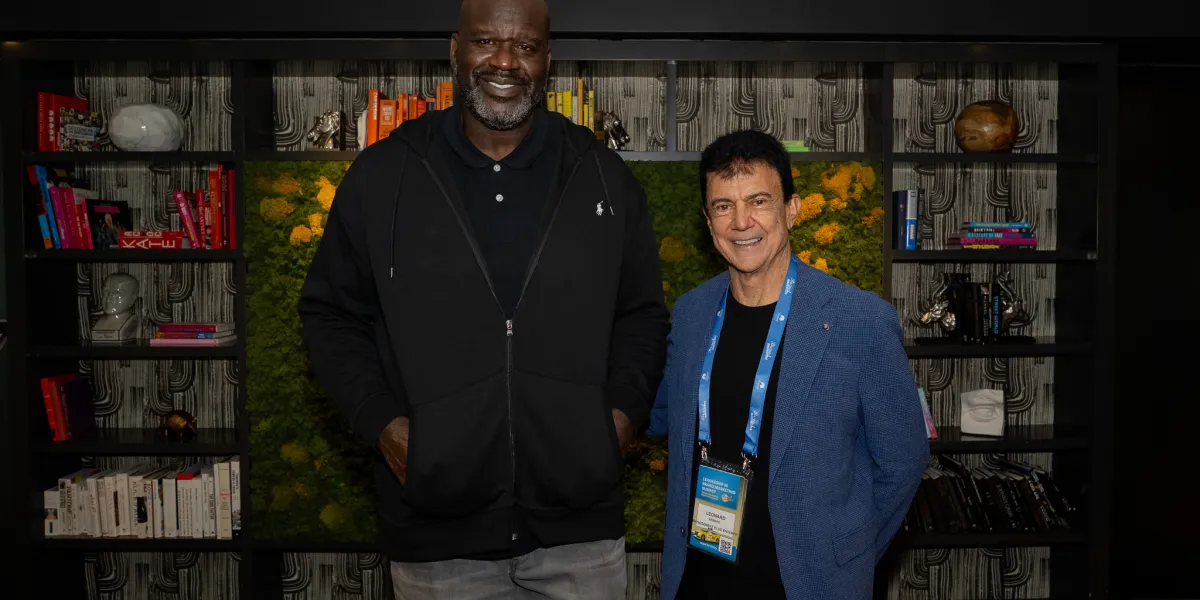
The former basketball star was speaking at the Brand Innovators Marketing Leadership Summit at Paramount’s New York headquarters alongside Leonard Armato, the agent who signed him after his time at Louisiana State University.
O’Neal and Armato were promoting Maximize: 7 Keys to Unlock Greatness in You, a book due to be published in November. O’Neal wrote the foreword, while Armato sets out the business strategy they developed in 1992.
Under that plan, O’Neal retained ownership of his name and logo, allowing companies to pay to use them in their marketing. Armato described the approach as “OPM” – building a brand using “other people’s money”.
“He owned his own brand, and then we had to find companies to help build value in his brand by using it in their marketing in creative ways,” Armato said.
O’Neal said he had little understanding of business when he left university, but credited Armato with teaching him how to protect and develop his commercial identity.
“I really respect people such as you guys who have to do real jobs. I’ve never had a real job,” he told the audience. He recalled helping his son complete a CV, saying: “I had no idea what I was doing because I’ve never filled out a resume.”
Shaquille O’Neal’s personal brand was built around ownership
Armato’s first major lesson was the importance of owning a logo. After showing O’Neal Michael Jordan’s Jumpman emblem, he encouraged the player to retain control of his own design.
O’Neal subsequently turned down Nike and signed with Reebok. The company’s advertising agency created the Dunkman logo, but O’Neal owned it and licensed it back to Reebok.
When Reebok withdrew its marketing support after two years, O’Neal was able to take the logo with him. He said in the book’s foreword that the Dunkman has since appeared on more than 400 million pairs of affordable shoes.
Armato writes that O’Neal later sold part of the intellectual property connected to his name for more than $100 million. In 2015, Authentic Brands Group acquired the rights to manage his name in merchandise and endorsements, although the terms were not disclosed at the time.
His commercial interests have extended beyond advertising. O’Neal has also bought into businesses he endorses, including a Krispy Kreme store in Atlanta.
Why O’Neal rejected some endorsement deals
Despite appearing in campaigns for brands including Icy Hot, The General, Nestle Crunch, Pepsi and Reebok, O’Neal said he did not accept endorsements simply because they offered large sums of money.
“I’ve never ever taken the deal just because it was a high value monetary deal. If I don’t believe in your product, I don’t do it,” he said.
He said he had declined repeated offers to appear on a Wheaties box because he had never eaten the cereal, and suggested he would prefer to work with Kellogg’s brands including Frosted Flakes and Froot Loops.
O’Neal said his relationship with The General was based on personal experience. As a student buying his first car, he said he could not afford standard insurance and the company was the only one to provide him with cover.
“My brand is all about affordability. I’m not trying to break people’s bank accounts,” he said.
He also credited Armato with teaching him to focus on long-term partnerships rather than immediate payments. O’Neal said he had renewed his relationship with Icy Hot 19 times.
From basketball star to advertising figure
Armato said O’Neal’s appeal to advertisers came from combining his intimidating presence on the basketball court with a more approachable personality away from it.
O’Neal described the contrast as being “Terminator” on court and “Bambi” elsewhere. “In real life, I’m a nice guy. I respect everyone. Doesn’t matter how much you make. Doesn’t matter where you’re from. It’s ‘yes, sir’, and ‘yes, ma’am’, to everybody,” he said.
Armato said a Pepsi advert featuring O’Neal and a child helped demonstrate that he was not only powerful but also emotionally intelligent.
He also helped shape O’Neal’s public persona, including the nickname “the Big Aristotle”. The name was inspired by Aristotle’s line that excellence is a habit, which Armato discussed with O’Neal before he accepted an MVP award.
O’Neal said Armato also helped secure a $10 million deal for three rap albums after he expressed an interest in making music.
The partnership eventually ended after disagreements over which commercial opportunities suited O’Neal’s brand and over his wish to use profanity on his records. Armato writes that O’Neal dismissed him after he failed to answer repeated calls from a hotel in Orlando, although he says the split involved no dispute over money.
The pair have since become close again. Asked about younger athletes signing lucrative name, image and likeness agreements while still at university, O’Neal said he would not tell them whom to hire.
“I just know that if I don’t believe in your product, I can’t promote it to people. That’s not me,” he said.
He said he had initially resisted social media but changed his mind after offering five tickets to a Phoenix game and seeing a car stop in the street shortly afterwards. He now says his posts are intended to make people laugh, provide inspiration and promote business.
“I hate wealthy athletes that show off their wealth on social media. It upsets me, makes me sick,” O’Neal said.
At the close of the summit session, he offered the assembled marketing executives a final sales pitch: “If you haven’t signed me up to your company, I’m available. I don’t have enough commercials on TV yet.”
