


Possible US military action against Cuba is raising fears that the Cuban Revolution may be approaching its final days, amid reports of American activity near the island and repeated calls from US officials for “Cuba to be free”. The timing and form of any operation remain unclear.
Washington’s operation in Venezuela at the start of the year is widely seen as having created a possible path towards similar action against Cuba. Any intervention would carry significance well beyond the Caribbean, given the outsized role the island has played in global politics for more than six decades.
Cuba has repeatedly challenged US influence, sometimes through military confrontation and sometimes through international diplomacy, healthcare and support for liberation movements. Its conduct has made it a persistent counterpoint to American power, while its political repression has also exposed the contradictions of its revolutionary system.
Cuba’s challenge to US power
The revolution’s ability to turn pressure into international attention was evident soon after Fidel Castro came to power. During a visit to New York in September 1960 to address the United Nations General Assembly, several hotels were pressured to refuse accommodation to the Cuban delegation because of Castro’s anti-imperialist rhetoric.
The group instead stayed at the Hotel Theresa in Harlem, drawing photographers and television crews. Castro used the episode to compare the treatment of his delegation with the discrimination faced by Black Americans in the segregated South.
The incident placed an uncomfortable spotlight on the United States, not in the region most associated with segregation but in New York, a city seen as a centre of American liberalism. It became an early example of Cuba using its conflict with Washington to expose what it viewed as hypocrisy within the US system.
Havana later expanded what became known as Cuban internationalism, sending doctors, engineers, agricultural technicians and other professionals to 164 countries. As many as 400,000 doctors were sent abroad, winning Cuba support across parts of the Global South, including in Venezuela, South Africa and Vietnam.
Cuba’s armed forces also defeated the Bay of Pigs invasion, which was carried out by Cuban exiles and supported and funded by the CIA. The episode was a major setback for the United States and strengthened the revolution’s image as a state willing to confront a far more powerful adversary.
From 1975 to 1991, more than 300,000 Cuban soldiers fought alongside forces in Angola in a proxy conflict involving the United States. Operation Carlota helped secure the liberation of Angola and neighbouring Namibia and contributed to the eventual collapse of apartheid in South Africa.
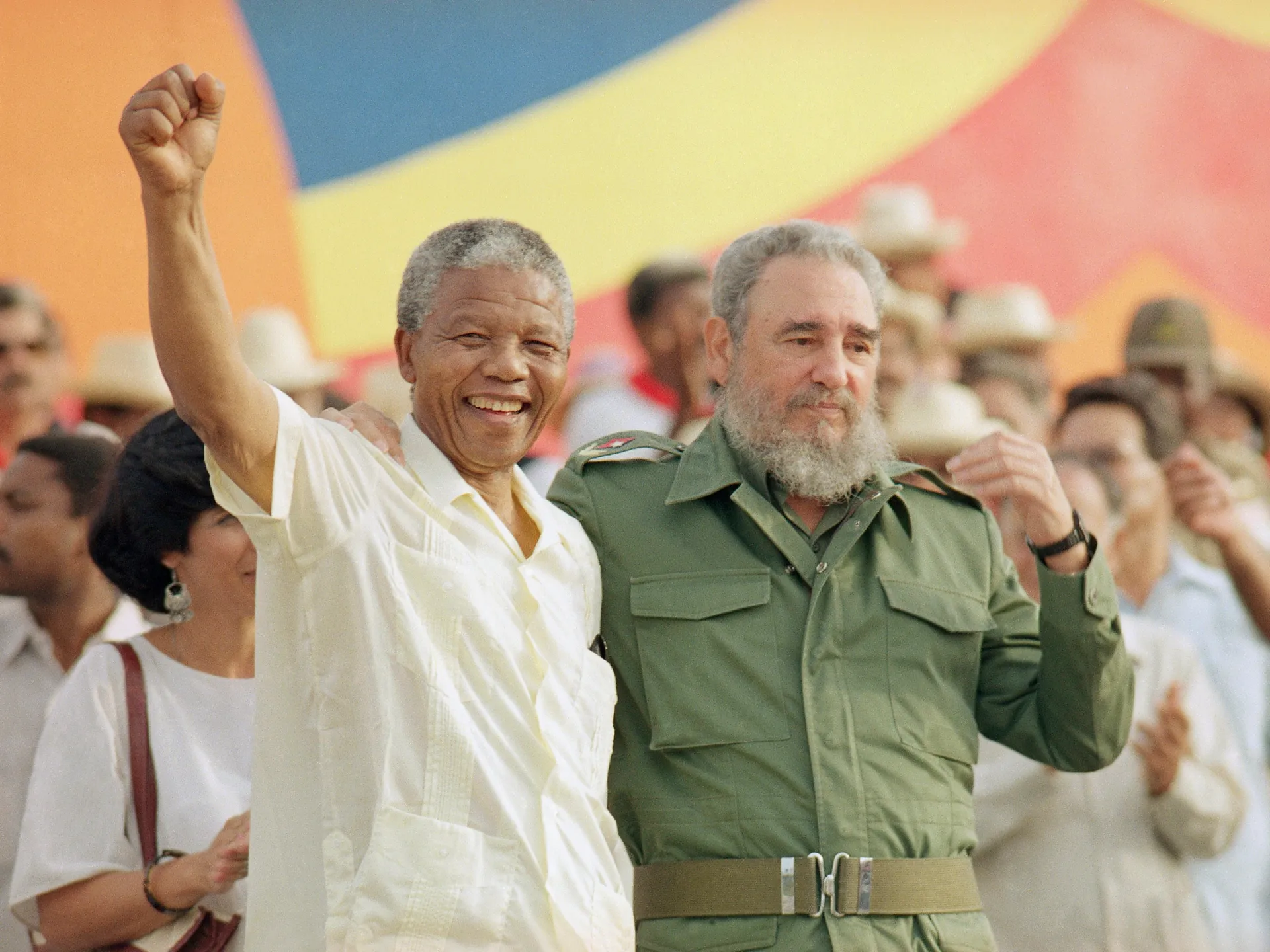
Nelson Mandela later said Cuba’s intervention had “destroyed the myth of the invincibility of the white oppressor”. Havana also backed the Palestinian liberation movement and the anti-apartheid struggle while the United States provided diplomatic and military support to Israel and South Africa’s apartheid regime.
Castro became another symbol of the revolution’s defiance. He reportedly survived more than 600 assassination attempts before dying of natural causes at the age of 90.
The cost of the Cuban Revolution
The island’s survival has been central to its standing among supporters. The United States has maintained a severe economic embargo against Cuba for more than 60 years, intensifying the pressure after the collapse of the Soviet Union plunged the country into a profound economic crisis.
Despite that pressure, the revolution survived the crisis of the 1990s through economic diversification and liberalisation, as well as its established links across the Global South. Cuba also undertook a nationwide shift towards more sustainable agriculture.
Supporters have pointed to periods in which Cuba outperformed the United States on literacy, infant mortality and life expectancy. But those achievements have coexisted with severe restrictions on political rights and civil liberties.
Freedom of speech is restricted, access to information and the internet is heavily controlled, and recent popular protests have been violently suppressed. Critics have cited those measures as evidence of the revolution’s authoritarian character.
The comparison with the United States has become more pointed under Donald Trump’s administration. The source material describes the US as facing corruption, weakened democratic institutions, expanded surveillance, attacks on free speech, voting rights and the media, as well as an increasingly powerful presidency.
It also points to extrajudicial killings of US citizens by masked state agents and renewed attention on the detention facility at Guantanamo Bay, where 15 detainees from the “global war on terror” remain. The argument is that Washington increasingly resembles the governments it condemns, including those of Cuba, Russia and Iran.
With conditions in Cuba deteriorating and the United States appearing ready to act, the possible end of the revolution raises questions about what would replace it. For many opponents, its fall would be a cause for celebration, particularly in Miami; for others, it would mark the disappearance of a flawed but important alternative to US dominance.
The revolution’s survival has allowed Cuba to occupy an unusual place in international affairs: both a symbol of resistance and a state marked by repression. If that role comes to an end, the consequences may be felt not only on the island but in the wider contest over how power is challenged and held to account.
