


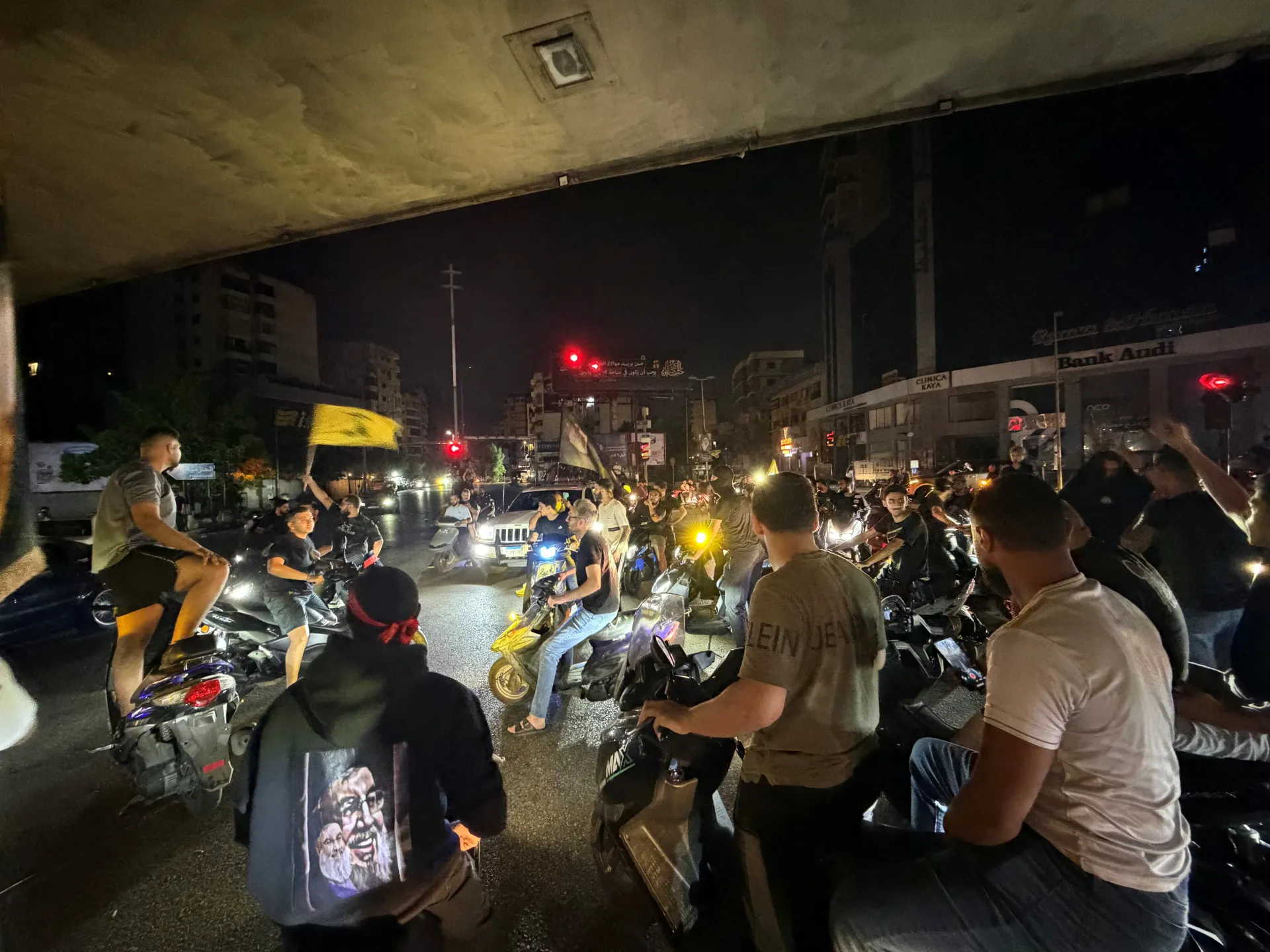
Hezbollah’s financial support for families displaced by the war with Israel is intensifying pressure on Lebanon’s government as it tries to curb the group’s influence, analysts have said.
The Lebanese Shia movement announced on October 13 that it would compensate families whose homes were destroyed or made uninhabitable. The initiative comes as the government faces international pressure to address Hezbollah’s military presence and financial networks.
Ali Damoush, chairman of Hezbollah’s executive council, said the organisation would continue helping people affected by the conflict.
“At Hezbollah, and out of our religious and moral responsibility, we will continue to serve our people and make every possible effort to preserve their dignity and honour,” he said.
Families in Beirut and its southern suburbs whose homes were destroyed are due to receive 14,000 dollars, while those elsewhere in Lebanon will receive 12,000 dollars. The movement has also promised assistance with replacing furniture.
Hezbollah said the scheme would be open to “everyone who has suffered harm in our country, regardless of their political position”. Families who own another home can waive the housing payment but remain eligible for help with furniture, it said.
Hezbollah’s funding and Lebanon’s government
The payments are being made as tens of thousands of people remain displaced, living with relatives, renting accommodation or staying in hotels after Israel’s renewed military campaign in Lebanon.
Israel intensified its war on Lebanon on March 2, after Hezbollah launched an attack following joint US-Israeli strikes on Tehran that killed Iran’s Supreme Leader Ayatollah Ali Khamenei. Hezbollah also cited what it described as repeated Israeli violations of a 2024 ceasefire.
More than one million people were displaced in the subsequent fighting and about 4,300 people were killed, according to the figures in the report. Israel has largely not withdrawn from Lebanese territory, while more than 50 frontline villages and towns have been completely destroyed, it said.
The announcement followed the seizure by Lebanese authorities of hundreds of kilogrammes of explosives linked to Hezbollah. Hezbollah MP Hassan Fadlallah said the stockpile belonged to the “axis of resistance” against Israel and called for it to be returned, with those arrested released.
US Secretary of State Marco Rubio also spoke to Lebanon’s President Joseph Aoun last Thursday, pressing him over the explosives confiscated by Lebanese forces.
Analysts said Hezbollah’s ability to provide assistance could complicate Beirut’s efforts to demonstrate control over the country’s financial system and security policy.
“The Lebanese government is facing a real test and challenge to build and win the trust of the international community, and particularly the United States, against Hezbollah’s signalling attempts of rebuilding itself,” said Dania Arayssi, assistant director at the New Lines Institute for Strategy and Policy.
She said the funding could make negotiations with Israel over a verification plan and the withdrawal from remaining territory more difficult, as Israel could argue that the Lebanese government was failing to control Hezbollah’s finances.
Iranian funding claims
The support programme comes after a report that Iran had provided Hezbollah with 200 million dollars to ease the impact of years of war on Lebanon’s Shia population. A US State Department official denied that Iran, which is under stringent economic pressure, had been able to transfer the money to its Lebanese ally.
Hezbollah has historically received Iranian funding but also maintains independent sources of income, including support from the Lebanese diaspora. Analysts said it can access money through domestic financial institutions and cryptocurrency despite extensive sanctions.
“It has access to funds from the state, wealthy individuals, various entities, companies and hospitals,” said Lebanese political analyst Marcel Baloukji.
Nicholas Blanford, a non-resident senior fellow at the Atlantic Council, said additional funds would provide a significant boost to Hezbollah and help ease the hardship facing its support base.
“Hezbollah is very sensitive towards the needs of their support base, the Shia community, and I think that’s one of the reasons why they haven’t gone back to fighting the Israelis,” he said.
Hezbollah’s prominence as Lebanon’s strongest political and military actor has been weakened by the killing of much of its leadership, including its secretary general Hassan Nasrallah, during Israel’s intensified campaign in 2024.
Arayssi said the compensation scheme appeared intended to preserve support among communities that had suffered heavily in the conflict, at a time when frustration with the war had grown.
However, analysts said the payments would not necessarily secure continued loyalty. Some members of the Shia community have welcomed the assistance but said it would not cover all their expenses, while concerns have emerged over how families with destroyed homes will be treated compared with those whose properties were badly damaged.
