


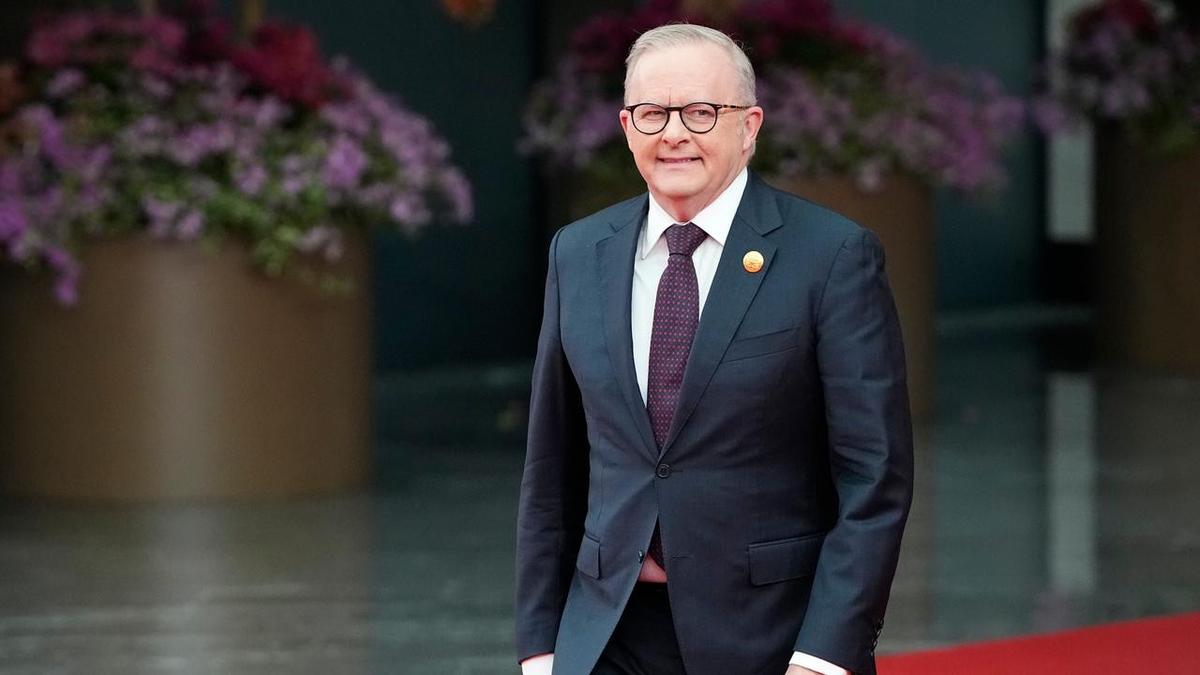
Anthony Albanese has returned to Australia after an 11-day overseas tour that delivered diplomatic gains but ended with attention turning to a sharp rise in unemployment at home.
The prime minister was praised by Chinese President Xi Jinping for helping achieve a “full turnaround” in relations between Australia and China during talks in Shenzhen on Friday.
The meeting was the final engagement of a three-country tour that included the COP climate conference in Turkey and the ASEAN summit in the Philippines, as well as the APEC summit.
At APEC, attended by 21 of the world’s leading economies, Mr Albanese promoted Australia’s priorities on artificial intelligence standards, open trade and reducing tensions in Ukraine and the Middle East.
But the Australian agenda was eclipsed by a historic meeting between the leaders of China, Russia and the United States on the sidelines of the summit.
The encounter took place a day before Mr Albanese met Mr Xi and prompted comparisons with the 1945 Yalta conference, when the United States, Britain and the Soviet Union discussed the future of Europe after the Second World War.
There were concerns that the meeting could signal a return to major powers dividing the world into spheres of influence, leaving middle powers such as Australia, Japan and Ukraine with less room to act independently. Ukrainian President Volodymyr Zelenskiy was concerned that his country’s future could be decided without its involvement.
Nick Bisley, an international relations expert at La Trobe University, said the meeting had been symbolically important but produced little substance.
“Trump will be gone in two years and while the domestic focus is likely to remain, the kind of personalised leadership he has pursued, that allowed this kind of meeting, is unlikely to persist,” he said.
Professor Bisley said Ukraine had barely featured in the talks, while the fact that they were held alongside a multilateral summit demonstrated that such institutions remained relevant.
Quad agreement highlights Australia’s regional focus
Donald Trump’s attendance at a Quad leaders’ meeting with Mr Albanese, Japanese Prime Minister Sanae Takaichi and Indian Prime Minister Narendra Modi in Manila was also seen by analysts as giving fresh momentum to the grouping.
The four countries agreed to hold military exercises together for the first time. Australia is expected to contribute P-8 and P-C3 patrol aircraft, suggesting the United States continues to devote at least some attention to the Asia-Pacific.
“Australia’s real focus is on East Asia, and the agreements at ASEAN and the revitalisation of the Quad are probably the most important achievements,” Professor Bisley said.
He added that Australia had a vital interest in ensuring multilateral structures functioned effectively and that contributing to them had advanced the country’s interests.
However, the trip also attracted criticism over spending at the COP climate conference, a hot-microphone conversation involving Climate Change Minister Chris Bowen and Mr Albanese’s appearance in a staged group photograph with Russia’s president.
The most significant development for the prime minister may have come while he was abroad. The Australian Bureau of Statistics reported that unemployment had risen to 4.9 per cent in October, its highest level in five years.
Mr Albanese is unlikely to receive much political credit from voters for improving relations with China, while a recession would leave him carrying the responsibility for the state of the economy.
